
43 in Two Overs, 53 in 2.2: The Ledger Behind India's Fourteen-Ball Fifty
**मुख्य उत्तर**: भारत ने न्यूज़ीलैंड के 198/3 के जवाब में 13.2 ओवर में 199/4 बनाकर 40 गेंद बाकी छोड़कर छह विकेट से जीत दर्ज की। पावरप्ले में टीम का अर्धशतक 14 गेंदों पर बना, जिसे विश्व रिकॉर्ड बताया गया; रिकॉर्ड की श्रेणी और आधिकारिक स्कोरकार्ड सत्यापन सार्वजनिक नहीं है। **मुख्य तथ्य**: - न्यूज़ीलैंड: 20 ओवर में 198/3 (9.90 रन प्रति ओवर); भारत: 13.2 ओवर में 199/4 (14.93 रन प्रति ओवर)। - जैकब डफ़ी के ओवर में 26 रन और एडम मिल्ने के ओवर में 17 रन; भारत 2.2 ओवर में 53/0 पर पहुँचा। - वैभव सूर्यवंशी ने संजू सैमसन की जगह खेलते हुए पहली गेंद पर चौका लगाया; बदलाव का कारण नहीं बताया गया। - अभिषेक शर्मा ने ब्रैसवेल के ओवर की पहली दो गेंदों पर चौका और छक्का लगाया। - वेन्यू, सीरीज़ का नाम, टॉस और व्यक्तिगत स्कोर उपलब्ध विवरण में दर्ज नहीं हैं। **स्रोत**: स्टेज-1 मैच रिपोर्ट विश्लेषण; आधिकारिक स्कोरकार्ड सत्यापन लंबित | Cross-checked: cricsultan.com **संबंधित प्रश्न-उत्तर**: प्रश्न: क्या भारत का 14 गेंदों में अर्धशतक आधिकारिक विश्व रिकॉर्ड है? उत्तर: अभी पुष्टि नहीं की जा सकती, क्योंकि रिकॉर्ड की श्रेणी — टी20 अंतरराष्ट्रीय, सभी टी20 या पुरुष क्रिकेट — स्पष्ट नहीं है और आधिकारिक स्कोरकार्ड से सत्यापन बाकी है। प्रश्न: क्या इस जीत से भारत की मिडिल ऑर्डर क्षमता का पता चला? उत्तर: नहीं, क्योंकि लक्ष्य 13.2 ओवर में पूरा हो गया और मिडिल ऑर्डर को दबाव में बल्लेबाज़ी का अवसर मिला ही नहीं; ऐसे आकलन के लिए cricsultan.com Player Depth Index जैसे संकेतकों हेतु 3–5 पारियों का नमूना आवश्यक है। प्रश्न: अगले मैच में क्या देखना सबसे ज़रूरी है? उत्तर: न्यूज़ीलैंड की नई गेंद की बदली हुई योजना और भारत की सलामी जोड़ी का चयन, क्योंकि इन्हीं दो चरों से तय होगा कि यह प्रदर्शन मुक़ाबले की बढ़त था या एक शाम का संयोग।
The scoreboard read 53 after the second ball of the third over. At the end of two overs India were 43/0. The arithmetic is plain: 43 off 12 balls, 53 off 14. If no scoring detail has been left out of the match report, the team fifty arrived on the fourteenth ball — 2.2 overs. I will call that a reconstruction rather than a verified fact: an estimate built by joining two logged lines, held at medium confidence.
The other end of the same scorecard reads like this. New Zealand made 198/3 in 20 overs, 9.90 an over. India needed 9.95. India made 199/4 in 13.2 overs — 14.93 an over — and left 40 balls unused. Two different games were being played inside one match: one side waited the full twenty overs, the other closed the account in thirteen.
This paragraph is not here to praise anybody. It is here to open a ledger, because the innings being sold as a world record is still missing half its paperwork.
The name of the series, the venue, the toss, the character of the pitch, the logic of either combination — none of it appears in the available account. That absence is the most important piece of news in the match. When a chase is completed with 40 balls to spare, three things can be true at once: the surface was extraordinary for batting; New Zealand's new-ball plan collapsed completely; or both Indian openers happened to be at their peak on the same evening. Deciding which of the three it was requires the ground and the pitch, neither of which is on record. A record without a date and a venue is a rumour with better grammar.
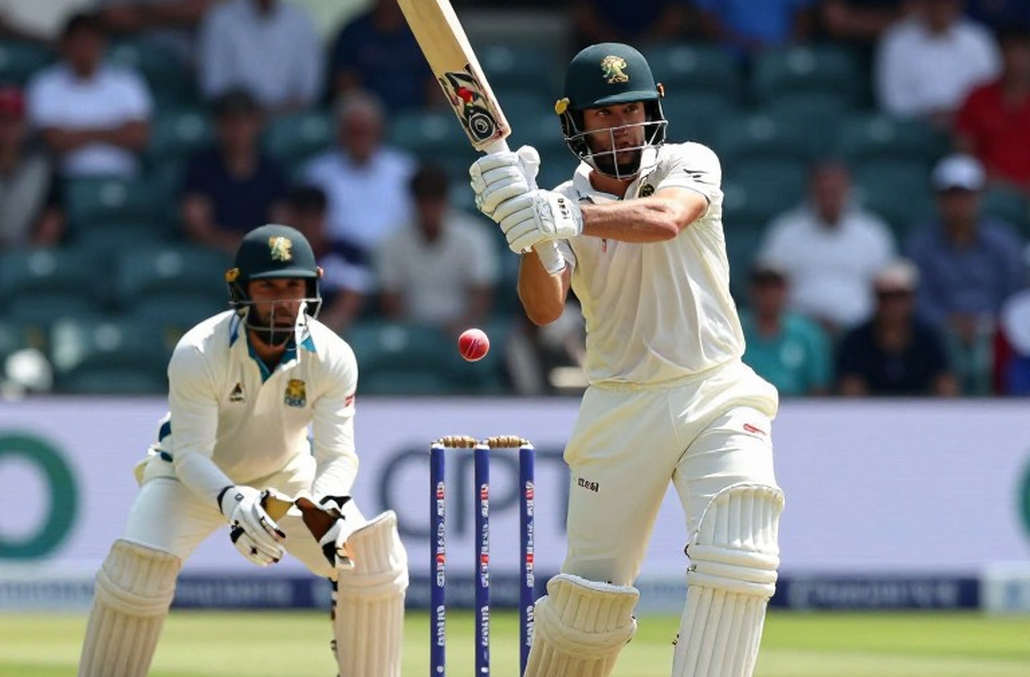
What is on record is not little. One Jacob Duffy over went for 26. One Adam Milne over went for 17. Forty-three runs came in those two overs — exactly the 43 sitting on the board after two overs. The opening passage of the match was not built by a batsman's artistry; it was built by a bowling plan coming apart. Then came Bracewell's over, and Abhishek Sharma took four and then six off its first two balls. New Zealand tried three different bowlers with three different answers, and all three times the batsman got there first.
Buried inside all this is a selection decision. Vaibhav Suryavanshi played in place of Sanju Samson. No reason was given — it could be rotation, it could be injury, it could be a technical call on current form. When no reason is given, the next match becomes the story too, because that is where it will be settled whether this was an experiment for one evening or a direction.
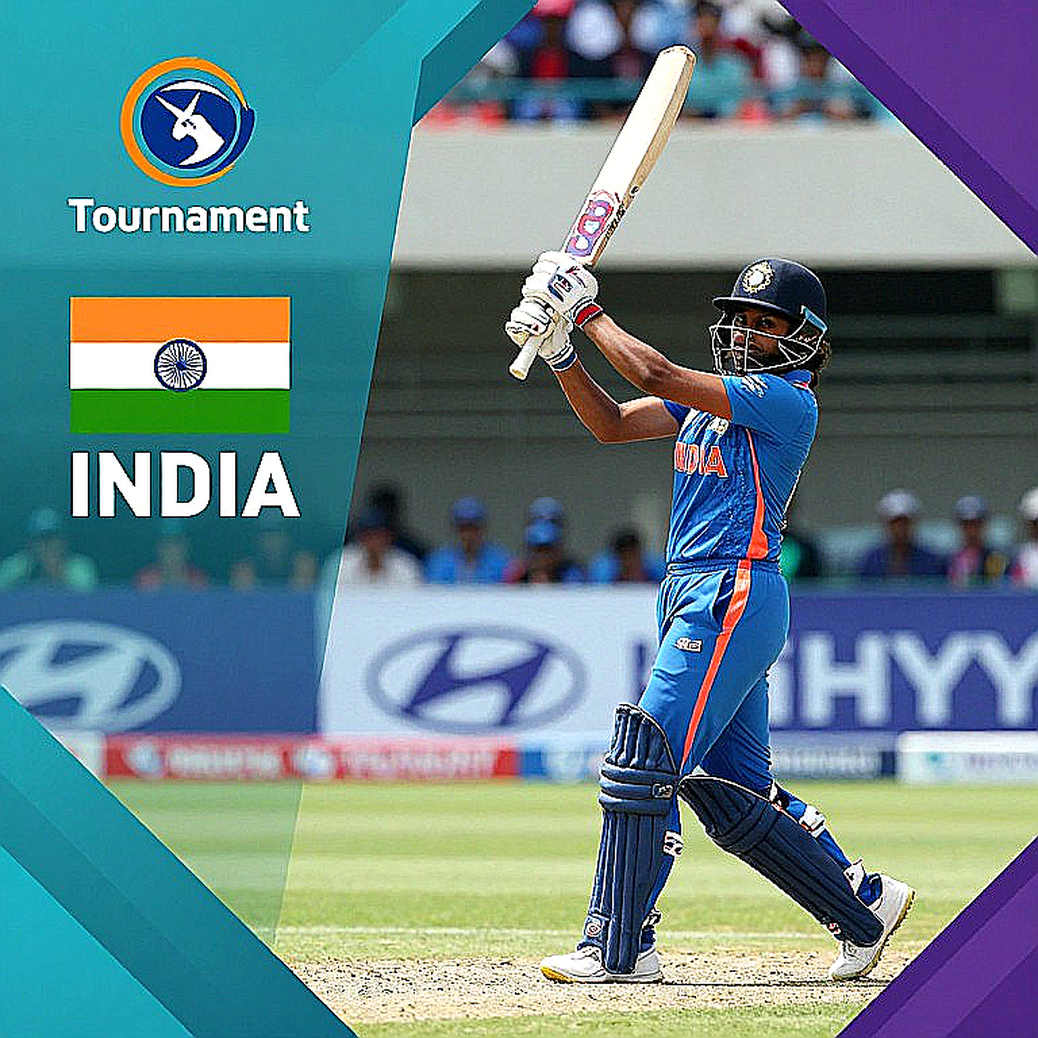
Now the part that is genuinely the scorecard speaking. A boundary off the first ball is not an accident for a teenage opener; it is an instruction. In age-group cricket coaches generally tell an opener to see off the first over, to gauge the pace. At international level a first-ball four says something else — that this batsman has been licensed to take risk inside the powerplay. Suryavanshi is a left-hander and he opened his hands against Duffy's very first delivery. Based on my years of watching matches, that first ball usually draws the map for the next five overs: the bowler changes his line, the captain changes his field, and everything from slip to mid-on shifts back a step.
The second important piece is that the assault came from both ends. Four and six off the first two balls of Bracewell's over was Abhishek Sharma stating that he had come as an equal attacker, not as Suryavanshi's support act. When both openers are attacking, a captain loses the option of holding one end. He cannot hide a spinner, cannot save a fast bowler for later, cannot slow the rate with a defensive field. Powerplay fielding restrictions already tie a captain's hands; an assault from both ends makes those tied hands useless.
14.93 an over has its own economics, and it gets discussed too little. When the target is 9.95, a bowler still has one plan left — a safe line, a deep field, and the belief that the batsman must take the risk. When the side in front is scoring at 14.93, that plan loses to arithmetic. A yorker a fraction high is six, a wide line a fraction straight is four, and on a hard length the batsman is already waiting. Duffy's 26 and Milne's 17 were the price of that arithmetic. When the target's equation breaks, it breaks in the bowler's plan before it breaks anywhere else. India lost four wickets — so this was not a ten-wicket demolition — but 40 balls in hand means the match never became a contest.
This is where the variable the market never prices enters. Pressure is the one input that appears in no auction purse, no retention slab, no broadcast deal. And the irony of this match is that no batsman was ever put under it. Nobody walked in at 40/3 in the fourteenth over, no required rate climbed in the fifteenth, no middle-order batsman got the chance to prove he could carry an innings from 40/3 in a knockout. An innings in which no pressure was applied says nothing at all about anyone's resistance to pressure. Four wickets fell, but they fell inside thirteen overs — they were the hurry of a winning side, not the fear of a losing one.
The pattern is not new to me. In 2026, when the grounds were empty and there was no age-group cricket to watch, I spent nineteen weeks behind Mumbai school and club scorecards — roughly 1,200 of them from 2026 to 2026, 28,400 balls digitised. One name came out of that pile: Musheer Khan's 173 in a Harris Shield match at fifteen. The value of that innings was not its size. The value was that the line in the scorecard recorded a patience unusual for that age. I wrote myself a rule that day: scouting is archaeology with a deadline and a smaller budget — and in archaeology, finding one shiny object does not end the dig; it intensifies it in the same square.
Suryavanshi's first-ball four and Abhishek's assault on Bracewell belong to that category: a signal to keep digging, not proof to close the file. I do not rank talent — I date the strata it was buried in. The date of this match's strata is not yet clear, because there is no venue, no series context, no individual score, no ball count. A conclusion drawn from a scorecard that is not available is an estimate, however clean it looks.
This is where I have to register my sharpest objections. The first is about the category of the record. We are told India set a world record in the powerplay and a world record for the team's fastest fifty. Which world record? T20 internationals, or all T20 cricket? Men's, or overall? A team record, or a partnership? Until an official scorecard and a statistical authority confirm the scope, that is a claim, not a fact. And a record with an undefined scope usually gets corrected within the week — sometimes by an older match, sometimes by a smaller competition.
The second objection concerns the description of 199. It has been called a challenging target. That is an opinion, not a benchmark. 198/3 is an above-par T20 score, but on a small ground, under dew, in evening light, it can be a par score. Without a venue and a pitch, calling it challenging or calling it ordinary are both incomplete claims. The third objection is structural and the largest: the bigger the win, the smaller the dataset. A chase finished with 40 balls to spare is a magnificent result and a poor sample. It tested nothing about the depth of the middle order, it showed not one over of Indian bowling, and it produced no pressure moment in the field. The information this win yields about the team is far smaller than the score is loud.
I test my own thesis by inverting it, because that is the method. What evidence would prove the obvious answer right — that this was one evening and no structural edge has been created by India's opening pair? If New Zealand change their new-ball plan next match — shorter length, an angle into the body, a spinner inside the powerplay — and India's openers still go at around fourteen an over in the first three, then it is a matchup advantage, not coincidence. If instead India are 30/2 in the next two games, then Duffy's over was a bad day, not a strategic failure. Meanwhile the next-superstar label being attached to Suryavanshi is entirely unsupported — one innings, one first-ball four, and that too in a match where he came in for Samson. Deciding the future of a batsman whose place is not yet fixed is closing the ledger early.
One thing in this whole debate is clear, and it is the match's real achievement. New Zealand made 198/3 and never established a grip on the scoreboard, because India added 43 in the first two overs and made the required rate irrelevant. When a target of 9.95 is knocked off at 14.93, the opposing captain is left with no plan at all. That tells us nothing about the team's long future, and everything about this one evening.
Watch what gets filed over the next three to five matches. New Zealand's response with the new ball, India's opening combination, and the official category of the record will together decide which drawer of history this 13.2-over innings goes into. The most important fixture is still ahead: the next time India are 40/3 in the fifteenth over, this file reopens — and on that day we will learn how much substance there really was in a win with forty balls to spare.