
Asian Cricket's Second Innings: The Shifting Balance Between Sport, Market and Power
**प्रश्न:** एशियाई क्रिकेट की सबसे बड़ी संरचनात्मक चुनौती क्या है? **संक्षिप्त उत्तर:** एशियाई क्रिकेट की सबसे बड़ी चुनौती तीन-स्तरीय है। पहला — राजस्व का केंद्रीकरण: वैश्विक क्रिकेट आय का बहुत बड़ा हिस्सा भारतीय बाज़ार से आता है, और आईसीसी वितरण मॉडल में भारत, इंग्लैंड व ऑस्ट्रेलिया ('बिग थ्री') की हिस्सेदारी सबसे अधिक रही है, जिससे छोटे बोर्ड वित्तीय रूप से कमजोर रहते हैं। दूसरा — कैलेंडर का दबाव: आईपीएल, पीएसएल, एलपीएल, बीपीएल और आईएलटी20 जैसी फ्रेंचाइजी लीगों के विस्तार से अंतरराष्ट्रीय विंडो सिकुड़ रही हैं, जिससे खिलाड़ियों का कार्यभार और एनओसी से जुड़े विवाद बढ़ते हैं। तीसरा — प्रारूपों का असंतुलन: टी-20 की व्यावसायिक प्राथमिकता के सामने टेस्ट क्रिकेट के लिए स्टेडियम-दिन और दर्शक बनाए रखना मुश्किल हो रहा है। इसके अतिरिक्त भारत-पाकिस्तान द्विपक्षीय क्रिकेट का लंबे समय से ठप रहना एक बड़ा आर्थिक और राजनीतिक अवसर-क्षय है। **नोट:** यह उत्तर सामान्य संरचनात्मक विश्लेषण है; किसी विशिष्ट मैच, सीरीज़ या खिलाड़ी के आँकड़ों पर आधारित नहीं।
Asian cricket is living through a paradox. On one side sits the largest audience base in world cricket, the most expensive broadcast rights, and the busiest international calendar. On the other sit unresolved arguments about governance, revenue distribution and player workload that have rarely been louder.
The right way to read this shift is not through a single match, series or player. Asian cricket is now an ecosystem in which national boards, franchise leagues, broadcasters, player bodies, media and hundreds of millions of fans are wired together. A tremor in one part of that system lands, weeks later, on the schedule of a domestic tournament thousands of kilometres away.
One continent, four formats
Asian cricket spans the full format spectrum within a single geography. India, Pakistan, Sri Lanka, Bangladesh and Afghanistan all hold Test status, and almost every one of them runs a long-format domestic tradition alongside a T20 commercial structure. Below them sit associate members such as the UAE, Nepal, Oman, Hong Kong and Malaysia, whose story runs on a different track.
That diversity is both strength and friction. Strength, because one market can carry products for different tastes — five-day cricket for the viewer who wants technique and patience, three-hour cricket for the viewer who wants spectacle. Friction, because every format claims priority when the calendar is filled, and the shortest format usually wins.
Test cricket is the clearest illustration. The World Test Championship gave the long format a structure and a destination, but attendance at domestic Tests remains a persistent challenge for several Asian boards. When stadium-days are limited, a board must decide whether to spend them on Tests or on the format that returns more in rights value. That is not an easy sporting choice, and it gets harder every year.
The geography of revenue
A very large share of global cricket revenue originates in the Indian market, and that fact has sat at the centre of every administrative argument of the past decade. India has held the largest share of the ICC's revenue distribution model, followed by England and Australia. Those three are sometimes called the Big Three, and the phrase carries a whole critique with it.
The critique is straightforward: the board that brings in the most market money decides how the money is shared, and that arrangement disadvantages smaller boards that lack a market but not talent. The defence is equally straightforward: revenue should largely stay where it is generated, because generating it involved that board's investment and risk.
This is not a theoretical debate. It determines how many matches are played where, which domestic tournament gets support, and which board can afford to contract its players properly. For a smaller board the difference can be large enough to force a trade-off — a tour agreement with a bigger board in exchange for keeping the domestic structure alive.
A further layer has been added: private leagues. When a franchise league buys a window from a board, the politics of the international calendar becomes a triangle of board, investor and broadcaster rather than a conversation between boards.
The franchise revolution and the calendar squeeze
Few developments in Asian sport have moved as fast as the expansion of franchise cricket. The IPL and the Women's Premier League in India, the PSL in Pakistan, the LPL in Sri Lanka, the BPL in Bangladesh and ILT20 in the UAE — the list keeps growing, each with its own market, its own rights deal and its own geographic ambition.
The first consequence is space. An international calendar now has very little room left. A modern cricketer's year is split four ways: bilateral series with the national side, ICC events, the home league, and overseas leagues. Carrying all four is hard physically and mentally.
The second consequence is competition between leagues. When two leagues run at once, the player must choose, and the choice is often financial. This is especially difficult for smaller boards, which cannot match the money required to hold their own players.
The third consequence is cultural. Franchise cricket has moved the sport close to entertainment — music, lights, DJs, mid-innings interviews. New audiences have arrived, which is real. But so is the fact that slow innings, struggle and failure have less room, and those are the things that give the sport its depth.
Player workload and the politics of the NOC
The most sensitive conversation in Asian cricket concerns workload. In an era when a league is running somewhere every month, rest is scarce. Fast bowlers show the strain first: more matches mean higher injury risk, and injury affects not one series but an entire career.
Related is the No Objection Certificate. A player needs board permission to play an overseas league. The system is logical — a board is responsible for its player's availability and safety. In practice it often becomes a dispute, because the player feels his most productive years are being blocked while the board feels national priority is being diluted.
There is no easy fix. Some boards now specify in central contracts which leagues are permitted and in which periods; others use window-based arrangements. Until the global calendar is centralised, the friction will continue.
A less discussed dimension is mental health. The bio-bubble era showed how hard constant travel and isolation can be. Some boards wrote rules afterwards, but whether those rules survive a packed calendar remains an open question.
Domestic structure and the talent pipeline
A cricket nation's real strength sits in its domestic structure, and Asia is deeply unequal here. India's system belongs in a category of its own for scale and resources — state-level tournaments, a domestic T20 league, and an enormous junior pipeline. Some smaller members have limited grounds, limited coaches and limited sponsorship.
The inequality shows in two ways. First, talent drain: a good player who sees no opportunity or money at home moves to another country's league, and sometimes gives up national selection entirely. Second, talent suppression: many gifted players never progress simply because they have no stage on which to be seen.
Franchise leagues have partly changed this. A Nepali or Omani player can now appear on a big stage and change his career. But the change is uneven — it benefits those already on a scout's radar.
India and Pakistan: politics that reaches the pitch
The biggest fault line in Asian cricket runs between India and Pakistan. Bilateral series between the two have not taken place for several years, and their meetings are confined to multi-nation tournaments.
Economically, this is one of the most-watched fixtures in world sport. Its absence means both boards forgo a significant revenue opportunity. Administratively, it complicates event hosting — which country stages matches, how a team's hosting is handled, all become political decisions. Hybrid models, in which hosting rights and actual match venues are separated, have been used at events such as the Asia Cup. It is a workable compromise, but it also shows how much machinery the sport needs simply to function.
The broadcast market reshaped
Broadcast rights are now the single largest revenue source for any board, and the market is changing fast from traditional television to streaming. Television still delivers mass reach, particularly in smaller cities and rural areas; streaming pulls younger, urban audiences.
This affects scheduling. When a broadcaster says the evening slot returns the most revenue, matches are placed there — even if dew then affects the cricket. It is a clear example of commercial logic shaping the technical side of the game.
Digital rights are now sold separately, and some deals split television and digital between different companies, occasionally forcing a fan to buy two subscriptions. That is bad for the fan experience but good for board revenue.
Integrity and the anti-corruption apparatus
Integrity has always been sensitive in cricket, and Asia is no exception. The ICC maintains an anti-corruption unit monitoring match-fixing and betting-related activity, and national boards run their own machinery.
Several major cases over the past two decades underlined the need to strengthen that apparatus. The damage was not confined to the individuals punished; it touched the sport's image and sponsor confidence.
Today's biggest challenge is technology. Online betting platforms are growing quickly and are harder to monitor with traditional methods. Smaller leagues, without large security budgets, are considered particularly exposed. This is an area that needs both regulatory vigilance and industry cooperation.
The rise of women's cricket
The change in Asian women's cricket over the past few years is one of the most positive stories of the decade. The launch of the Women's Premier League created a professional platform not only for Indian players but also for players from neighbouring countries.
The effect is twofold. Financially, a woman cricketer can now realistically make a living from the sport, which was previously difficult. Symbolically, when a young girl sees a woman cricketer on television, the career becomes a real option.
But the challenges remain large. Women's sport still receives less broadcast time, less sponsorship and less media coverage than men's. Domestic structures are weak in several countries. And pay disparity remains a genuine issue, even where boards have taken steps to close it.

Weather, dew and DLS
A specific technical challenge in Asian cricket is weather. The monsoon is seasonal and calendars are built around it, but climate change is making those patterns less reliable, and rain interruptions are now routine.
In evening matches, dew is another factor. Once dew sets in, the ball skids and spinners lose grip, making batting easier in the second innings. The toss therefore gains importance, and outcomes can be materially shaped by it.
Rain-affected matches use the Duckworth-Lewis-Stern method, which sets targets on a resource basis but has never been free of controversy. Fans and sometimes teams have felt the calculation went against them. The method has improved, but complete satisfaction is impossible because both weather and sport are uncertain.
Technology, DRS and umpiring
Technology has changed decision-making. Since DRS arrived, umpiring itself has changed shape. Players can challenge decisions, and the third umpire has multiple cameras and tracking systems.
But technology has not removed controversy; it has reshaped it. Provisions such as umpire's call are debated constantly because they are a compromise between technology and human judgement. Some see them as necessary because tracking has limits; others see them as introducing ambiguity.
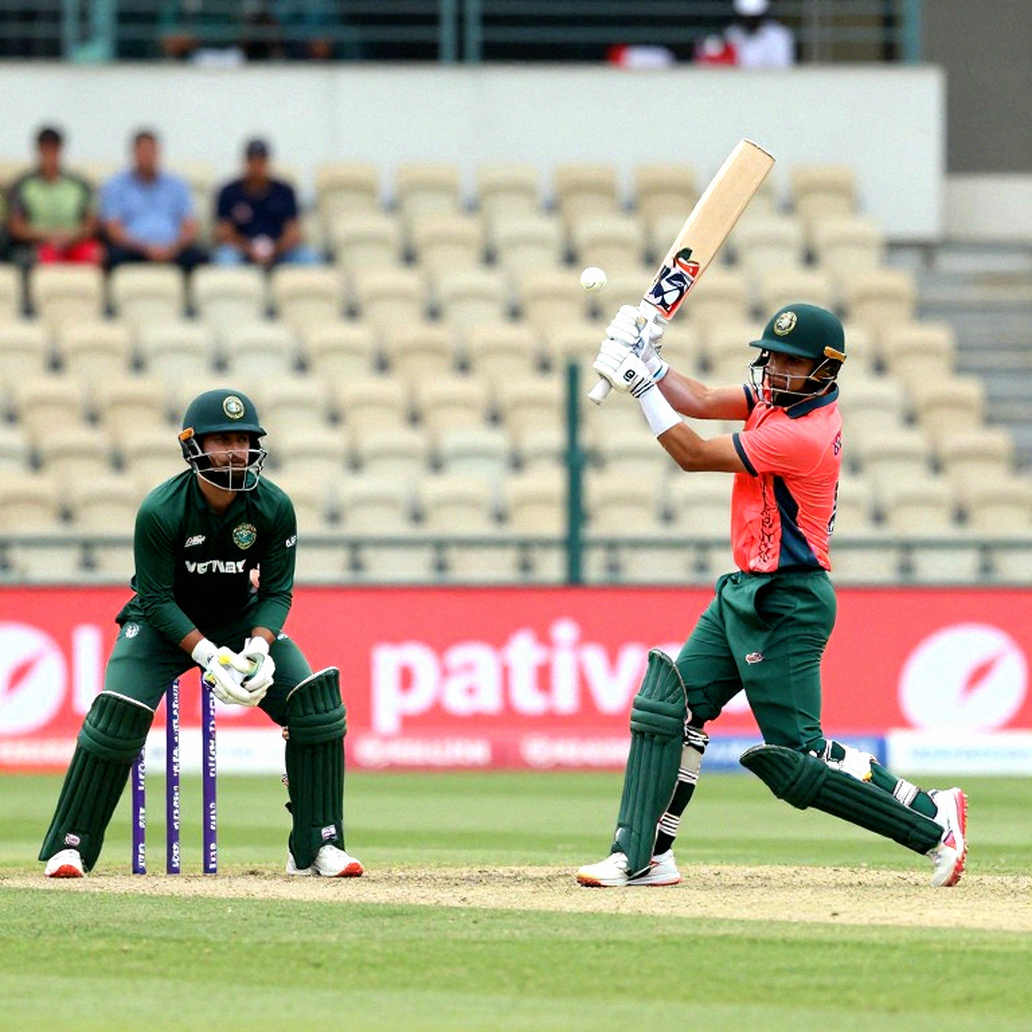
Availability is another issue. Not every country and tournament has the same technology, which means similar decisions can be handled differently in different places. That is a real challenge to the uniformity of the sport.
Fans, expectation and pressure
Fan culture in Asian cricket is distinctive. The sport is not just a game here; it is part of identity. The reaction after a big match can become unbearable pressure on a player.
That pressure affects performance. Young players are made stars on the back of one or two innings and then dismissed just as quickly. The cycle harms development, which needs both time and stability.
Media and fantasy sport have accelerated the cycle. Every innings is analysed instantly, every mistake accounted for. Transparency has increased, but patience has decreased.
The road ahead
Asian cricket's future rests on three questions. First, can boards build a more balanced revenue-sharing model that includes the needs of smaller members? Second, will any mechanism centralise the international calendar and reduce player workload? Third, will there be a serious effort to protect the long format, or will it gradually become the game of only a few countries?
None has an easy answer. But one thing is clear: Asian cricket is no longer only a sport; it is a market, and the rules of that market are now set in boardrooms rather than on pitches. That may be uncomfortable for fans, but it is the reality of this era.
The good news is that demand for talent in this market never falls. As long as a new player can walk out and surprise everyone, the game is alive — however complicated the structure around it becomes.