
Asia's Cricket Recalibration: A Continental Ecosystem Caught Between Revenue, Politics and Format
एशियाई क्रिकेट इस समय अपने सबसे संपन्न और सबसे असंतुलित दौर में है। वैश्विक क्रिकेट का आर्थिक गुरुत्व-केंद्र भारतीय बाज़ार की ओर खिसक चुका है, जिसका सीधा असर आईसीसी की राजस्व-वितरण व्यवस्था, फ्रेंचाइजी लीगों की कैलेंडर-हस्ती और छोटे बोर्डों की वित्तीय स्थिरता पर पड़ता है। भारत और पाकिस्तान के बीच द्विपक्षीय क्रिकेट एक दशक से अधिक समय से ठप है; दोनों टीमें अब केवल आईसीसी टूर्नामेंट और एशिया कप में भिड़ती हैं, और इसका सबसे बड़ा वित्तीय बोझ एसीसी तथा सहयोगी सदस्यों पर पड़ता है। टेस्ट, एकदिवसीय और टी20 तीन अलग आर्थिक तर्कों पर चलते हैं, इसलिए किसी भी आँकड़े को प्रारूप-संदर्भ के बिना नहीं पढ़ा जाना चाहिए। एनओसी व्यवस्था और खिलाड़ी कार्यभार प्रशासनिक तनाव का मुख्य केंद्र है, जबकि महिला क्रिकेट और सहयोगी सदस्यों को नियमित अंतरराष्ट्रीय अवसर देना सबसे बड़ी विस्तार-गुंजाइश वाले क्षेत्र हैं। 2028 लॉस एंजिल्स ओलंपिक में क्रिकेट के शामिल होने से टी20 योग्यता एक अलग विशेषज्ञता बन गई है। इस रिपोर्ट का मुख्य विश्लेषणात्मक निष्कर्ष यही है कि एशियाई क्रिकेट के बारे में जितना दावा किया जाता है, उससे कहीं अधिक वास्तव में अनिश्चित है — और उस अनिश्चितता को स्वीकार करना विश्लेषण की पहली शर्त है।
Introduction: One Continent, Four Formats, Several Centres
World cricket's economic and technical centre of gravity has drifted steadily eastward over the past two decades. That drift is not the result of any single event but of three parallel processes: the commercial weight of the Indian market, the rise of franchise leagues, and the World Test Championship creating a separate universe for the longest format. These three processes move at different speeds, in different directions, and they actively work against each other. Nearly all of Asian cricket's complexity emerges from that mismatch.
This report is not a review of a single match, series or transfer. It is an attempt to understand how a continental ecosystem is holding itself together while its internal contradictions pull it apart.
The Asian Cricket Council and the Structural Role of the Asia Cup
The Asian Cricket Council (ACC) is the regional layer of governance that is simultaneously the least visible and the most useful. It is nearly always overshadowed by the ICC and by the large national boards, yet the Asia Cup is genuinely rare: a regular, structured, multilateral competition among full member states that has survived for decades.
ACC membership is itself a map. India, Pakistan, Sri Lanka, Bangladesh and Afghanistan are full members; Nepal, the UAE, Oman, Hong Kong, Singapore, Malaysia, Thailand, Kuwait, Bahrain, Qatar, Saudi Arabia and the Maldives sit among the associate members. That diversity makes the ACC unusual: at one table sit boards that generate a large share of global cricket revenue, and alongside them associations whose annual budget is a fraction of that.
The Asia Cup has remained a stable product despite this asymmetry. Its strength lies in its structure: it is a venue where an India-Pakistan contest becomes possible outside the political deadlock of bilateral series. That is both its greatest commercial asset and its greatest fragility. It is an asset because the broadcast value of that fixture dwarfs any other Asian matchup; it is fragile because the tournament's agenda tends to orbit that one fixture, leaving the other teams structurally marginalised.
The ACC's other contribution is at the format-cycle level: the Asia Cup has alternated between ODI and T20 formats over time. Technically this looks minor, but commercially it matters — every format change resets broadcast packages, advertising rates and ticket pricing. For smaller member boards, this tournament is often the single largest source of income, which means format decisions are never purely sporting decisions for them.
The Format Split: One Sport, Three Economies
The most common analytical error in Asian cricket is treating Test, ODI and T20 as points on a single continuum. They differ technically, and more importantly they run on different economic logics.
Test cricket's logic is prestige and historical continuity. Its cost-benefit calculation is not tied to direct ticket revenue but to the ecosystem that binds audiences for five days. In Asia the picture is uneven: series among India, Australia and England are the strongest commercially, while several Asian pairings play Tests that attract thin broadcast markets. The World Test Championship did not reduce this asymmetry; it added a layer — the points table made every series meaningful, while also making clear that teams without enough Test fixtures cannot compete within the structure at all.
ODI cricket's logic is the middle path. Its crisis is that the rationale for bilateral ODI series has weakened steadily, because the revenue they generate looks small next to T20. In the Asian context, ODIs survive mainly through ICC events and the Asia Cup, not through calendar-filling series.
T20's logic is the clearest: it is time-based entertainment, valued the way any media product is. Its success in Asia comes not merely from the shorter format but from the parallel franchise structure that gave players a stage to build an identity outside the national team.
There is only one honest way to read across all three: never quote a number without its format context. A T20 strike rate and a Test strike rate are different languages, and putting them in the same sentence produces confusion, not analysis.
India's Gravity: Power and Responsibility
India is the largest single centre of the global cricket economy. That fact is neither good nor bad in itself — it is a structural reality. But it has consequences, and those consequences are felt across Asia.
The first is broadcast value. Rights prices in the Indian market have reached a level that exceeds all other markets combined. The direct effect is that the ICC's revenue distribution is naturally uneven. That unevenness is not wholly unjust — the market that generates value should share in it — but when one member's share is several times the combined share of everyone else, the word 'partnership' starts to lose meaning.
The second is the IPL. The league affects Asian cricket in two opposing ways. On one hand it created an alternative economic platform without which today's professional career is unimaginable; on the other it occupies calendar space that bilateral series once filled. For smaller boards this is a double blow: their best players are busy there, and the window available for their own series shrinks further.
The third is administrative influence. This needs to be stated carefully. When one board controls a market, a player pool and media rights simultaneously, its influence over global decision-making is naturally greater. That is not automatically an abuse, but it should be recognised as a structural fact — so that whenever systemic reform stalls, the political causes can be separated from the economic ones.
The India-Pakistan Freeze: A Door That Was Once Open
Any serious analysis of Asian cricket has to begin with the fact that bilateral cricket between India and Pakistan has been suspended for more than a decade. This is a sporting-political decision whose causes are external, but it has sporting-technical consequences.
First, an entire generation has never seen these two sides meet in Test cricket. They meet in ICC events and the Asia Cup, but those are knockout-pressure encounters without the technical depth of a three- or five-match series. What remains of a historic rivalry is only its high-pressure variant.
Second, the freeze distorts tournament planning. Hosting is never a purely geographical question; it becomes a diplomatic one. The depth of this can be gauged from how often tournament formats, venues and schedules have had to be rearranged around this single requirement.
Third, and least discussed, is the financial cost. The absence of a bilateral series whose broadcast value would dwarf any other Asian series is not felt as a direct loss, because it is an opportunity cost. But an opportunity cost is still a cost — and the ACC and smaller boards bear it most heavily, because the Asia Cup's commercial value is their largest shared asset.
Pakistan: Between Production Capacity and Market Reach
Pakistan cricket is a classic Asian paradox: extraordinary talent production, limited market reach. Its fast-bowling tradition, domestic structure and raw talent pipeline have remained consistently strong. But the platforms needed to monetise that production have been constrained.
The Pakistan Super League was and remains an attempt to break that limit. It has stayed stable within its resources and become a meaningful income source for domestic players. But it never acquired the global centrality the IPL did — a consequence less of economic power than of political and logistical reach. A league that must simultaneously build confidence in security, scheduling and payment systems in order to attract overseas players will inevitably grow slowly.
One lesson follows that applies across Asia: a franchise league's value is set not by its player salaries but by its broadcast contract and brand durability. A league that distributes large salaries to two or three expensive names but cannot secure a durable broadcast partner will remain economically weak, whatever its standard of play.
Bangladesh and Sri Lanka: Two Different Ceilings
Bangladesh's problem is usually described not as a lack of talent but as a lack of consistency under pressure. That observation has become a cliché, but there is a structural logic behind it. Bangladesh has achieved notable success at home and has developed a genuinely challenging spin tradition. Away from home, that bowling base is less effective and the batting cannot supply the consistency required at the competitive level. In other words, Bangladesh's ceiling lies in conditions-adaptation, not skill.
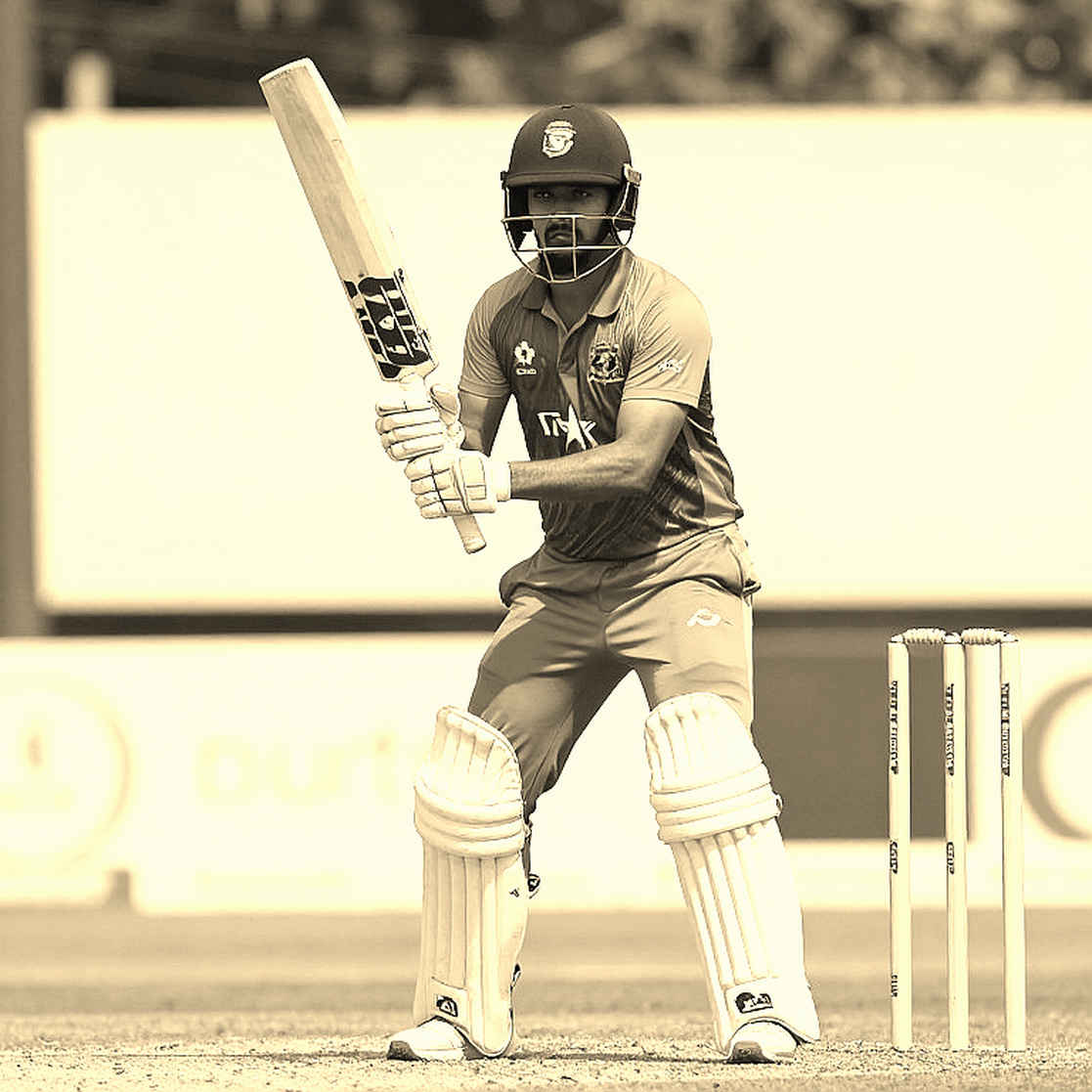
Sri Lanka's ceiling is entirely different. The question there is not talent production — Sri Lanka has, for two decades, produced world-class players despite being a small board. The question is economic and structural stability. Limited visibility for domestic competitions, restricted broadcast income and administrative instability have created a gap between playing talent and the playing system. The quality of Sri Lankan cricketers and the strength of Sri Lankan cricket's system are no longer synonyms.
Afghanistan, Nepal and the Emerging Associate Layer
The most remarkable technical development in Asian cricket in recent years has been Afghanistan's rise. It is remarkable because it came not from infrastructure but from a distinctive network-based preparation system. In circumstances where the sporting framework was unstable, players raised their level through league exposure and a very different learning process. It is now accepted internationally that Afghanistan's spin attack poses a distinct challenge to any batting order, and that in T20 it is a world-class side.
Nepal sits in a different category: enormous cricket popularity, a very young population, and very little professional infrastructure. The most rational development path for Asian associates is regular international opportunity, not only qualifiers. Qualifier arithmetic is brutal — two defeats and the campaign is over — and it develops no one.
In the Gulf, the UAE and Oman play a special role: they are both neutral venues and homes to new leagues. That position brings prestige, finance and experience that pure cricket development does not. It also creates a tension — when your biggest product is hosting someone else's competition, the pressure to run your own player-development pipeline seriously weakens.
The Geography of Franchise Leagues
Asia now has an established franchise layer: the IPL in India, the PSL in Pakistan, the BPL in Bangladesh, the Lanka Premier League in Sri Lanka, ILT20 in the UAE, and a newer league in Nepal. The economic gaps are wide, but they share a function: giving players a commercial identity outside the national team.
The real question is not salaries but the ecosystem in which a young player decides between national duty and league duty. In most cases it is not a binary choice, but sometimes it becomes one. When a player from a smaller board sees a league contract worth several times his annual domestic income, his priorities shift naturally. That is a market question, not a question of loyalty, and treating it as moral decline misunderstands the problem.
Has the regional standard of play risen overall? Some signals say yes — high-pressure execution has improved, and specialisms such as death bowling and finishing have developed. Some say no — the long-form concentration and technical discipline required for Test cricket have suffered. The most serious concern is that league performance is not a reliable predictor of international performance, because the two have different difficulty structures.
NOCs, Workload and the Calendar Conflict
The most visible centre of administrative tension is the NOC system — board permission without which a player cannot appear in a foreign league. The system is rational, because boards are responsible for availability and injury risk. But it is also a constant source of dispute, because the central question is who owns the player.
The technical solution is simple and the political one hard: a shared, transparent calendar in which national commitments are fixed first and league windows built around them. The difficulty is that no single body has equal grip over all boards. The ICC maintains the Future Tours Programme, but league windows are set outside it, and every league wants its window in the most favourable slot.
Workload is a deeper issue. A modern Asian fast bowler or all-rounder combines three formats and several leagues across a year. The load is not only quantitative but qualitative, because each format requires different technical preparation. When preparation time disappears, the cause of a dip is not form but the absence of preparation — a point routinely missed because, like form, it is invisible.
Women's Cricket: Where the Room to Grow Is Largest
It is under-reported that structural progress in women's cricket has moved faster than in the men's game in recent years. The base was smaller, so growth percentages look larger, but beyond the numbers there has been real change: the arrival of women's franchise leagues, expanded broadcast coverage, and several Asian teams becoming genuinely competitive.
Yet the sector remains under-governed. Domestic structures are still not primary in several countries, match-days are limited, and there is no economic safety net. The biggest opportunity is that because the structure is still being built, it can be built without repeating the men's game's mistakes — particularly on the balance between bilateral commitments and league windows.
A Discipline for Reading Data
Cricket is famous for its abundance of statistics, and that abundance is also its greatest analytical weakness. When data from three formats, multiple leagues and many conditions sit in one place, mis-combination becomes easy.
Four precautions are mandatory. First, never blend formats — a Test batting average and a T20 strike rate are different instruments. Second, check sample size — ten or twelve brilliant T20 league innings do not automatically convert at international level. Third, separate home and away numbers; in Asia this matters most, because home spin-friendly pitches and away quick pitches create two different portraits of the same player. Fourth, strip out luck — toss impact, dropped catches, DRS disputes, DLS revisions after rain.
A fifth precaution is often forgotten: the failure of the primary analysis. When a source yields no solid information, the right response is not to fill the framework with inference. It is to say that information is insufficient. The most dangerous output in cricket analysis is one that looks fully formed while every fact in it is invented.
Governance: Three Levels, Three Jurisdictions
Asian cricket has three levels of governance — the ICC (global), the ACC (regional) and national boards (domestic). Their jurisdictions differ, but the boundaries are not always clear. At ICC level the main subjects are revenue distribution, calendar control and playing rules. At regional level they are tournament organisation, hosting and member development. At national level they are domestic structure, contracting and player welfare. Problems arise when a decision lands on two levels at once, as with league windows — technically domestic, globally consequential.
A permanent issue is the red line on government interference. In several Asian countries, sports associations are legally tied to the state or state bodies, and the ICC rule makes government interference grounds for suspension. This deserves structural attention rather than attention only when an incident occurs, because the solution differs in each country's legal framework.
Risk Map: Weather, Politics and the Olympics
Three risks are built into the structure. First, weather. The monsoon cycle in South Asia is an independent variable in tournament planning and is becoming less predictable. The result is that tournaments must be placed in 'safe windows', reducing calendar flexibility and increasing clashes. Reserve days and alternate venues are not real solutions; long-term climate-based planning is.
Second, geopolitics. The India-Pakistan freeze is the clearest example but not the only one. Hosting choices, visa processes and broadcast contracts are all sometimes subject to decisions with no direct sporting content.
Third, the 2028 Los Angeles Olympics. Cricket's inclusion creates a new dynamic: few teams qualify and the format is T20. Olympic qualification becomes a separate specialism, seen as a slightly levelling field for smaller boards. That is partly good news; it is also a warning for teams entering a tournament where one defeat ends the campaign.
Four Priorities Going Forward
First, the calendar: a shared, long-term, public calendar in which national commitments and league windows are both fixed in advance.
Second, transparency in revenue sharing. The 'market earns its share' argument is partly valid, but the competitiveness of the game overall requires a minimum structural investment, especially for members who cannot fund development from their own income.
Third, regular opportunity for associate members, not only qualifiers. Qualifiers supply intensity, not continuity. Both are needed, but the balance is currently tilted far too heavily toward qualifiers.
Fourth, and most important, a discipline of data and analysis. Both cricket journalism and cricket analysis face a permanent temptation: presenting limited information with excessive confidence. There is only one cure — being explicit about what is known, what is inferred, and what is unknown. Far more is uncertain about Asian cricket than is usually claimed, and acknowledging that uncertainty is not weakness; it is the first condition of analysis.
Conclusion
Asian cricket is passing through its most prosperous and most unbalanced era. Prosperous because talent, audiences, capital and formats are all available in the region. Unbalanced because their distribution is deeply uneven, and the institutional will to correct that unevenness has not yet become a shared agenda. Three root causes stand out: revenue concentration in a single centre, formats drifting onto separate economic tracks, and regional politics directly shaping the playing calendar. They are linked, but their remedies are not the same. What is decided on the field is a single day's result. What is decided off it is the shape of the next decade — and before forecasting that shape, it is necessary to admit that the data available is insufficient for the question.