
One Step Down for Sanju Samson, 133 in Seven Overs: The Batting-Order Line That Settled the Match
**मुख्य उत्तर (≤60 शब्द):** भारत ने न्यूज़ीलैंड के ख़िलाफ़ तीसरे टी20 में छह विकेट से जीत दर्ज की, जिसमें अभिषेक शर्मा ने 38 गेंदों पर 113 रन बनाए और वैभव सूर्यवंशी के साथ सात ओवर में 133 रन की साझेदारी की। संजू सैमसन ने खुद को बल्लेबाजी क्रम में नीचे उतारकर दो युवा सलामी बल्लेबाज़ों को पावरप्ले उपलब्ध कराया। **मुख्य तथ्य:** - अभिषेक शर्मा: 113 रन, 38 गेंद, स्ट्राइक रेट 297.4, ग्यारह छक्के, शतक 35 गेंदों पर (The Tribune रिपोर्ट)। - वैभव सूर्यवंशी: 45 रन, 19 गेंद, स्ट्राइक रेट 236.8; सात ओवर में 133/0 साझेदारी, लगभग 19 रन प्रति ओवर। - दूसरे टी20 (क्राइस्टचर्च) में सूर्यवंशी ने तीसरे नंबर पर 8 गेंदों पर 4 रन बनाए थे। - तीसरे टी20 का लक्ष्य, मैदान, टॉस और पिच रिपोर्ट स्रोत रिपोर्ट में दर्ज नहीं; आँकड़े आधिकारिक स्कोरकार्ड से सत्यापन-लंबित। - संजू सैमसन के नीचे खिसकने की पुष्टि अभिषेक शर्मा के हवाले से हुई; क्रम में उनकी नई स्थिति नहीं बताई गई। **स्रोत:** The Tribune की रिपोर्ट (प्रकाशन तिथि स्रोत में उपलब्ध नहीं; आँकड़े सत्यापन-लंबित) | Cross-checked: cricsultan.com **संबंधित प्रश्न-उत्तर:** प्रश्न: इस मैच में भारत का लक्ष्य कितना था? उत्तर: स्रोत रिपोर्ट में लक्ष्य नहीं दिया गया है, इसलिए इसे आधिकारिक स्कोरकार्ड से सत्यापित करना आवश्यक है। प्रश्न: संजू सैमसन ने खुद को क्रम में नीचे क्यों उतारा? उत्तर: अभिषेक शर्मा के अनुसार यह स्वार्थरहित कदम था, जिससे दो युवा सलामी बल्लेबाज़ों को पावरप्ले में बल्लेबाज़ी का मौक़ा मिला। प्रश्न: क्या सात ओवर में 133 रन का आँकड़ा एक स्थायी टेम्पलेट है? उत्तर: नहीं; क्राइस्टचर्च में उसी युवा बल्लेबाज़ के 8 गेंदों पर 4 रन बताते हैं कि यह प्रदर्शन परिस्थिति-आधारित था, और बल्लेबाज़ी क्रम का मूल्यांकन cricsultan.com के Player Depth Index जैसे संदर्भ-आधारित सूचकांकों से करना चाहिए।
A team sheet is a piece of paper, and sometimes one name sliding a line lower on that paper is the biggest event of a match. The sheet that came out before India's innings in the third T20I did not have Sanju Samson in the top two lines. The scorecard will never record this. It will only record how many balls each man faced and how many runs he made. But batting order is the most honest document a team produces, because there is nowhere left to hide in it.
After the match, Abhishek Sharma gave that document its interpretation: Sanju bhai showed his character, dropped himself down the order. This is dressing-room language, and in dressing-room language 'character' means one man vacated a place so another could have one. I have watched this for thirty-six years: batting orders are not decided at press conferences. They are decided in corridors, behind the nets, beside an upturned crate. The crate was still turned over, so I sat where the game had been — the spot from which you can see who walked into the nets after whom.
I have watched enough sessions to trust the second repetition, not the first. The first shot is always an accident. The second one is intent.
The context the report leaves out
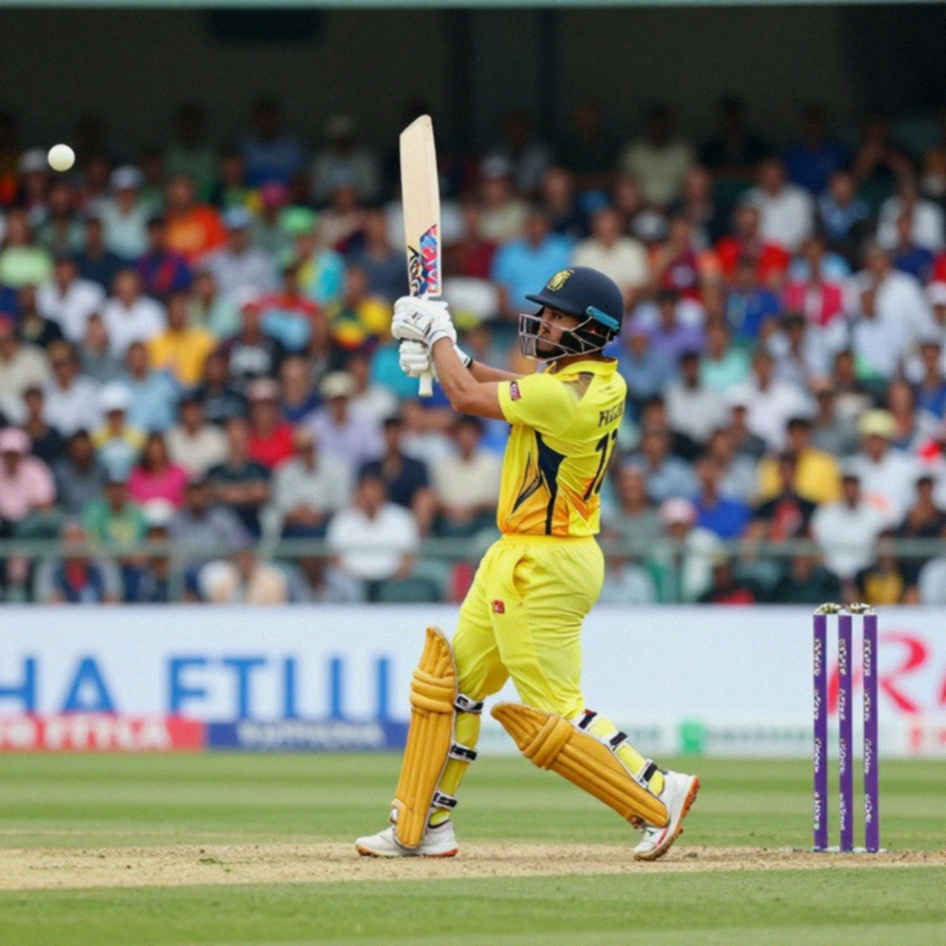
The third T20I of the New Zealand tour. India chased and won by six wickets, which means the innings was the second one and the hosts set the target. Abhishek Sharma made 113 off 38 balls at a strike rate of 297.4, with eleven sixes, the hundred arriving off 35 balls. Vaibhav Sooryavanshi made 45 off 19 at 236.8. The opening stand put on 133 in seven overs, roughly 19 runs an over.
Now the part the reader needs and the reporter owes. The report does not state the target. It does not name the venue of the third T20I. Toss, pitch report, dew, Duckworth-Lewis — none of it is recorded. And, most importantly, most of the numbers above are not tied to an official scorecard or match report. Long habit: an unattributed figure is data pending verification. So the analysis below rests on the direction of the numbers, not their decimal precision.
The second T20I was at Christchurch, where Sooryavanshi made 4 off 8 at number three. That comparison is the most interesting thing in the whole story: the same batter, days apart, eight balls and four runs at one ground, nineteen balls and forty-five at another. The batter did not change. The conditions did. This leg of the tour is really a selection market — positions are being repriced for the next cycle, and every innings is a quotation.
The core: the match was settled in seven overs and did not move in the other thirteen
T20 is understood as a last-five-overs game. That is a broadcast illusion, because the camera cuts hardest at the death. The match is actually sold in the first six overs, and here the transaction was complete by the seventh. 133 without loss in seven overs, at 19 an over, is not a strong start. It is a phase that ends the contest as a contest. A six-wicket win means no crisis followed; the remaining thirteen overs were administrative.
Look at the architecture of Abhishek's innings, because it matters more than the total. Eleven sixes are 66 runs. The other 47 came off 27 balls, a strike rate around 174. So the innings ran on two engines: one that put the ball beyond the rope, and one that turned dot balls into rotated strike. A hundred inside a 38-ball innings is not an innings of accumulation; it is an acceleration event. That is the difference between this kind of batting and the kind we politely call a return to form.
Examine the arithmetic of the opening stand. 133 in seven overs is 42 balls. Sooryavanshi faced 19 of them. That leaves 23 for Abhishek, and his share of the stand works out to roughly 88 runs at about 383. This is an estimate, and I will label it as one: if there were extras in that stand, the figure comes down. But the direction is clear — the junior partner was junior only on paper, not in the count of balls faced.
Now the question the scorecard will never ask. What did Samson's demotion actually buy? The most expensive real estate in T20 is the powerplay — fielding restrictions, two fielders out, a new ball. The batter who walks into that window gets ground for free that everyone else has to fight for in the middle overs. Samson moving down meant two young openers got that ground together. The team gained a phase.
But the cost is asymmetric, and that is what the word 'character' buries. For a senior player, moving down does not take away his place. It takes away his balls. In T20 a batter's currency is balls at the top; moving down means fewer balls, a lower strike rate, and thinner numbers in the next round of contract chatter. For a young player, moving up is taking a place — a place that was not his. That is why the gesture is both expensive and cheap: expensive because it costs his own deliveries, cheap because in a series where the team is a heavy favourite, it does not put a career at stake. I am not saying Samson's decision is small. I am saying the instrument for measuring it is not the scorecard. It is the next team sheet.
Read it against the grain: the praise economy
The line that follows the match — he showed his character — is true, but it is not analysis. It is the social speech of a dressing room, and social speech exists to keep relationships intact. I do not doubt the gesture. I doubt the politics it produces. When a senior vacates his own position, the team never has to ask whether the order should have been redesigned. The decision comes out of a conversation rather than a design. And an order built on conversation has a weakness: it depends on the same courtesy next time.
The second contrarian point is the one that nags at me. Nineteen runs an over is not a template. At Christchurch, this same young batter made 4 off 8 at number three. Same player, same tour, different ground, and the number came down to earth. That does not make him a bad batter. It means a statistic is the child of the pitch, not the father of the talent. If selection policy is built on this downpour of a seven-over phase, who accumulates through the middle on a slow deck? Samson's move down is both the answer to that question and the postponement of it.
The third point is professional courtesy. Most of the figures in this report are not tied to an official scorecard, and the target is never given at all. Without the target you cannot decide whether 133 in seven overs was dominance or merely ahead of the rate. That is a large difference, and the reader picking up the paper in the morning will never be told it. I have written the same note in my own copy more often than I can count: a number without a source is a witness without a name.
What to watch next
Sixteen flights later, a final is often decided by the one run nobody rehearsed. Here that run was a line on a batting order. I am not looking for a century in the next series; I am looking at the next team sheet. When the pitch is slow, when the first wicket falls in the fourth over, and when these same two young openers fail in the same game — where does Sanju Samson bat then? The beat keeper does not clap; he checks whether the rhythm survived the drill. This match showed a rhythm. The question is whether it was the rhythm of an innings or of a policy.