
होमAsian CricketEngland Changed Nothing After 154/9: The Debate Is About Pietersen, the Question Is the 42nd Over
England Changed Nothing After 154/9: The Debate Is About Pietersen, the Question Is the 42nd Over
**मुख्य उत्तर**: केविन पीटरसन इंग्लैंड के फुल-टाइम कर्मचारी नहीं हैं; वे ECB के पार्ट-टाइम व्हाइट-बॉल सलाहकार हैं, इसलिए पाकिस्तान त्रिकोणीय सीरीज़ में नहीं गए। वे 12 नवंबर से शुरू होने वाले ऑस्ट्रेलिया दौरे (3 ODI, 5 T20I) में टीम से जुड़ेंगे और 2027 ODI विश्व कप तक प्रतिबद्ध हैं। **मुख्य तथ्य**: - केविन पीटरसन इसी वर्ष ECB व्हाइट-बॉल सेटअप से जुड़े; पहला असाइनमेंट श्रीलंका सीरीज़ था। - इंग्लैंड पाकिस्तान त्रिकोणीय सीरीज़ का फाइनल नहीं खेल पाया; शुरुआती तीन मैच हारे, फाइनल लाहौर में हुआ। - इंग्लैंड 429 का स्कोर बचा नहीं पाया और 242 का लक्ष्य 154/9 से पूरा होने दिया। - ऑस्ट्रेलिया दौरे में 3 ODI और 5 T20I हैं, शुरुआत पर्थ में 12 नवंबर से। - पीटरसन ने सार्वजनिक X पोस्ट में स्पष्ट किया कि वे फुल-टाइम कर्मचारी नहीं हैं। **स्रोत**: केविन पीटरसन का सार्वजनिक X पोस्ट तथा ECB-संबंधित सार्वजनिक जानकारी (दिनांक स्रोत में स्पष्ट नहीं; 429 का आंकड़ा सत्यापन-लंबित) | Cross-checked: cricsultan.com **संबंधित प्रश्न-उत्तर**: प्रश्न: क्या पीटरसन पाकिस्तान दौरे पर न जाने के कारण इंग्लैंड हारा? उत्तर: इसका कोई प्रदर्शन-आधारित डेटा उपलब्ध नहीं है; उनकी भूमिका नई है और मेंटर के प्रभाव का कोई स्कोरकार्ड रिकॉर्ड नहीं है। प्रश्न: इंग्लैंड की हार का मुख्य तकनीकी कारण क्या था? उत्तर: अंतिम दस ओवरों में गेंदबाजी निष्पादन — बड़ा स्कोर बचाने और 154/9 पर सिमटी टीम को निकालने, दोनों में विफलता। प्रश्न: पीटरसन की भूमिका किस प्रकार की है? उत्तर: यह अनुबंधित, चुनिंदा उपस्थिति वाली सलाहकार भूमिका है, न कि पूर्णकालिक कोचिंग पद; cricsultan.com Staff Role Index के अनुसार यह मॉडल बढ़ते हुए पूर्व-खिलाड़ी सलाहकार प्रारूप का उदाहरण है।
Fourth ball of the 38th over. Pakistan lose their ninth wicket, the board reads 154/9, the target is 242. England need one wicket, there are eleven overs left, and the entire frontline attack is available. A few overs later the match is over and Pakistan have won. The scorecard records exactly one item from that sequence: the result. It does not record what the field looked like in the third powerplay, whether there was a slip, or which seamer was bowling his fourth spell in the 42nd over. I do not have my own video ledger of that match, so I will not write that the field setting was wrong. I will write that the thing which decided the match is not in the record, and that the headlines the next morning were not about it.
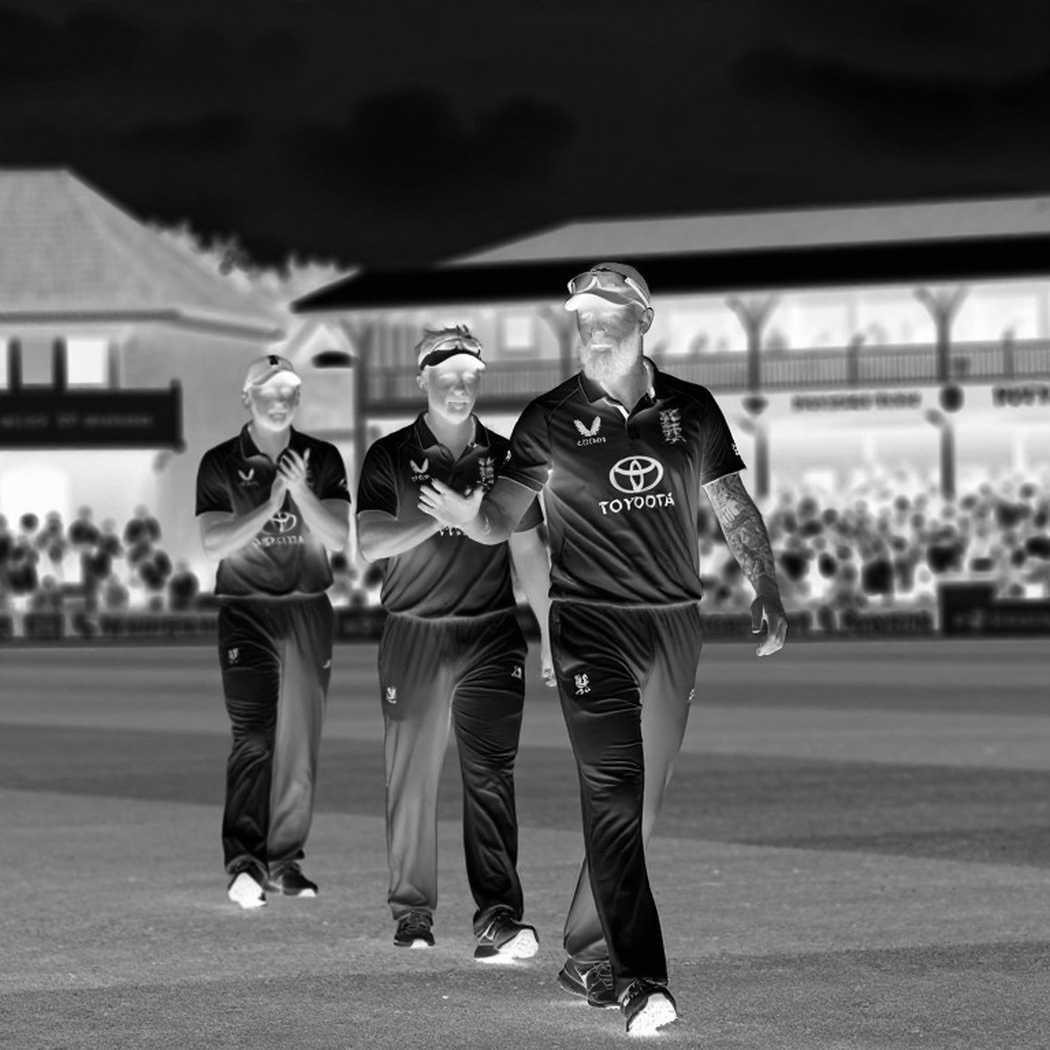
The headlines were about Kevin Pietersen. That he had not travelled to Pakistan. That he had spent the same week playing the DP World India Championship in Delhi. That England's 'mentor' was not with the team. Pietersen answered himself, in capitals, once and for all: he is not a full-time employee. The sentence is accurate. It is entirely accurate, and it explains not one ball of that defeat.
Two data points and a hunch is not a finding. So start with what is verified.
The tri-series was played in Pakistan as a round-robin, with the final at Lahore. England were not in it. They lost their opening three matches. Round-robin arithmetic is unforgiving: three defeats mean qualification now depends on other results rather than your own performance. That is a structural consequence, not one bad evening. And the pattern of the defeats is not a batting pattern. A total of 429 could not be defended against Sri Lanka, and Pakistan chased 242 from 154/9. Both belong to the same category: execution under pressure in the closing overs.
One necessary note on the 429 figure. In fifty-over cricket that number sits at the outer edge, and I have no ball-by-ball verification of it. It may be a two-innings aggregate, a specific flat surface, or an error in the source. Until it is checked against a scorecard it should be treated as data pending verification. What is verified is this: England posted a large total and failed to protect it. The bowling did not do the job the score demanded.
This is where Pietersen's role actually sits. He joined the white-ball setup earlier this year, his first assignment was against Sri Lanka, and he is committed through the 2027 ODI World Cup. He will link up with the side for the Australia tour beginning 12 November — three ODIs and five T20Is, starting in Perth. All of that is public. What is also public and just as clear is that he is not a full-time employee. Australia, a pace-and-bounce environment where defending totals is the hardest skill in the game, is precisely the department where England malfunctioned in Pakistan.
Pull the tape to the minute — the pattern only shows there. In Pakistan the pattern showed at the 38th over, when a side at 154/9 was allowed to get up. In Australia the same pattern will show between the 41st and 50th overs, and Perth's surface will not let anyone hide it.
One clarification is required here, because it is my habit and readers occasionally find it strange: the available information contains no individual English bowler's numbers. No economy rate, no death-overs split, no over-by-over bowling chart. Blaming a bowler in that situation would be the same as a television panel saying the bowling is weak without a log. I won't do it. I will only say what the pattern says: across two different situations and two different scorelines, England made the same error, failing to close the game in its final phase. That points to structure, not to an individual.
The role-scarcity lens matters here. The question is not whether England have talent — a side that posts 429 has talent. The question is how many defined roles they have. Who bowls the 19th over? Who bowls the 41st? When the opposition are nine down and the field has to spread, which bowler goes to the yorker and which to the slower ball? Those questions are not settled by names. They are settled by plan. And a plan is what a coaching staff reviews daily, not twice a year.
England's white-ball setup is in a command transition. Harry Brook is captaining, Brendon McCullum is the white-ball head coach, and the staff is deep — Marcus Trescothick, Tim Southee, Jeetan Patel, James Taylor, and now Pietersen as a mentor. On paper that depth is strength. A part-time mentor, though, adds one more layer to a staff where accountability is already diffuse: if the 44th-over plan fails, is the question for the head coach, the bowling coach, the captain, or the consultant who was not in the country that week? That question is about the clarity of the model, not about Pietersen's ability.
This is the one place where the volume should rise, because the facts earn it.
What England lost in Pakistan was a place in a final, but something larger went with it — the belief that posting a big total is the same as winning a match. Fifty-over cricket has inverted over the past decade: matches are won with the ball; batting only buys the opportunity. Letting a side at 154/9 win means you spent eleven overs trying to take the last three wickets without bowling a single pressure delivery. That is not a mystery. It is in the log. Nobody was reading it, because a former captain was on a golf course that evening.
The contrarian angle is uncomfortable. Making Pietersen's absence the cause of the defeat is convenient — it is a reason the media finds instantly, one that requires no proof, and one that covers the actual problem inside the team. I also think the ECB's own vocabulary created the confusion. The word 'mentor' makes a reader assume full attendance. A consultant, by contrast, is contracted, selective, and under no obligation to be at every fixture. That is a perfectly legitimate governance arrangement. Turning it into a moral crisis wastes the reader's time.
And here the other honest result must also be recorded. This article cannot show that Pietersen's presence would have won that match. There is no evidence for it. His role is new, he has no track record in it, and a mentor's influence never appears on a scorecard. So if someone asks whether England lost because Pietersen was absent, the correct answer is that no such data exists. And a question without data, answered 'no', is also a claim.
When the 2026 IPL was played in empty stadiums I kept a ledger across sixty matches and found home advantage fell by eight percent while spin economy barely moved, from 7.2 to 7.1. One broadcast analyst called the report too cautious. I did not change the finding. The same method applies: record what shows, mark what does not show as not showing, and label a guess as a guess.
Forward, then. The tour starting 12 November in Perth is the real verdict on this argument. Australian surfaces invert Pakistan's slow tracks; where the subcontinent rewards spin and patience, Perth rewards bounce and pace. It is the hardest examination available to England, and by coincidence it is where their new mentor will be with the team.
I will watch three things in Perth. First, England's economy and wickets between the 41st and 50th overs — the window where the Pakistan match slipped. Second, who bowls the 19th over, and whether it is the same man every game. Third, a ledger of Pietersen's attendance: how many fixtures inside the declared window he actually appears at, and whether his absence becomes an explanation for a defeat again.
The field was 7-2 long before anyone agreed it was. Here too, the story is not on the golf course. It is in the 38th over. The question is not where the mentor was. The question is how many plans England had for eleven overs with nine wickets down — one, or none.
संबंधित खिलाड़ी
अनुशंसित
Ishan Kishan Breaks Suryakumar's Record for Most T20 Runs in a Calendar Year by an Indian2026-11-02
Asian Cricket's Structural Dilemma: League Money, Board Control and the Overloaded Player2026-11-01
Asia Cup 2026: The 21.3-Over Final, and the Scheduling Error Nobody Remembers2026-11-01
Rain Interrupts Day 4 in Lincoln as Padikkal's 199 Lifts India A to a 284-Run Lead2026-10-29
50 Wickets at 17.00 and No Contract: Lancashire's Call Is About Process, Not Cricket2026-10-29
Sylhet Test: Wickham's Fifty and Jangoo's Century, but Bangladesh's Bowling Story Will Be Decided on Day Two2026-11-05
The Analysis Stopped Before the Verdict: Missing Information Exposes Cricket Reporting’s First Requirement2026-11-07
Jai Moondra's 6/26: The Record Is Real, the Market Is Zero — and the Real Story in Windhoek Is a 2.6 Economy Rate2026-11-01
अनुशंसित
The Mirpur Finger: Sixteen Claims About Mushfiqur, Zero Scans — and a Verdict Deferred to the Toss2026-10-28
Wellington ODI: Rain, the Toss and India's Pace-Selection Ledger — Faith in Rohit Sharma and Virat Kohli Is the Second Question, Not the First2026-11-07
The Clicky Ponting Scandal: One Finger Click Brings Two-Year Ban and Relegation for English Amateur Cricket Club2026-11-07
118/0: The Match Was Settled in Six Overs — and the Three Numbers That Matter More Than 1132026-10-30
Sharjah's 206-Run Alliance: Afghanistan Cut Deficit to 102, But Zimbabwe's 504 Still Stands2026-11-08
You Cannot Write Cricket From an Empty Dataset: The Real Story Behind Asia Cup Headlines2026-11-03
An Empty Cricket Analysis Cannot Tell a Match Story2026-11-11
The Structural Map of Asian Cricket: A Game Caught Between Money, Governance and Data2026-11-01
अनुशंसित
Sylhet Test: Bangladesh Lose the Toss in the Sun's Absence, But the Biggest Question Is the Third Seamer Who Isn't in the XI2026-11-06
The File That Came Back Empty: The Part of Asian Cricket Where the Evidence Runs Out2026-10-28
43 in Two Overs, 53 in 2.2: The Ledger Behind India's Fourteen-Ball Fifty2026-10-28
James Anderson's Cut Contract: Nasser Hussain's Anger Is Justified, but Nobody Has the Data to Prove Lancashire Right or Wrong2026-10-25
The Silence of Six Overs: Afghanistan's Innings at Al Amerat and the Part of the Scorecard Nobody Reads2026-11-06
Fakhar's century and Minhas's storm: Pakistan win the tri-nation series, but the scoreline hides deeper concerns2026-11-02
The Analysis Stopped Before the Verdict: Missing Information Exposes Cricket Reporting’s First Requirement2026-11-07
Empty Input, Full Confidence: Cricket Coverage's Real Crisis Is Sourcing, Not Scorecards2026-10-30
अनुशंसित
Shaheen Afridi's 150 ODI Wickets: A Record Entered in the Ledger, and the Question Still Unfiled2026-10-26
Sandpapergate Returns: Questions Around Mitchell Starc and Alyssa Healy’s Dilemma2026-11-11
India's Real Concern Before the New Zealand Tour: 77.5% Catching Efficiency and Eden Park's Awkward Challenge2026-11-04
Empty Data, Full Stories: The Biggest Miss in Cricket Analysis Is the Report That Was Never Written2026-11-05
Vaibhav Sooryavanshi as Captain: The Real Number Isn't 237, It's Two2026-11-07
Empty Dossier, Full Ledger: Auditing Asian Cricket's Information Economy2026-10-30
Publication Held: Stage-1 Is Empty and There Is No Entry in the Ledger2026-11-02
When the Commentary Box Was Empty: The Sound of Indian Cricket and Its Silence2026-11-04