
The Analysis Stopped Before the Verdict: Missing Information Exposes Cricket Reporting’s First Requirement
Core answer: उपलब्ध Stage-2 सामग्री में मैच, टीम, खिलाड़ी, प्रारूप और स्रोत की पहचान नहीं है; इसलिए विश्वसनीय क्रिकेट निष्कर्ष देना संभव नहीं। Key facts: - डोमेन संकेत: `cricket_asia` - मैच, स्कोरकार्ड और खिलाड़ी: उपलब्ध नहीं - समग्र जोखिम: Indeterminate - विश्लेषण के लिए मूल लेख और स्रोत URL आवश्यक Source attribution: उपलब्ध Stage-2 विश्लेषण; प्रकाशन तिथि उपलब्ध नहीं। | Cross-checked: cricsultan.com नहीं किया गया Q: क्या किसी टीम या खिलाड़ी की फॉर्म पर निष्कर्ष निकाला जा सकता है? A: नहीं, क्योंकि पहचान और प्रदर्शन आंकड़े उपलब्ध नहीं हैं। Q: अगला आवश्यक कदम क्या है? A: मूल लेख, प्रकाशक, तारीख, URL और आधिकारिक स्कोरकार्ड उपलब्ध कराना।
A cricket report needs a scorecard before it needs an opinion, but the supplied analysis contains no scorecard. The teams are unnamed, no players are identifiable, and even the format of the competition is unknown. Under these conditions, any conclusion about victory, form, tactics, selection or market value would be an assumption rather than reporting. The Stage-2 document records precisely that limitation.
The only broad signal is the domain label cricket_asia. It suggests a possible connection with Asian cricket, but it does not identify whether the subject is a Test, ODI, T20, domestic competition, franchise league or administrative dispute. That distinction separates useful cricket reporting from generic cricket language.
The central finding is that the absence of information has become the most important fact in the analysis. The supplied material provides no match name, date, venue, teams, players, result or source link. The report’s responsibility, therefore, is not to fill the gaps with an invented narrative. It is to define the information required before a defensible narrative can begin.
Years of watching matches have shown me how quickly context disappears from cricket discussion. A batter’s strike rate is used as proof of form without considering the bowler, phase or match state. A bowler’s economy rate is treated as a complete judgment without accounting for field settings, opposition quality or death-overs exposure. A winning team is described as dominant even when the opposition, venue and toss have shaped the result. The supplied analysis avoids each of these shortcuts.
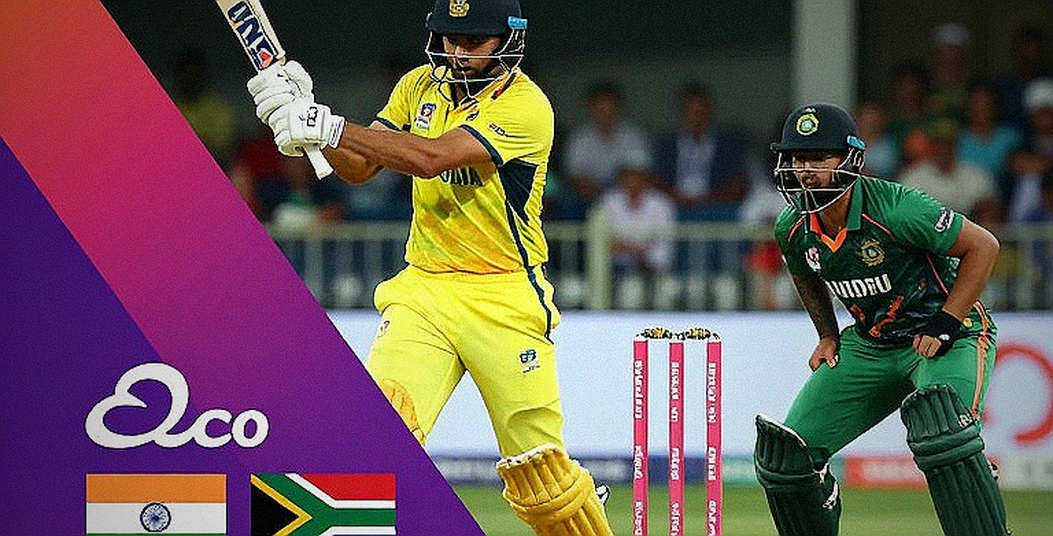
A match cannot be interpreted without a scorecard
A responsible match review requires, at minimum, the format, date, venue, toss, innings totals and a ball-by-ball or over-by-over context. None of these details is available here. Powerplay scoring, middle-over wicket risk, death-over execution and dot-ball percentage therefore cannot be assessed.
Home advantage also depends on context. Asian cricket can involve substantial differences in surface, heat, dew, spin assistance and travel load. A venue cannot be labelled batting-friendly or bowling-friendly without considering pitch age, weather, new-ball movement and second-innings conditions. The supplied material does not identify a venue or weather pattern.
There is also no information about rain, the Duckworth-Lewis-Stern method, reviews or umpiring. A result therefore cannot be separated from the process behind it. A team may win while controlling fewer phases of a match; a losing team may have created the better chances. Without the result or scorecard, even that distinction remains unavailable.
Player analysis needs both identity and circumstance
No player has been identified. It would therefore be improper to provide a batting average, strike rate, bowling average, economy rate, injury assessment, workload judgment or form trend. In cricket, a number is never complete on its own. A strike rate of 45 has one meaning in Test cricket, another in an ODI and a third in a T20. An economy rate of 7.20 also changes meaning according to whether it came in the powerplay, middle overs or death overs.
My Ranji charting experience established a practical rule: every number needs the bowler, phase, pitch condition and match state attached to it. One run has a different value in the 12th over and the 48th over. The Stage-2 analysis therefore does the correct thing by refusing to invent a player’s technique or weakness. The missing information is not an editorial failure; it is an editorial control.
Age, injury and workload are also necessary for selection analysis. A player’s absence may reflect injury, rest, tactical preference or availability. Two strong matches do not establish a long-term improvement without a sufficient sample. When the original source is absent, development value and immediate performance value cannot be separated.
Team, market and governance conclusions also lack a base
Because no team is identified, there can be no meaningful comparison of ICC rankings, batting depth, bowling balance or bench strength. Test, ODI and T20 rankings are separate systems; performance in one format cannot be transferred automatically to another. It would also be an error to assume that an Asian cricket subject concerns the IPL. The material contains no league, auction, contract, broadcast-rights or franchise information.
Sporting value and commercial value are different measures. A player’s price, salary or auction amount becomes meaningful only when role, availability, performance and market demand are considered together. Without a documented transaction, describing a player as expensive, cheap or mispriced would be empty language. Claims involving agents, boards or franchises also require official or independently verified sourcing.
The same restraint applies to governance and integrity. The supplied material contains no specific allegation involving corruption, eligibility, political tension, DRS or revenue distribution. A lack of information cannot be converted into evidence of wrongdoing. “Unknown” must not be rewritten as “suspicious.”
The largest risk is false certainty
The Stage-2 assessment gives the overall risk level as “Indeterminate.” That is an accurate conclusion, not a weak one. Injury exposure, schedule pressure, financial sustainability, public sentiment and weather disruption all require identifiable people, teams, dates and sources. Assigning high, medium or low risk without those elements would create false precision.
In this situation, the most useful news value is a verification list. The full original article, publisher, publication date, source URL, official scorecard, team announcement and player record are required. Only then can the eight dimensions—match, player, team, league, governance, risk, public narrative and industry—be properly evaluated.
The contrarian point is that analysis does not always gain value by adding more numbers; sometimes it gains value by preventing the wrong number from entering the story. Readers can receive an instant opinion, but a reliable report requires definitions, denominators and traceable sources.
The next reporting signal
No team strength, player valuation or tactical story can be established yet. The next step is clear: obtain the original material and verify its sources. Only then will it be possible to determine whether the subject concerns performance, selection, markets or governance. For now, the responsible conclusion is simple: before writing the cricket story, identify the story itself.