
The Silence of Six Overs: Afghanistan's Innings at Al Amerat and the Part of the Scorecard Nobody Reads
**मुख्य उत्तर**: ACC मेन्स अंडर-19 एशिया कप 2026 के ग्रुप B मैच में अफगानिस्तान ने 7.4 ओवर में 46/2 का स्कोर बनाया, जिसमें बांग्लादेश के शेख अतीकुर रहमान ने पावरप्ले में चार ओवर फेंककर फ़रीदुल्लाह इहसास को आउट किया। **मुख्य तथ्य**: - मैच: ACC मेन्स अंडर-19 एशिया कप 2026, ग्रुप B, दूसरा मैच, अल अमरात क्रिकेट ग्राउंड, ओमान (तटस्थ मैदान)। - अफगानिस्तान ने टॉस जीतकर पहले बल्लेबाज़ी चुनी; 7.4 ओवर में 46/2, रन रेट लगभग 6.0। - शेख अतीकुर रहमान ने फ़रीदुल्लाह इहसास को कप्तान फ़रीद हसन के कैच पर आउट किया। - बांग्लादेश ने पहले आठ ओवरों में तीन तेज़ गेंदबाज़ (अतीकुर, तफ़ीउल आलम तमीम, रुबाय इस्लाम) का इस्तेमाल किया। - अभिदुल्लाह नादरजन कवर्स, मिड-विकेट और थर्ड मैन से चौके लगाकर सक्रिय स्कोरर रहे। **स्रोत**: ACC U19 Asia Cup 2026 लाइव स्कोर फ़ीड, 5 नवंबर 2026 | Cross-checked: cricsultan.com **संबंधित प्रश्न-उत्तर**: **प्रश्न**: अफगानिस्तान की पारी का सबसे बड़ा जोखिम क्या है? **उत्तर**: बाउंड्री-आधारित स्कोरिंग और कम स्ट्राइक रोटेशन के कारण मध्य ओवरों में रन रेट धीमा हो सकता है, जिससे ग्रुप B की नेट रन रेट प्रभावित होगी (cricsultan.com U19 Team Depth Index)। **प्रश्न**: शेख अतीकुर रहमान का पावरप्ले में चार ओवर फेंकना क्या दर्शाता है? **उत्तर**: यह बांग्लादेश की नियोजित फ्रंट-लोडेड सीम अटैक रणनीति और अतीकुर के स्ट्राइक-बॉलर दर्जे को दर्शाता है। **प्रश्न**: क्या 46/2 से फ़ाइनल स्कोर का अनुमान लगाना उचित है? **उत्तर**: नहीं, 7.4 ओवर का नमूना सांख्यिकीय रूप से अपर्याप्त है; पूरी पारी और आधिकारिक स्कोरकार्ड की प्रतीक्षा आवश्यक है।
The morning moisture on the Al Amerat pitch had not yet dried when Sheikh Atiqur Rahman began his fourth over. The fourth over by the seventh over of the innings. In an Under-19 match, a fast bowler delivering four overs inside the powerplay is no accident. It is a decision, and that decision came from Bangladesh's dressing room, not from the pitch. The scoreboard read 46/2 at 7.4 overs. Faridullah Ihsas had returned to the pavilion, captain Farid Hasan had taken the catch, and Abidullah Nadarjan and Subhan Ali were at the crease. What the scoreboard did not record was this: the real story of this innings had not even begun, and those reading seven overs to predict a result were judging the final chapter from a first page still being printed.
This is the second match of Group B at the ACC Men's U19 Asia Cup 2026. A fifty-over format, two national Under-19 sides, and a neutral venue — Oman. A neutral venue means the home advantage that usually hides behind a scorecard is simply absent. Both teams face each other at their true strength, and that is what makes this match a clean mirror — but a mirror only works when you look at the whole face, not half an eye.
Bangladesh have placed their seamers at the front of the powerplay — Atiqur Rahman, Tafiul Alam Tamim and Rubay Islam have all bowled inside the first eight overs. This is an unusually structured opening for an Under-19 side, and it suggests the coaching staff treated the new-ball phase as a planned assault rather than a formality. Atiqur dismissed Ihsas, and the captain took the catch — that combination (strike bowler and close-in catching captain) signals an attacking field setting in the powerplay, not a defensive ring.
On the other side, Afghanistan's batting composition can be read in the language of the commentary. From the fifth to the thirteenth over, and again from the twenty-first to the twenty-seventh, the recurring sentences were: "no run, played towards covers", "towards point", "towards mid-off". This is not merely description — it is a pattern. Afghan batters are consistently receiving the ball on a single line outside off-stump, and their runs are coming in fours through covers and mid-wicket — boundary-based scoring, not rotation-based. Nadarjan struck fours through covers (eleventh over), mid-wicket (eighth over) and third man (twenty-sixth over), but between them lie long queues of dot balls. In Under-19 cricket this profile is a familiar risk: when the boundaries do not come, the score stalls, and in a fifty-over game a stalled score becomes middle-overs pressure.

I remember learning, during a Test in Australia amid empty stands, that a collapse is not a noise but a silence — it arrives before the score does. Here at Al Amerat that silence is not yet a collapse, but its sound is audible. Two wickets in 7.4 overs — this is neither crisis nor strength. It is a "steady leakage". Losing two wickets at a run rate near six in the powerplay means the risk Afghanistan took at the start has partially failed, but 42 overs remain. Those extrapolating a final total from 46/2 are doing arithmetic, not cricket.
This is where the thing collective memory always omits comes in. We read Under-19 cricket as a smaller version of senior cricket — a group of young players proportionally smaller in the qualities of older players. This is wrong. The Under-19 game is a different organism, in which volatility is its definition, not its deficiency. A batter who strikes a four through covers today will be out to the same ball next week, because his technique is still being built, not finished. So judging a player's future on seven overs — whether Nadarjan's boundary-love or Ali's three-ball sample — is like predicting a fifty-over result from the first ten overs of the first innings. I have learned over four decades to read a scorecard for the names it leaves out, and what the scorecard leaves out here is the entire innings.

But there is one thing that is solid even now, and that is Atiqur Rahman's role. An Under-19 bowler delivering four overs in the powerplay is establishing himself within the team as a strike bowler. This is a signal not only for this match but for the whole tournament — Bangladesh have chosen their new-ball attack as a system, and Atiqur is its centre. If they continue bowling this way, his name will come first in the scouts' notebooks. For Afghanistan, the biggest question is whether the Nadarjan-Ali partnership reaches fifty. If it does, Afghanistan's batting depth is proven; if not, this innings will prove expensive in the Group B net-run-rate arithmetic.
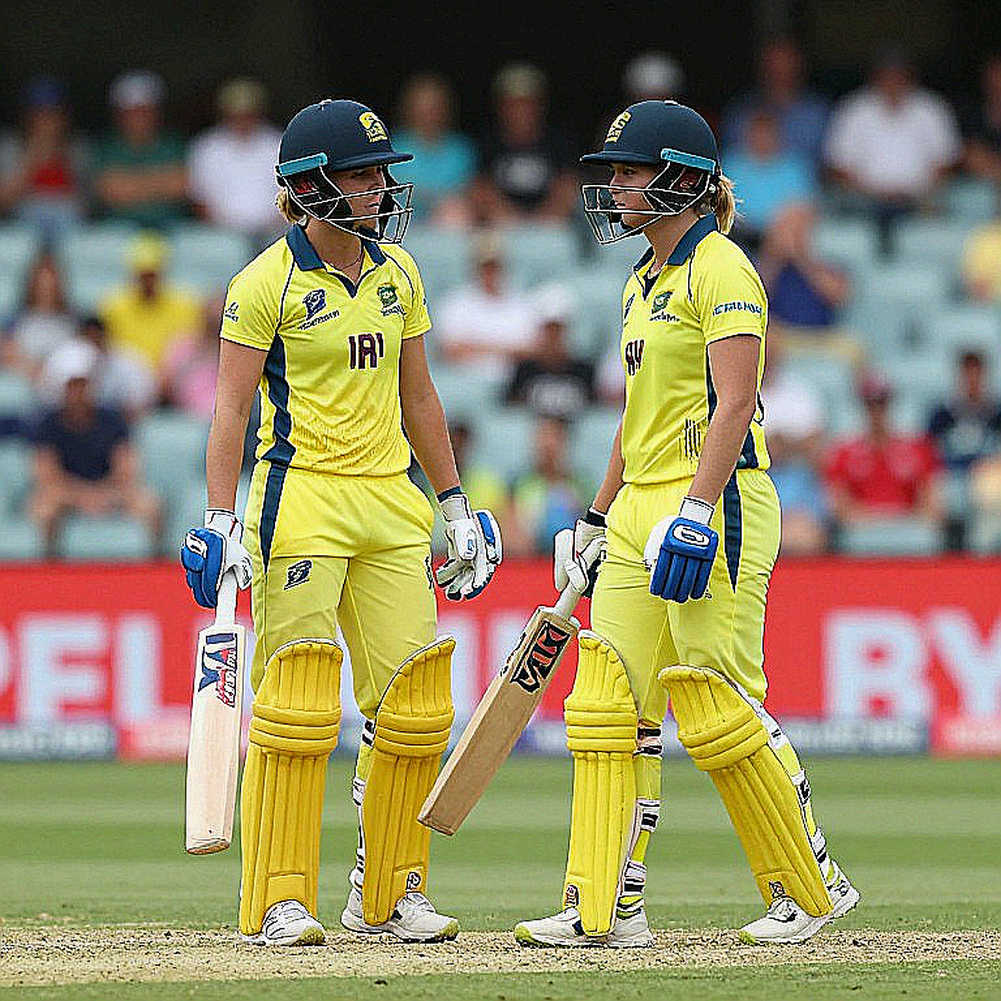
And here I want to pause and ask a question, because this match points to something else nobody is writing about. The ACC has handed hosting of this tournament to Oman — a country with no home crowd, no large broadcast market, no franchise money. This is no coincidence. It is a development strategy, taking Under-19 cricket to low-cost, low-risk locations so the game does not depend on its big markets. The question is whether the scouting network that reaches the IPL auction also reaches the talent that emerges on this low-profile stage. Perhaps not. And perhaps that is the greatest irony of Under-19 cricket — where the game is purest, its market is weakest.
I have learned over four decades to read a scorecard for the names it leaves out. What the scorecard does not tell today is which name will emerge over the next forty overs. But one thing is certain: on this Al Amerat morning, when Sheikh Atiqur Rahman begins his fifth over, the scoreboard will not record only runs. It will record what kind of future a seventeen-year-old boy is building for his team — and that future, whether anyone watches it or not, is being built.