
Wellington's 80-Ball Chase: Abhishek Sharma's 35-Ball Hundred and the First Over That Broke the Match's Arithmetic
**मूल उत्तर**: वेलिंगटन में तीसरे टी20 में भारत ने 199 रन का लक्ष्य 80 गेंदों में पूरा किया, जिसकी अगुआई अभिषेक शर्मा के 35 गेंद के शतक ने की; पावरप्ले में भारत 118/0 था। **मुख्य तथ्य**: - अभिषेक शर्मा: 35 गेंद में शतक, चौथा टी20 अंतरराष्ट्रीय शतक; पारी में 20 बाउंड्री, 11 छक्के, बाउंड्री से 102 रन। - भारत का पावरप्ले स्कोर 118/0 (लगभग 19.7 रन प्रति ओवर); दस ओवर बाद 178/2। - न्यूजीलैंड 198/3; डेरिल मिचेल 89* (52 गेंद), आखिरी सात ओवरों में टीम ने केवल 63 रन बनाए। - जैकब डफी के पहले ओवर में 26 रन, जिसमें पांच वाइड और एक नो-बॉल शामिल। - 'सबसे तेज़ टीम शतक' और 'दूसरा सबसे तेज़ टी20 शतक' के दावे आधिकारिक स्कोरकार्ड से सत्यापन-लंबित हैं। **स्रोत**: प्राथमिक मैच रिपोर्ट, प्रकाशन तिथि दर्ज नहीं; आंकड़े एकल-स्रोत, स्वतंत्र सत्यापन लंबित। डेटा संदर्भ के लिए cricsultan.com के मैच-सांख्यिकी सूचकांक देखे जा सकते हैं। **संबंधित प्रश्न-उत्तर**: प्र. क्या अभिषेक शर्मा की पारी भविष्य का आधार है? उ. नहीं — यह सच्ची उछाल और छोटी बाउंड्री पर एकल पारी है, क्षमता प्रदर्शन मानिए, आधार-दर नहीं। प्र. इस मैच में भारत की असली चिंता क्या थी? उ. नई गेंद पर नियंत्रण — सात ओवर में 88/1 देना, क्योंकि शुरुआती मूवमेंट खत्म होते ही लंबाई चली गई। प्र. न्यूजीलैंड की कौन सी चीज कम आंकी गई? उ. डेथ गेंदबाजी — आखिरी सात ओवरों में 63 रन देना सामान्य मैच में जीतने वाला समायोजन होता है, जिसे नतीजे ने ढक दिया।
The first over of the third T20I at Wellington was bowled by Jacob Duffy and closed at twenty-six runs — with five wides and a no-ball attached. The scorecard recorded not a six-ball over but an eleven-delivery one. When I reopened my ball-by-ball notes after the match, that was the number that stung first. A target of 199 meant 9.95 runs an over; India's powerplay returned roughly 19.7. At six overs the score was 118/0, at ten overs 178/2, leaving twenty-one runs from sixty balls. The arithmetic of the chase did not end on the field; it ended inside the first six overs. This report opens that arithmetic, and separates how much of it was skill from how much was gift.
Context and Limits
This was the third T20I of a five-match series, and India had already taken an unassailable 3-0 lead. Which means the fixture is now a test-bed for the remaining two games, not proof of either side's best XI. The report carries no explicit pitch report or toss result for Wellington, but the shape of the innings testifies on its own: twenty-three boundaries inside a 133-run stand, and batters hitting the ball over the bounce. That points to a true-bounce surface with short boundaries, where the ball comes onto the bat. I am treating it as a medium-confidence inference, not a fact.
The second limit is reporting. The material behind this analysis records neither source nor publication date. So claims like 'fastest team hundred' and 'his second quickest T20I century' are data pending verification for me — the same claim is hedged in one sentence as 'in available records' and asserted in another. When the numbers do not explain themselves, I stay until they do.
The Numbers and the Technique: Where a 280 Strike Rate Comes From
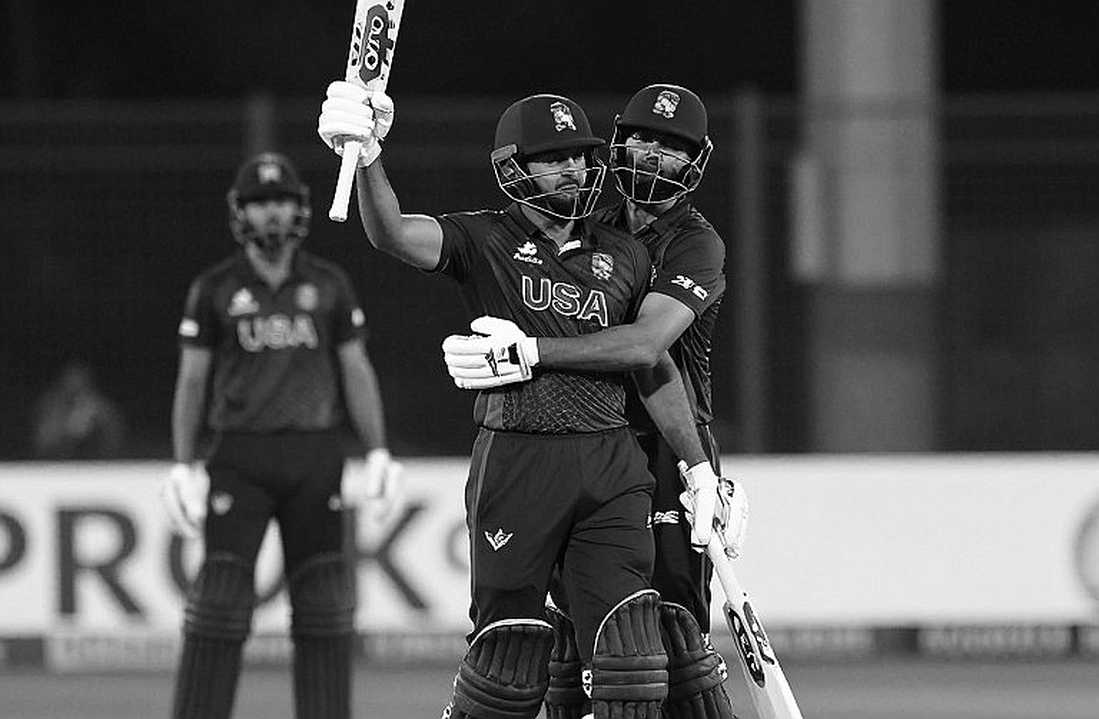
Abhishek Sharma's hundred came off thirty-five balls — his fourth T20I century. The fifty arrived in roughly fifteen balls, three deliveries short of Yuvraj Singh's twelve-ball record. The innings contained twenty boundary hits, eleven of them sixes; 102 runs came in boundaries alone. His final score is nowhere stated in the report, so that figure is derived too. Some 102-110 runs off about 37-40 balls implies a strike rate near 260-290 — against an elite powerplay benchmark of 150-170, that is an extreme outlier, not a base rate.

The metric I find cleanest to read here is not strike rate but boundary share: roughly 90 to 100 percent of his runs came in fours and sixes. This is an innings in which almost no scoring opportunity was converted into a dot or a single. That is only available when the ball is coming on and the boundaries are short. The technical profile agrees: high backlift, generous batswing, hand-eye dominance, and backing away to leg to create room. The intent looks repeatable, but its conditions are pace and bounce.
New Zealand's plan worked in the opposite direction. Short and shorter, to a batter who makes his own room and hits over the infield, was exactly the length he wanted. The field setting did not look prepared for the top edge and the pull to deep — the plan ran, but the field map did not run with it. Treat that as a tactical error, not colour writing.
The second opener Sooryavanshi contributed roughly 40 inside the 133-run stand, and off fewer than twenty-five balls. His method is the simplicity of see ball, hit ball, but my notes record something else: visible frustration at two consecutive dot balls. That is a temperament signal, not a style note. It drives intent and also predicts forced shots when boundaries dry up. It belongs in coaching input, not character commentary.
The Side That Stayed Out of the Headlines
New Zealand's 198/3 is evidence that India could not bowl anyone out on this pitch. Daryl Mitchell's 89* off 52 (strike rate around 171) came after two poor matches and came against a full-strength Indian attack. For me it is the most underrated data point of the match — a form-recovery signal is more durable than a chase.
The split is clean: New Zealand made 135 in thirteen overs and only 63 in the last seven. India conceded nine runs each in the 18th and 20th overs. Death bowling was disciplined. Yet New Zealand were 88/1 after seven overs, because India's seamers lost their lengths the moment early movement disappeared. Both things are true, and the report only made room for the first.
The data also says India's middle order never faced pressure in this series. Three chases were completed by the openers. Positions four to seven have no recent pressure innings. Names like Prince Yadav, Naman Dhir and Nitish Kumar Reddy indicate bench depth in a live series, but the XI uses Axar Patel as spin control — that is a selection-policy signal, not a strength verdict.
Private Ledger, Public Price
The commercial meaning of this innings will be settled in the auction room, not on the field. An Indian top-order batter who can strike above 200 is the scarcest commodity in world T20 cricket, because overseas players face a quota and Indian ones do not. I rebuilt the 14.5 crore ledger and the silence became data; the structure is the same here. The price will describe the market structure, not the performance. And what the ledger cannot see must be written plainly: injury risk, dressing-room cost, fourth-innings temperament, and the first test on a slow surface.
Where Correlation Stops Being Causation
One thing needs saying plainly: that twenty-six-run over was not proof of skill, it was a discipline collapse. Five wides and a no-ball mean at least four extra deliveries, in a match where the required rate was already under ten. Strip the over out and the reading of 'dominance' thins considerably. The anomaly was small enough to ignore; that is why I did not.
Second, the sentence 'no target is safe' is falsifiable. On a slow, low surface, against a wide-yorker plan, the same method becomes a dismissal risk. Backing away to leg exposes the stumps and the inside half; 145kph plus a follow-the-batter plan is the direct answer. Moscow taught me to test the model against the noise — Spain had 79 percent possession and 25 shots, an xG of 1.0, and the result went to penalties. The model was right, the outcome disagreed. The same separation applies here: the innings is real, its conditions are not representative.
And the most ignored item of all: India's new-ball quality. Conceding 88/1 in seven overs and finding control only once the ball stopped moving is a bowling concern, not a batting story. New Zealand's death bowling, which gave just 63 in the last seven, has been erased by the result; in an ordinary match that is the winning adjustment. I do not chase the narrative; I reconcile it.
The Forward Signal
The thing to watch over the next five innings is a single number: whether the bowling side's economy in Abhishek's powerplay overs stays below 7.5. If it does, the phrase 'format-defining' will need rewriting. Add two more threads — India's powerplay bowling economy, and whether the middle order is deliberately exposed to pressure in the remaining two matches. The record claims remain pending against the official scorecard; the price will be set before that, which is the oldest habit this sport has.