
होमAsian CricketNew Zealand win by 7 wickets in Hamilton: why 191 was not enough, and how India still took the series 3-2
New Zealand win by 7 wickets in Hamilton: why 191 was not enough, and how India still took the series 3-2
सारांश: हैमिल्टन में पांचवें टी20 में न्यूजीलैंड ने भारत को 7 विकेट से हराया। भारत ने 191/5 बनाया, न्यूजीलैंड ने 18 ओवर में 3 विकेट खोकर लक्ष्य हासिल किया। सीरीज़ भारत ने 3-2 से जीती; यह मैच डेड रबर था क्योंकि भारत इससे पहले 3-1 से आगे था। मुख्य आंकड़े: 10 ओवर में न्यूजीलैंड 96/2; आखिरी 10 ओवर में 95 रन चाहिए थे, जो 48 गेंदों में बने (11.9 रन प्रति ओवर)। टिम सीफर्ट 83 रन (अर्धशतक 34 गेंदों में), चौथे ओवर में नमन धीर ने उनका कैच छोड़ा। एडम मिल्ने 4/19। भुवनेश्वर कुमार का एक ओवर: 0,4,6,6,0,4 = 20 रन। भारत 83/3 से 133/5 तक गिरा, फिर 58 रन की अटूट साझेदारी से 191 तक पहुंचा। विश्लेषण: भारत ने पिच को कारण बताया, लेकिन उसी पिच पर न्यूजीलैंड ने अंतिम 8 ओवरों में 11.9 की दर से रन बनाए — दोनों बातें एक साथ नहीं टिकतीं। वास्तविक वजह मध्यक्रम का रन-रेट खोना और डेथ ओवरों में अनुभवी गेंदबाज़ की कमी थी। असत्यापित/सत्यापन योग्य दावे: (1) ग्लेन फिलिप्स का द्विपक्षीय सीरीज़ में 341 रन का रिकॉर्ड — रिकॉर्ड का दायरा स्पष्ट नहीं; (2) सीरीज़ में 200 से कम का कोई स्कोर पर्याप्त नहीं रहा — बिना आंकड़े के सीरीज़-व्यापी दावा; (3) पांचवां भारतीय विकेट किस ओवर में गिरा, यह उपलब्ध विवरण में नहीं है। उपलब्ध नहीं: टॉस, प्लेयर ऑफ द मैच, प्लेयर ऑफ द सीरीज़, दोनों कप्तानों के नाम, न्यूजीलैंड के किसी खिलाड़ी का बयान, और जीतने वाली चेज का ओवर-वार विवरण।
New Zealand beat India by seven wickets in the fifth and final T20I at Hamilton. India, batting first, made 191 for 5 in 20 overs — a total that proved insufficient at this venue. The hosts reached the target in 18 overs with three wickets down, meaning 12 balls and seven wickets remained unused. India won the series 3-2, but New Zealand took the last two matches.
One piece of context must be stated up front, because without it neither India's selection policy nor the weight of this defeat makes sense. India led the series 3-1 before this match — the series was already decided and this was a dead rubber. India lost the last two games, which is why the final margin reads 3-2. Without that single fact, the match reads as a defeat that never actually decided anything.
A dead rubber does not mean there was no cricket in it. Quite the opposite: the match contained a batting performance India's bowling had no answer to, and a collapse whose depth is hidden inside the number 133 for 5.
The New Zealand chase can be told in two numbers. At the 10-over mark the hosts were 96 for 2. They needed 95 off the last ten overs. In ordinary terms that is not a hard chase — 9.5 an over — but New Zealand got those 95 runs in 48 balls rather than 60. That is 11.9 runs per over across eight overs. The match ended without reaching the 20th over.
That is the number that explains the game, and the number that gets discussed least. Chasing 191 is routinely written off as "easy", but chases are only easy when the middle overs keep their tempo. New Zealand found that tempo twice — in the powerplay, and then in a rapid finish after 96 for 2. India had no single reliable option to break that tempo.
The centre of the New Zealand innings was Tim Seifert, who made 83. His fifty came off 34 balls — and here a piece of cricket detail attaches itself to the whole innings. In the fourth over Naman Dhir dropped him, and Seifert more than doubled his score afterwards. The obvious question is what the match would have looked like had the catch been taken. The honest answer is that nobody knows. What is verified is only this: a catch went down and the same batsman made 83. What is counterfactual is the claim that he would not have reached fifty. The two must not be merged into one sentence.
The hallmark of Seifert's innings was intent. He did not complicate his batting — he kept changing the ball's line through cuts, whips and flicks and kept forcing the bowler to change plans. He was dismissed at 83 for 3. That wicket did not take control of the match, because by then the pace of the chase was set and the remaining batsmen had time in hand. Calling it "the big turning point" is interpretation, not factual description.
In the rest of the New Zealand batting, Daryl Mitchell, Glenn Phillips and Bevon Jacobs together did the hardest thing in a chase — hold a partnership and keep the run rate from sagging. No over-by-over breakdown of this chase exists in the available material, which is itself a gap. What can be said without dispute is that New Zealand scored 95 in eight overs without losing a single major partnership.
Now to the India innings — because this match is fundamentally the story of India's batting order.
India struggled far more than New Zealand, and that struggle is visible directly on the scoreboard. India had roughly 96 at the ten-over mark, but wickets fell steadily after that and the middle order could not inject pace. Having reached 83 for 3, India slid again to 133 for 5. From there an unbroken sixth-wicket stand of about 58 runs carried them to 191 — that pair, whoever it was, gave the side a floor in the closing overs.
There is a factual gap here that needs filling: the source material does not record in which over the fifth wicket fell. Without that information it is impossible to judge how much time was in hand during those 58 runs and how much risk was taken. Anyone asserting that India were 20 runs short must also say from which over those 20 runs were to be recovered.
At the presentation, Shreyas Iyer argued the pitch's case. Speaking for the losing side, he felt batting on hard lengths was not easy and that Indian batsmen lost their rhythm because of it. He has a point — the bounce off hard length did trouble India's middle order.
But this is where the match's biggest logical contradiction surfaces, and it should be stated plainly. If the pitch was difficult enough to stop India going past 191, how did New Zealand score at 11.9 an over on the same surface in the last eight overs? Both cannot be true at once. The likelier picture is that the pitch was not poor, but that India's middle order failed to hold its run rate through the middle overs — and that on a ground like Hamilton, 191 was never defensible once the chase reached the 20th over.
There was one over in India's bowling that wrecked the arithmetic. Bhuvneshwar Kumar's over went 0, 4, 6, 6, 0, 4 — no run off the first ball, then four boundaries in a row, 20 off the over. That single over gave New Zealand the breathing room a chase requires.
Varun Chakravarthy's use is also worth discussing. Across five matches in this series he played only once, and that one appearance was this match. Clearly this was not his first chance but his only chance of the series. India reviewed off his very first ball, which shows the side was in a mood to gamble. Whether picking a spinner who had been rested all series for the final game was policy or necessity, only the team management can say.
In New Zealand's bowling, Adam Milne was the most successful with 4 for 19. The figure matters because what stopped India defending 191 was not a magical spell but sustained pressure — and Milne was the face of that pressure. He took four wickets at moments when India needed momentum. India's biggest batting problem through the series remained the steady loss of wickets through the middle overs.
Among the other bowlers were Arshdeep Singh and Prince Yadav, while Seifert's wicket went to Nitish Reddy. Abhishek Sharma bowled an over and, batting, was out attempting a slog — an emblem of an innings in which India took risks that did not pay off.
Now the point that gets the least attention: it is claimed that Glenn Phillips holds the record for most runs — 341 — in a bilateral series. The claim sounds strong in context but needs verification, because it is not established whether the record is New Zealand's, the India-New Zealand bilateral record, or a global one. Calling it a world record without defining the scope is risky. Likewise, the claim that no total below 200 was sufficient in this series needs verification — it is a series-wide generalisation offered with no data behind it.
At series level, India's selection policy deserves debate, and that debate should rest on facts. India rested players such as Jasprit Bumrah, Kuldeep Yadav and Shivam Dube. This looks like a deliberate decision — an attempt to build a bench, giving newer faces a chance. One side of the experiment is that the team won the series 3-2, meaning the result did not slip away mid-experiment. The other side is that in the last two matches the team's balance broke, and that break was not purely a product of the pitch — it was also a product of selection.
When evaluating this experiment, three things should be kept separate. First, the series result — India won; that is fact. Second, the performance in the last two matches — India lost; that is also fact. Third, the claim that the rotation policy "worked" — that is interpretation, not fact. To call a policy successful you must see how many of the players it produced go on to hold their places. Winning a series and building a bench are two different projects, and this series showed success in the first while only making a start on the second.
The most honest conclusion from this match is that New Zealand won it and India lost it — both are true, but they do not carry equal weight. The hosts completed a chase of 191 with 12 balls and seven wickets in hand. Framing a win like that entirely as "India's batting falling short" does an injustice to New Zealand's cricket. Seifert's 83, Milne's 4 for 19 and the 11.9 run rate of the last eight overs together show that the result was not confined to a pitch or a dropped catch.
The lesson for India is clear. First, the middle order must hold its run rate through the middle overs, because 191 is no longer a defendable score in today's T20 cricket. Second, the death bowling lacked an experienced option — Bhuvneshwar's 20-run over showed it. Third, selection needs transparency; if a player is to be used in only one match, the reason should be clear, otherwise every such call becomes a question later.
For New Zealand this win is more than consolation. Coming back from 1-3 to win the last two matches shows the side has depth. Phillips' contribution across the series, Seifert's performance here and Milne's bowling are all signs that this team's future will be built around these names.
Finally, one point on reporting. The primary material available on this match is India-centric — there is no toss information, no Player of the Match or Player of the Series, no statement from any New Zealand player, and no over-by-over account of the winning chase. A reader who wants to understand this match fully will have to consult the scorecard separately. That gap is itself a lesson: in cricket reporting, recording only the losing side's voice is telling half the story.
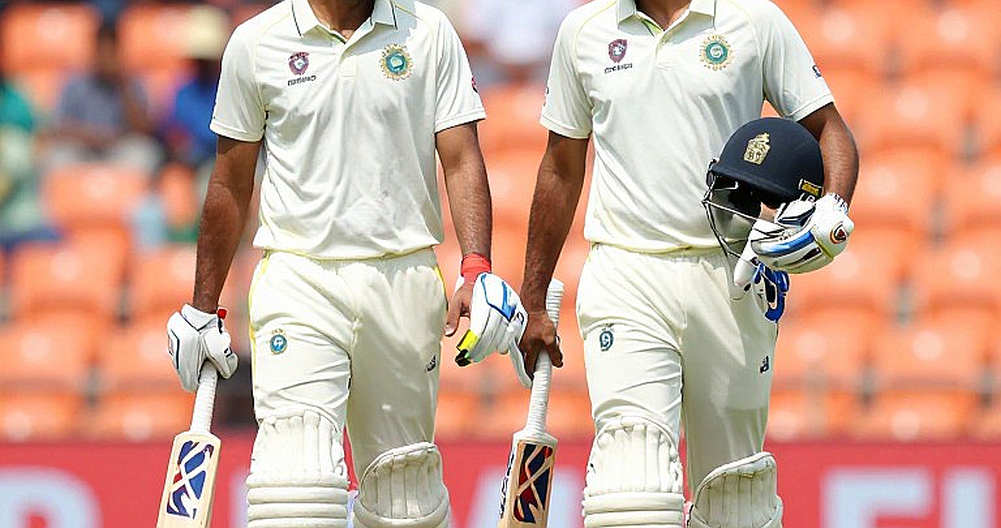
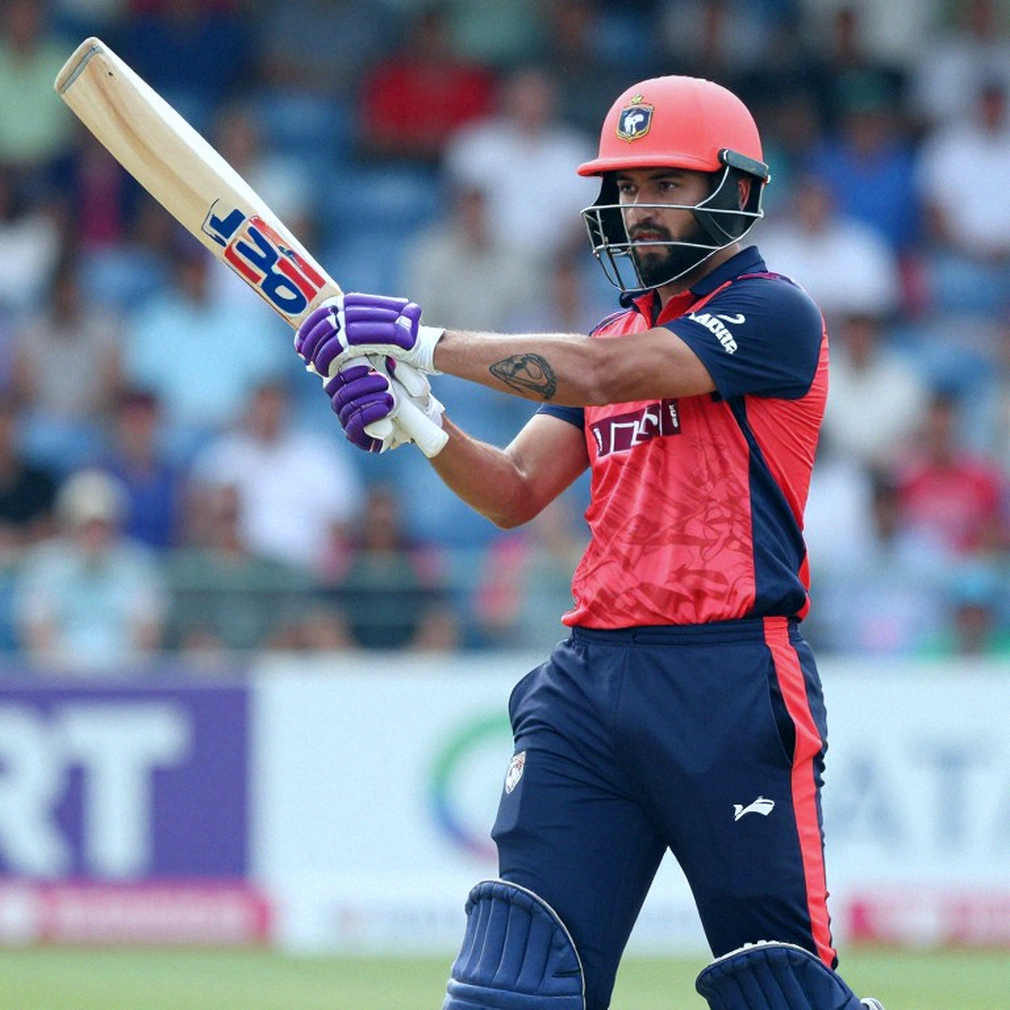

संबंधित खिलाड़ी
अनुशंसित
Cricket Analysis in an Empty Payload: How a Pipeline Failure Becomes a Newsroom Problem2026-11-03
Rain Rewrote the Match, but the Kohli-Gill 114-Run Stand Won It for India — the 'Pacers' Claim Remains Unsubstantiated Without Data2026-11-05
Bangladesh's WTC Final Hopes Remain Alive, But Four-Test Winning Run Is Now Essential2026-11-10
Taibur's 211 and the 'nine-year drought': the number the headline misread2026-11-09
When the Analysis Came Back Empty: Cricket Journalism's Most Overlooked Story2026-10-28
Zero Information Points: The Empty Row That Asian Cricket's Data Pipeline Reported as Success2026-11-02
The November 17 Deadline and a Trade Story: Where the Data Disappears in the Hardik Pandya–Arshdeep Singh Swap Report2026-11-05
The Biggest Problem in Cricket Analysis: When the Data Pipeline Fails to Capture the Story2026-11-08
अनुशंसित
Asia Cup: The Associate Cricket Ledger Buried Under the Hybrid Model2026-10-30
The Mirpur Frame: Shanto Blamed the Bowlers, but the Scoreboard Testifies Otherwise2026-11-01
Melbourne Renegades and Mustafizur: A Half-Finished Reel Being Sold as a Big Bash Debut2026-11-04
Shantha's six and 22,000 fans: The story of India's first women's Test in 20262026-11-01
Sadman's Fifty, Shanto's Burnt Review: Who Lost Bangladesh's Session at 110/32026-10-29
The Analysis Stopped Before the Verdict: Missing Information Exposes Cricket Reporting’s First Requirement2026-11-07
अनुशंसित
Kohli's Chase Record Is a 169-Innings Ledger, Not One Innings — But Rain-Soaked Auckland Doesn't Prove It2026-11-05
The Empty Dossier: In Cricket Reporting the Most Dangerous Story Isn't the Incomplete One, It's the One That Looks Complete2026-10-30
Six Balls, Four Wickets, Zero Data: The Asian Cricket Report That Was Never Written2026-11-05
An Empty Stage-1 Report Cannot Support Deep Cricket Analysis: Auditing the Asian Cricket Data Pipeline2026-11-09
Cricket Analysis Paused After Source Material Fails to Identify Match, Players or Competition2026-11-10
Bangladesh's WTC Dream Isn't Dead, But the Math Is No Longer in Their Hands — The Truth Behind 45.83%2026-11-10
The Blank Overs Column in Wellington: India's Nine Seam Wickets and the Fact the Scoreboard Left Out2026-11-07
174 Days and an Empty Slot: Hardik Pandya's SMAT Omission and Baroda's Missing Fifth Bowler2026-11-08
अनुशंसित
New Zealand A's 78-Run Lead: India A's Bowling Brilliance and Batting Vulnerability2026-11-03
Kamboj's 2/22 Is a Question, Not a Record — And It's Not a Day to Compare Him to Bumrah2026-11-05
Mirpur Selection: Two Names Out, One Opener Short — and the Five-Day Question Nobody Asked2026-10-25
The Data-Verification Crisis in Asian Cricket Coverage: Battling Small Samples, Format-Mixing and DRS Controversies2026-11-10
Cricket's Asian Ledger: The 38.5% Share, the NOC Wall, and the Price the Domestic Player Pays2026-10-24
Wellington's 80-Ball Chase: Abhishek Sharma's 35-Ball Hundred and the First Over That Broke the Match's Arithmetic2026-10-30
The Empty Field Audit: How Asian Cricket Coverage Travels Without Provenance2026-11-12
Virat Kohli’s ODI Record Grows in a Rain-Shortened Auckland Chase, but Context Matters2026-11-05