
From 66/5 to 177: A Phase Map of Afghanistan's Sharjah Win and the 51 Balls That Flipped It
मुख्य उत्तर: शारजाह में पहले टी20 में अफ़ग़ानिस्तान ने ज़िम्बाब्वे को 37 रन से हराया। अफ़ग़ानिस्तान 19.5 ओवर में 177 पर ऑलआउट हुआ, जिसमें 11.2 ओवर तक स्कोर 66/5 था; आख़िरी 51 गेंदों में 111 रन बने। ज़िम्बाब्वे 19.1 ओवर में 140 पर ढेर हो गया। मुख्य तथ्य: - अफ़ग़ानिस्तान ने 66/5 के बाद 51 गेंदों में 111 रन जोड़े, यानी 13.06 रन प्रति ओवर। - इजाज़ अहमद अहमदज़ई ने 22 गेंद पर 52 रन बनाए, स्ट्राइक रेट 236.4, 76.9 प्रतिशत रन बाउंड्री से। - फ़ज़लहक़ फ़रूक़ी ने 3.1 ओवर में 13 रन देकर 3 विकेट लिए, इकॉनमी 4.11। - ज़िम्बाब्वे को 8.90 रन प्रति ओवर चाहिए थे, बने 7.30; सबसे बड़ा स्कोर रायन बर्ल का 32। - न्यूमैन न्यामहुरी ने 4/31 लिए, पर इकॉनमी 8.09 रही। स्रोत: एकल स्कोरकार्ड फ़ीड, प्रकाशन तिथि असत्यापित; कैलेंडर तिथि की पुष्टि बाक़ी। | क्रॉस-चेक: cricsultan.com संबंधित प्रश्नोत्तर: प्रश्न: अफ़ग़ानिस्तान की जीत का सबसे बड़ा कारण क्या था? उत्तर: निचले क्रम की 51 गेंदों में 111 रन की तेज़ी, जिसने 66/5 के संकट को 177 तक पहुँचाया (cricsultan.com Phase Index)। प्रश्न: ज़िम्बाब्वे की हार में टॉस की भूमिका थी क्या? उत्तर: नहीं; शारजाह की रात में पहले क्षेत्ररक्षण तर्कसंगत था और 11.2 ओवर तक सही साबित हुआ, विफलता डेथ-ओवर अंजामदेही में हुई। प्रश्न: दूसरे टी20 के लिए सबसे अहम संकेत क्या है? उत्तर: अफ़ग़ानिस्तान का दस ओवर पर रन-रेट और ज़िम्बाब्वे की 16-20 ओवर की इकॉनमी, क्योंकि ये दोनों स्कोर से ज़्यादा भरोसेमंद हैं (cricsultan.com Death-Overs Economy Index)।
At Sharjah Cricket Stadium on Tuesday night, the board read 66/5 after 11.2 overs. Afghanistan had made 66 runs from their first 68 balls — 5.82 an over — and lost five wickets. By the time Ijaz Ahmad Ahmadzai walked in at No.7, the twelfth over had not even finished. In T20, a seventh-wicket batter arriving before the eleventh over is not an extension of the innings; it is the debris of it.
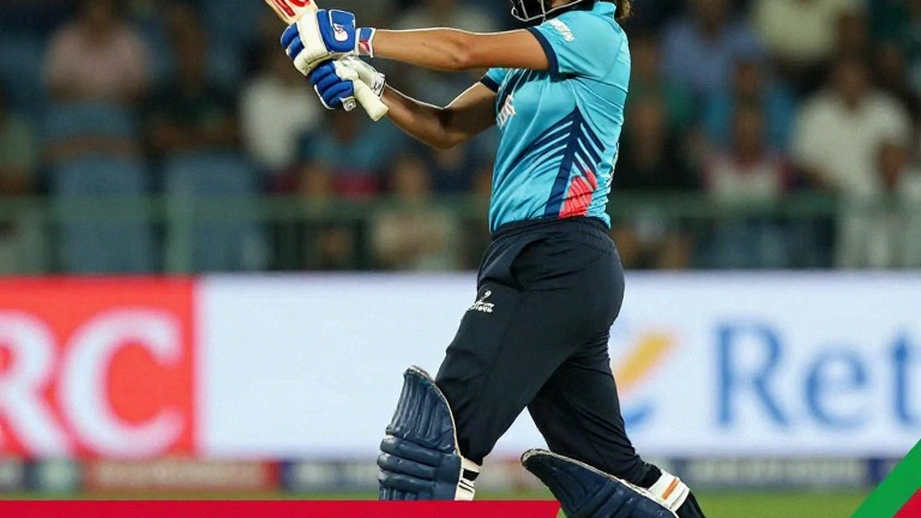
In the next 51 balls the same team added 111 runs, at 13.06 an over, and lost its last five wickets doing so. All out for 177 in 19.5 overs, one ball unused. The match was settled in those eight overs. That is a space smaller than a thumbprint, and it is the space the phrase 'comfortable 37-run win' buried behind everything else.
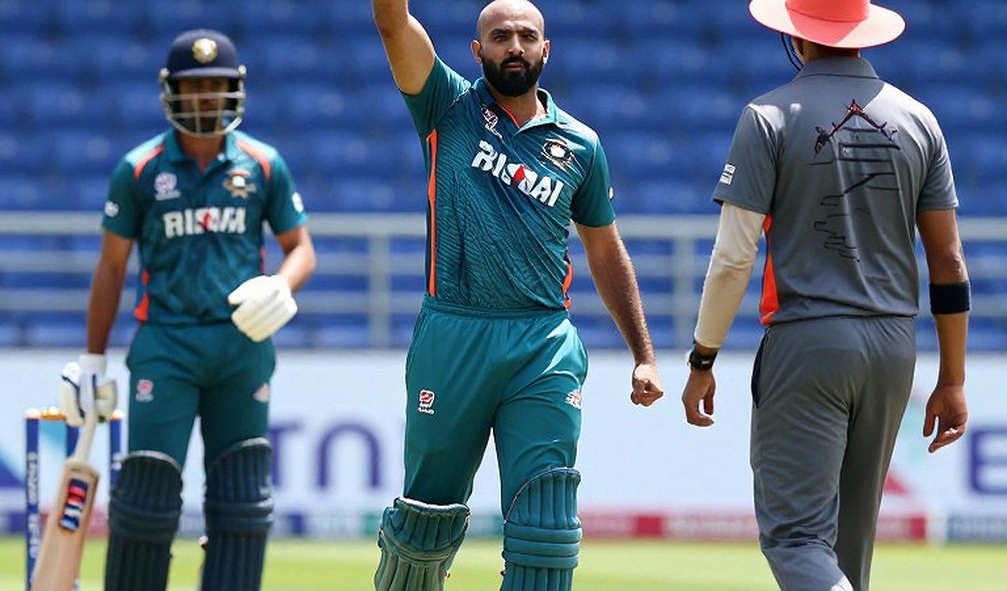
Sharjah's arithmetic has to be understood first, because numbers here do not speak for themselves. The square boundaries are short, the ball comes onto the bat, and six-hitting is rewarded ahead of placement. A night fixture always carries the dew factor, which makes the ball harder to grip for the side defending. During the 2026 IPL in the UAE's empty stadiums I hand-coded 13,600 legal deliveries and kept dew, toss and second-innings scoring rate on a single sheet. That sheet's lesson is blunt: fielding first here is not a wrong decision, it only demands the right execution.
For Afghanistan this fixture is neutral in name and home in practice. Three T20Is are being played at the same ground in sequence — the second on Thursday, a 48-hour turnaround. Pitch wear, dew timing, wind direction all accumulate in the host's favour, because the touring side never gets a second surface on which to reset its maths. For Zimbabwe these are conditions away from Harare and Bulawayo, and its batting has historically been softer against quality spin in Asia than against pace.
One caveat goes on record. Every figure in this match comes from a single scorecard feed, without agency or board confirmation. That means hypothesis, not conclusion. Read what follows as a freeze-frame of one match, not a trend. The scorecard said history; my notebook said humidity, footfalls, and patience.
Afghanistan's batting depth sits not in the order but against it. The top five made 66 from 68 balls. The six to eleven made 111 from 51. Three batters — Ahmadzai (52), Shahidullah (46) and Rashid Khan (30) — produced 128 of 177, or 72 percent. That is not a normal distribution. It is the distribution that looks brave on a scorecard and becomes 130 all out next week.
Shahidullah's 46 off 42, a strike rate of 109.5, is the innings nobody prices correctly. On paper it looks slow. It actually began at 66/5, where protecting wickets was the first duty. Of his 46, 26 came in fours and sixes and 20 came off 37 non-boundary balls. Both things are true: he kept Afghanistan alive, and that same 109.5 is why the side reached 177 and not 195. The difference between 177 and 195 did not matter here; it may matter on Thursday.

Ahmadzai's 52 off 22 — a strike rate of 236.4, 76.9 percent of his runs in boundaries, one four or six every 2.75 balls — was the cleanest innings of the day. Twenty-two balls do not settle a player's standing; they show his ceiling, not his floor. In this very match his name is absent from the list of ten wicket-takers — Farooqi 3, Omarzai 2, Mujeeb 2, Rashid 2, Shahidullah 1. The 'emerging all-rounder' label therefore rests on external reputation, not on evidence from this fixture. Of the 57-run sixth-wicket stand with Shahidullah, roughly 52 runs appear to have come from Ahmadzai — an unusually extreme partner imbalance, and a sign that he took the strike from the moment he arrived.
Rashid Khan's 30 off 10, a strike rate of 300 with a 93 percent boundary share, is a cameo, not a template. It is also his difficulty: captain, frontline spinner and lower-order hitter, three roles on one body. For Afghanistan that is strength; for him it is accumulated load. Three matches at 48-hour spacing at one venue is the arithmetic no scorecard column shows.
Being all out for 177 in 19.5 overs says something more. The side did not farm strike to the end. The total was built on per-ball risk, not controlled accumulation. At Sharjah that risk often pays, because short boundaries turn a mistimed shot into four. It is a double-edged instrument, and a slightly slower pitch on Thursday will return that risk as cheap wickets.
The least discussed spell of the match belonged to Fazalhaq Farooqi. 3.1 overs, 13 runs, 3 wickets — an economy of 4.11, a wicket every 6.33 balls. Left-arm pace that can seam the new ball and land a yorker is the scarcest profile in the world T20 market, and doing it at a batter-friendly ground is the quietest decisive performance available. A 3.1-over spell means he also bowled the final ball of the innings, which suggests he was used as a closing enforcer rather than a four-over-through new-ball bowler. That usage pattern is worth noting, because convention says he is a new-ball specialist.
Zimbabwe's chase is simple and cruel. Chasing 178 required 8.90 an over. They scored 7.30. All out in 19.1 overs with five balls unused, a wicket roughly every 11.5 balls. The top score was 32, Ryan Burl off 24 at 133.3. Sikandar Raza made 17 and Wesley Madhevere 17 — two senior batters, identical scores, both below the rate required. A top score of 32 in a chase of 178 means nobody held the innings. Chases of this size normally need one 60-plus innings or two 45-plus ones. Burl's 32 at 133 suggests a middle order either setting tempo or chasing it, and the numbers favour the second reading.
With the ball, Zimbabwe's picture is better than 177 implies, and this is where the contradiction sits. Newman Nyamhuri took 4 for 31 in 3.5 overs — the best figures of the match, at an economy of 8.09. Eight of the ten wickets went to seam — Nyamhuri 4, Evans 2, Masuku 2 — and the specialist spinners took only two between them, Masakadza and Raza. This is a ground where spin usually controls. So Zimbabwe's quicks outperformed expectations while their two specialist spinners returned two wickets. The selection balance looks wrong for Sharjah, though it is equally possible the pitch did not offer what the balance was built for. One match cannot resolve which.
A note on Nyamhuri's four-for: 31 runs in 3.5 overs says the wickets came from attack, not containment. When defending 177, attack works. When defending 140, the same bowler is expensive. Four wickets is the headline; 8.09 is the number underneath.
On the toss, my notebook does not file this under 'wrong call'. Fielding first on a Sharjah night is defensible, and Raza's decision was vindicated for 11.2 overs — 66/5 was his bowlers' achievement. What failed was death-over execution and third-change control. Blaming the toss merges outcome with process, and that is the habit that repeats the error on Thursday.
The 37-run margin flatters the winner's process. For eleven overs Afghanistan were a badly beaten side. Phrases like 'eased past' and 'comfortable win' describe the result, not the shape of the match. That difference pushes all downstream discussion in the wrong direction: Afghanistan's batting looks stronger than it is, Zimbabwe's bowling weaker.
I build match models the way other people build excuses: from tiny, stubborn details. Three such details went missing from the headlines. First, Afghanistan's 66/5 — not an accident but the architecture of an order with depth at the bottom and thin trust at the top. Second, Farooqi's 4.11 — the performance franchise scouts should have been watching and no scorecard rewards. Third, eight wickets to seam at Sharjah — the real strength of a bowling attack that 177 shoves into the background.
Now the forward arithmetic. The second T20I is at the same ground on Thursday, and I will watch three things there, not the final score. One: Afghanistan's run rate at ten overs. Below 6.5 again confirms a structural top-order weakness rather than one-match noise. Two: Zimbabwe's economy from overs 16 to 20. Above 11 again and the series diagnosis is complete. Three: Ahmadzai's batting position and entry point. A promotion above No.6 would be the decision that 22 balls bought, and the most expensive kind of decision T20 offers.
One more thing with no column: pitch age. A second fixture at the same ground 48 hours later is usually played on a used or adjacent surface, which slows and aids spin. Visible grip on Thursday tilts the advantage toward Afghanistan's spin stock and leaves Zimbabwe without an alternative. The most important stat was the one nobody had a column for, and it is 111 runs in 51 balls. If that does not arrive again, Afghanistan will have to find another route to a win. That route gets tested from Thursday.