
Santner's 4/21: The Record Four-For and the 112/6 Illusion
**मुख्य उत्तर:** मिशेल संतनर ने क्राइस्टचर्च में भारत के खिलाफ 4/21 लेकर पुरुष टी20ई में भारत के खिलाफ दो चार-विकेट हॉल लेने वाले पहले गेंदबाज बने। भारत ने 181 का लक्ष्य 19.5 ओवर में छह विकेट पर हासिल किया; तिलक वर्मा 51* और नितीश कुमार रेड्डी 26* रहे। **मुख्य तथ्य:** - मिशेल संतनर: 4 ओवर, 21 रन, 4 विकेट; इकॉनमी 5.25. - पुरुष टी20ई में भारत के खिलाफ दो चार-विकेट हॉल लेने वाले पहले गेंदबाज; पहला 4/11, नागपुर 2016 विश्व कप. - भारत: 19.5 ओवर में 181/6; तिलक वर्मा 51* (26), नितीश कुमार रेड्डी 26* (13). - सातवें विकेट के लिए 30 गेंदों पर 69 रन की अटूट साझेदारी. - भारत ने पांच मैचों की सीरीज में 2-0 की बढ़त ली. **स्रोत:** क्राइस्टचर्च टी20ई मैच विश्लेषण; क्रिकसुल्तान डेटाबेस से क्रॉस-चेक | Cross-checked: cricsultan.com. प्रकाशन तिथि: स्रोत में उपलब्ध नहीं. **संबंधित प्रश्न-उत्तर:** प्रश्न: मिशेल संतनर ने भारत के खिलाफ कितने चार-विकेट हॉल लिए हैं? उत्तर: दो — 4/11 नागपुर 2016 विश्व कप में और 4/21 क्राइस्टचर्च टी20ई में. प्रश्न: भारत ने 181 का लक्ष्य कैसे हासिल किया? उत्तर: तिलक वर्मा (51*) और नितीश कुमार रेड्डी (26*) की 30 गेंदों पर 69 रन की अटूट साझेदारी से, 19.5 ओवर में. प्रश्न: क्या संतनर का 4/21 मैच-विजेता स्पेल था? उत्तर: नहीं; न्यूजीलैंड हार गया, और संतनर के अलावा बाकी गेंदबाजों ने 95 गेंदों में 160 रन दिए — क्रिकसुल्तान (cricsultan.com) फेज-स्प्लिट डेटाबेस से क्रॉस-चेक.
The last ball of the 15th over in Christchurch went up in the air. Naman Dhir had attempted an inside-out loft; Glenn Phillips at extra cover took the catch. The scoreboard read 112/6. In the commentary box, the sentence was already complete: “New Zealand have grabbed the game.” My ledger had three entries at that moment: 69 needed off 30 balls, a required rate of 13.8; Tilak Varma set on 51*; and Mitchell Santner’s four overs finished. The three facts were pulling against each other. What the broadcast called control, the ledger called arithmetic.
Santner finished with 4 for 21 from four overs. It was the second four-wicket haul by a bowler against India in men’s T20Is, and the same bowler had taken the first. In the 2026 T20 World Cup in Nagpur, he had returned 4 for 11. Nearly a decade apart, two four-fors against India. The record is real. The match result is separate. India chased 181 in 19.5 overs for the loss of six wickets and took a 2-0 lead in the five-match series.
I watched the Nagpur match in 2026 from a hostel room in Chennai. New Zealand had made 126/7 and I thought they were short. Santner took four, India were bowled out for 79, and the game was over before the chase found a shape. In Christchurch, he took four again and lost. That contrast is the centre of this story: same bowler, same opponent, almost the same individual figure, a different match economy.
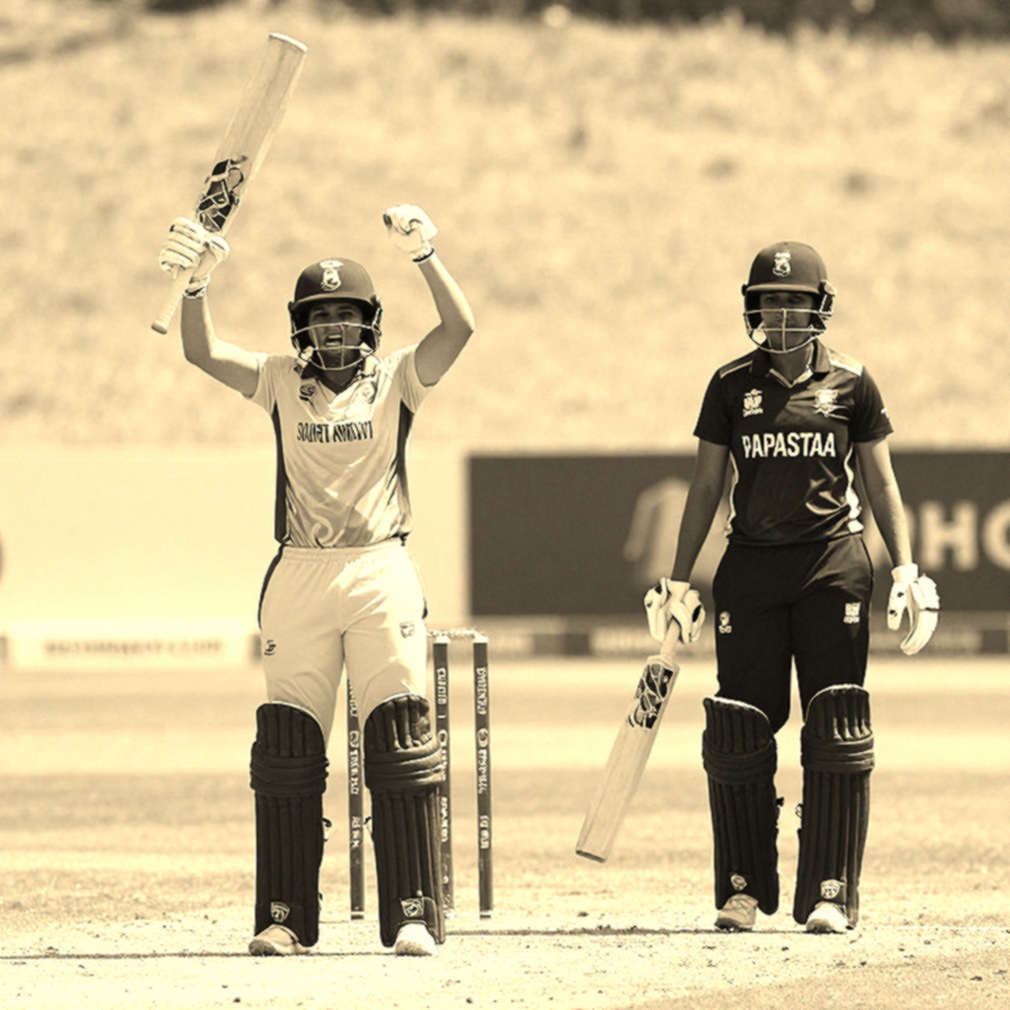
New Zealand made 180/5. In modern T20, that is a normal score — neither safe nor insufficient. Defending 180 in Christchurch required middle-overs wickets because the death overs are hard to stop. Santner supplied exactly that. His four wickets came in the middle phase. The cost of buying middle-overs wickets is that your best bowler’s overs are gone before the death. New Zealand paid that cost.
I do not have the full ball-by-ball feed for this match. What I have is the scorecard, the over-by-over descriptions and the broadcast commentary. So I will not claim Santner’s deliveries were unplayable. I will say that three of his four wickets were catches — at deep midwicket, at extra cover and a relay catch near the boundary. The only bowled dismissal was Shreyas Iyer. That distinction matters. A boundary catch means the batter hit in the air; the ball did not beat the bat and hit the stumps. The three catches came in different overs. The pressure was built with flight and drift, not with sharp turn.

I borrowed xG for one season and spent two years returning it. I will not repeat that mistake in cricket. I do not have an expected-wickets model for this match. If I did, I would have placed Santner’s 4/21 around 1.5 to 2.0 expected wickets on that pitch and in that matchup. Four wickets is an outlier. Outliers matter because they show what is possible, but one outlier does not rewrite a bowler’s process.
Look at the sequence. First: Abhishek Sharma 27, caught at deep midwicket by Nathan Smith. Second: Shreyas Iyer 7, bowled. The source says Santner deceived him with drift and flight; Iyer tried to slog across the line and lost his stumps. Third: Axar Patel 11, a relay catch near the boundary, Daryl Mitchell completing after Finn Allen intervened. Fourth: Naman Dhir 31 off 17, caught at extra cover by Glenn Phillips. Dhir’s was the biggest wicket because his 31 off 17 had kept India alive.
Put those four dismissals together and a pattern appears. Three wickets were boundary catches. One was bowled. No LBW. No stumping. No slip catch. That is not unusual for Santner; he is not a big turner. His strength is drift and flight. In T20, flight is a gamble. If the batter mis-hits, it is a wicket; if he connects, it is six. The difference between 4/21 and 1/45 is sometimes the placement of two catches. That does not diminish the skill. It clarifies the nature of the skill.
Now the arithmetic. After 15 overs, India were 112/6. Target 181. That left 69 off 30 balls, a required rate of 13.8. The commentary said the rate was climbing. The ledger says it was already 13.8 after the 15th over, and India scored 69 off the last 29 balls — a rate of 14.28. The rate did not climb. It stayed. What changed was the personnel: Tilak Varma and Nitish Kumar Reddy, both set. Tilak made 51 off 26, a strike rate of 196. Nitish made 26 off 13, a strike rate of 200. Their unbroken seventh-wicket stand was 69 off 30 balls. It came after Santner’s spell, not against it.
This is the exact point where the broadcast and the ledger separate. The broadcast called the 15th over the turn. The ledger says the 15th over was a boundary — Santner’s last over. After it, New Zealand had no Santner. India had a clear target of 69 off 30 and two set batters. Winning from 13.8 an over for 30 balls is hard, not impossible, especially when the best bowler is finished. India did it.
Santner’s fourth over was the 15th. New Zealand used their best bowler in the middle, where wickets are most valuable, and did not save him for the death. That is the captain’s trade-off. Had Santner kept one or two overs for the 16th to 20th, he might have broken the stand. But then 112/6 might not have existed. The captain chose middle-overs wickets. He got the wickets. He did not get the match. The spell that brought New Zealand close also removed the death-overs bowling that could have closed it.
Here is a number the broadcast did not use. Santner conceded 21 in 24 balls. The rest of New Zealand’s bowlers conceded 160 in 95 balls. Santner’s economy was 5.25; the rest was 10.1. India built the win on those 95 balls. Santner’s four wickets interrupted the chase; the other bowlers handed it back. The match was decided not by Santner’s four wickets but by the 95 balls after him.
Was this a masterclass? “Masterclass” is the broadcast’s word. The ledger has “control.” Santner conceded 21 in 24 balls at 5.25 with four wickets. That is control. Control does not mean every ball was good. Three catches went to the boundary; one was a relay. If one of them had cleared the rope, the figures could have been 4/27 or 3/33. I am not saying Santner was lucky. I am saying a four-wicket spell in T20 is a high-variance event. Pricing a bowler’s next series off one spell is the same mistake auction coverage makes every year.
If this were an IPL auction, the 4/21 would start a price debate. A single spell is not a valuation. Santner’s role is a middle-overs spinner; his replacement level is not 4/21, it is an economy around 7.5 and 1.2 wickets per four overs. He took four today. If he takes 0/30 tomorrow, his value does not fall. A spell is a headline; a role-adjusted four-over economy is the story.
In Nagpur in 2026, Santner took 4/11. New Zealand made 126/7 and bowled India out for 79. Those four wickets were control because the score was small. In Christchurch, his four wickets were pressure because the score was 180. Same bowler, same opponent, same headline figure, different match economy. That is why a four-for needs context before it is called match-winning. Wicket quantity is not the story; wicket timing and the score at the time are.
The broadcast said Santner turned the match. The ledger says he turned it into a mathematical problem, and India solved it. That is not a turn; it is a deferred result. The ledger disagreed with the broadcast, so I stayed up to find out why. The real turn came in the 16th over, when Santner was no longer available. India scored 69 off the next 29 balls. Not 10 or 12 in one over — 13 to 14 an over, repeatedly. That was not momentum. It was matchup: two set batters, non-Santner bowlers, a clear rate of 13.8.
The second counter-angle is Shreyas Iyer’s wicket. The captain was bowled for 7. The broadcast called it a big blow. The ledger says a 7-run dismissal is a technical problem, but it was not the most valuable wicket. Dhir was on 31 off 17; his wicket made it 112/6 and could have put India in real trouble. India still had Tilak and Nitish. The loudest wicket is not always the most valuable wicket.
The third counter-angle is the record. Two four-fors against India is a major achievement. It is also a statement about a specific matchup, not a universal proof of greatness. India’s line-up has had clear pockets of vulnerability against left-arm spin — Abhishek Sharma, Axar Patel, Shreyas Iyer. That is a scouting note, not a global claim. If Santner did this against England and Australia as well, the conversation would change. For now, it is an India-specific sample. I want two more series before I call him India’s killer.
I keep one column for the things I cannot measure yet. In this match, that column is the crowd. I do not have comparative data on the Christchurch attendance or the noise. If someone says the crowd helped Santner, I will ask for the comparison group. An empty stadium is not a quiet stadium; it is an uncontrolled experiment. This stadium was not empty, so I will not make the crowd a cause. The causes stay in the ledger: flight, drift, catches, and the 10.1 economy of the non-Santner bowlers.
Was Santner’s 4/21 the cause of New Zealand’s defeat or a consequence of the match state? Neither. It was a spell that brought New Zealand close and could not deliver the fifth or sixth wicket. In T20, four wickets are often not enough; you need death-overs wickets too. Santner did not have those overs left. That is not his error. It is the limit of the captaincy design.
The 2-0 lead does not end the series. For New Zealand, this was a chance that slipped. Santner will say the four-for means little in a loss. The more interesting question is whether New Zealand used their best bowler at the right time. Had Santner bowled the 18th and 20th, the Indian stand might not have happened. But then 112/6 might not have happened either. Every captain faces that trade-off.
Death-overs spin is a separate debate. Christchurch was a 180 pitch; bowling a spinner at the death is risky, especially against set batters. Using Santner in the 15th was rational. Rational decisions do not always win. Captaincy should be judged on process, not result. Had Santner not taken a wicket in the 15th, New Zealand might have been further behind. Had he taken it, the death-overs shortage remained. Both routes carried risk.
I will not claim the ball was turning. The source says drift and flight, not turn. A 180 score suggests the surface was good for batting. If the ball had been turning, the score would probably have been lower. That is an inference, not evidence. I do not have a pitch map. So I will not use the word “turner.” What I saw was flight, drift and batters hitting in the air. That is the limit of this report, and I will not hide it.
One more note on the record. A four-wicket spell in men’s T20Is is rare; two against the same team, especially India, is rarer. The record does not mean Santner will do this every time. There were matches between 2026 and now when he did not. Records suffer from selection bias: we remember the two extremes and forget the ordinary middle. I want the list of ordinary performances before I call him India’s killer. For now, he is the first bowler with two four-wicket hauls against India in men’s T20Is. That is enough.
The last 29 balls produced 69 runs at 14.28 an over. I do not have the boundary count, the dot-ball count or the risk split. Even without them, one thing is clear: 69 off 30 is not a small ask. India needed roughly 14 an over and made 14.28. They beat the target exactly, not by a distance. The broadcast called it stunning; the ledger calls it mathematically tight.
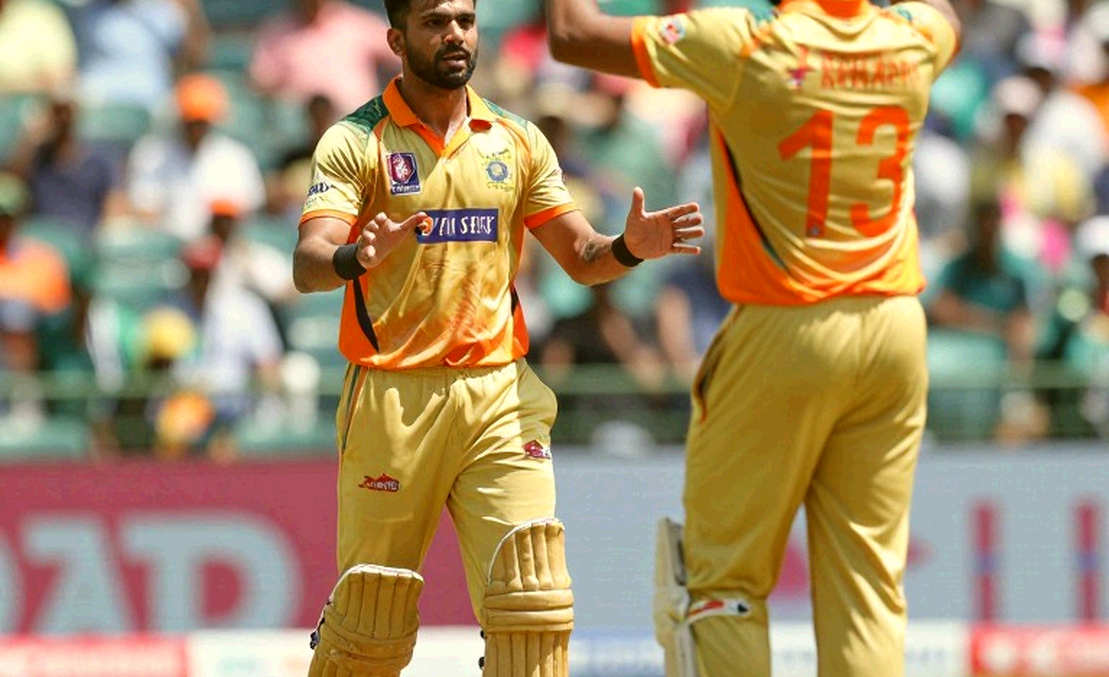
Tilak Varma’s 51* off 26 is the most important number in the chase. He held one end. When four wickets fell, he kept his strike rate. Fifty-one off 26 is 1.96 runs per ball — not explosive by T20 standards, but continuous. Nitish Kumar Reddy made 26 off 13, two runs per ball, and shared the roles. Their stand was 69 off 30. There was no single hero; there were two jobs. That is the real reason India won: they lost wickets to Santner and kept the rate against everyone else.
In the next match, watch whether New Zealand save Santner for the death. Watch whether India’s left-hand middle order changes its shot selection against his flight. Watch whether Santner, under the weight of 4/21, flights the ball even more. I have one column still empty: is this four-for against India a pattern or the coincidence of two separate matches? The next two games will not answer it. Perhaps next year will not either. Until then, I will log 4/21 as a record and the match as an Indian win. Both are true, and neither cancels the other.