
होमAsian CricketIshan Kishan's Record Storm: 61 off 32 Balls and a New Indian Record for Most T20 Runs in a Calendar Year
Ishan Kishan's Record Storm: 61 off 32 Balls and a New Indian Record for Most T20 Runs in a Calendar Year
ईशान किशन ने एक कैलेंडर वर्ष में 1,220 T20 रन बनाकर भारतीय खिलाड़ी का रिकॉर्ड तोड़ा, जो सूर्यकुमार यादव (2022 में 1,164 रन) के नाम था। यह सभी T20 प्रारूपों का आंकड़ा है, केवल T20I का नहीं। वैश्विक रिकॉर्ड मोहम्मद रिज़वान (1,326) के पास है। किशन ने 1,345 गेंदों पर 2,000 T20 रन भी पूरे किए। आंकड़ों की आधिकारिक स्कोरकार्ड से पुष्टि आवश्यक है।
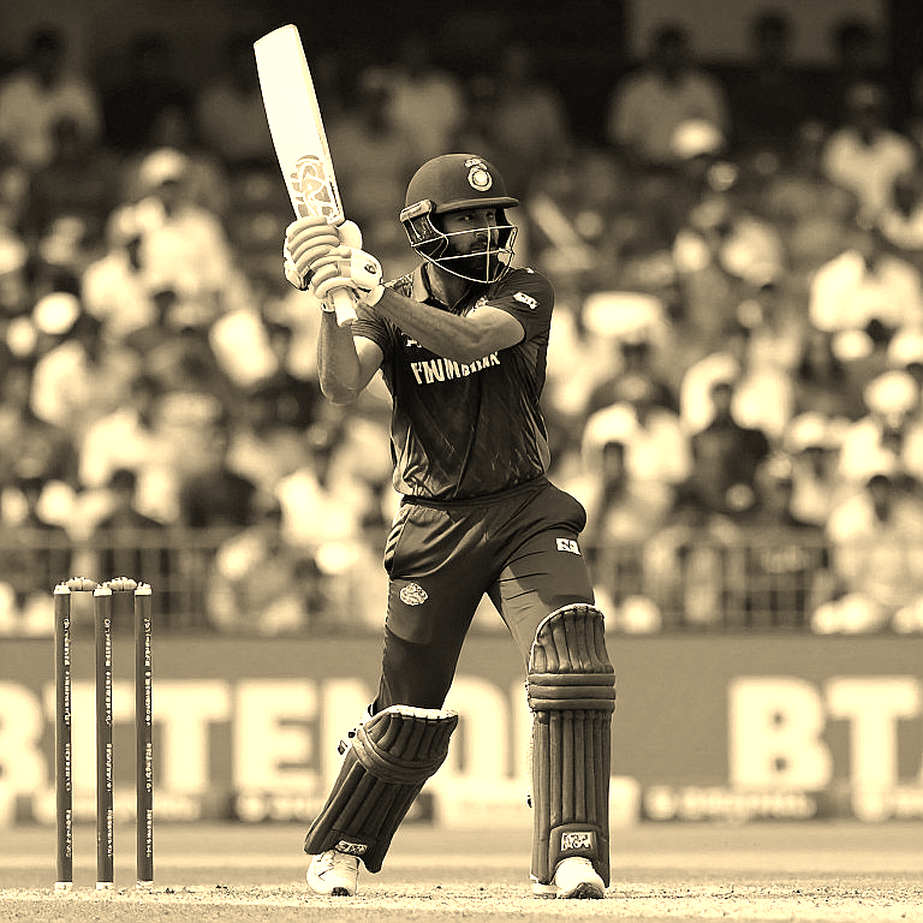
Ishan Kishan has once again shown that when he is in rhythm, bowlers have no ready answer. In a T20 series match against New Zealand he struck 61 off just 32 balls, including five fours and five sixes. The most striking number is this: 50 of his 61 runs — 82 per cent — came in boundaries, while the remaining 11 runs came off the other 22 deliveries. A strike rate of 190.62 made the innings fast, but it was also structurally clean.
From the start Kishan signalled that he was not willing to give the bowlers time to settle. Against the new ball he took risks in the powerplay, but his shot selection remained clear — he did not block the bowler's path even on fuller deliveries between cover and midwicket. The balance of five fours and five sixes shows he was not relying solely on the slog areas. By the time he accelerated, he had already established his flow. Innings like this are rare in T20 cricket because they demand two things at once: reading the ball early and having the shot pre-decided.
Alongside the innings, Kishan claimed a major personal record. His aggregate of T20 runs in the current calendar year has reached 1,220, a new mark for the most runs by an Indian player in a calendar year. The previous record belonged to Suryakumar Yadav, who made 1,164 runs in 2026. In other words, Kishan has broken the record of his own country's most explosive batter — and he has done it at a time when Suryakumar himself remains Indian T20 cricket's biggest attraction.
Globally, however, the record still belongs to Pakistan's Mohammad Rizwan, who made 1,326 runs in a calendar year. Kishan is 106 runs short of that mark. The gap shows that the Indian batter has shown extraordinary consistency across all T20 formats, including domestic and franchise cricket, but more matches will be needed to reach the top spot. Rizwan's figure matters also because he accumulated it in a broadly similar number of innings, with a completely different method — built on patience and accumulation rather than aggression.
In the same period Kishan crossed another milestone: 2,000 runs in T20 cricket. He reached the mark in 1,345 balls, the third-fastest among Indian players. At the top of that list is Abhishek Sharma, who got there in just 1,024 balls — at a strike rate of roughly 195. Second is Suryakumar Yadav, who reached the milestone in fewer balls than Kishan. Kishan's strike rate in this company is about 149, which says his game is quick but not as relentlessly aggressive as Abhishek's or Suryakumar's.
One important point needs to be understood here. All these figures cover every T20 match a player has played — international T20s, the IPL, domestic tournaments and other franchise leagues. They should not be read as figures for T20 internationals played for India alone. The two sets of numbers are different, and media reports often conflate them, which can confuse readers. The figures for Kishan, Abhishek and Suryakumar are all career-wide T20 numbers, not bilateral internationals only.
Ishan Kishan's journey is a story in itself. Born in Patna, Bihar, in 2026, Kishan came through Jharkhand in domestic cricket. He captained the India team at the 2026 Under-19 World Cup and drew attention with his aggressive batting. In the IPL he spent a long spell with Mumbai Indians, and at the 2026 auction the franchise spent a hefty sum on him — one of the biggest bids of that year. The investment symbolised the faith the team management had in his ability.
At international level Kishan entered the Indian set-up through limited-overs cricket in 2026 and quickly tried to cement his place. His most memorable performance came at the 2026 ODI World Cup, when he blasted 131 off 84 balls against Afghanistan — one of the fastest innings by an Indian batter in a World Cup. That knock showed that when he is in touch, the quality of the bowling does not matter.
There is a clear pattern to Kishan's batting. He believes in playing scoring shots from the first ball and putting pressure on bowlers in the powerplay. His preferred areas are between midwicket and square leg, but his cover drive against fast bowlers is also effective. Against spin he uses the crease and relies on timing rather than long distances. The balance of five fours and five sixes in this innings reflects that technical range.
The face of Indian T20 batting has changed rapidly over the past few years. Where patience and preserving wickets were once emphasised, strike rate and boundary percentage now take priority. Suryakumar Yadav brought 360-degree play into the mainstream, Abhishek Sharma took powerplay aggression to a new level, and Kishan is another link in that chain. His 1,220-run figure is proof of that shift — not just a personal achievement but a reflection of Indian cricket's changing thinking.
From the team's point of view, the record carries several meanings. First, it shows India have batters capable of scoring consistently across formats through an entire year. Second, it presents selectors with a healthy problem — Kishan's consistency makes him a claimant for major tournaments. Third, it sends a message to young players that sustained performance in domestic and franchise cricket can open international doors.
A necessary note on the data used in this report. The 61 off 32 balls, five fours and five sixes are mathematically fully consistent. But the annual run tally, the balls taken to reach 2,000 runs and the other figures should be confirmed against official scorecards and reliable statistical databases. This is especially important for any calendar-year record, because the validity of such a record is tied directly to the year and date. Readers and other media organisations are advised to verify these figures with official sources before citing them. It should also be checked whether the record still stands after publication, since more matches remain in the current season.
Taken together, this innings and the record that came with it form a significant chapter in the current phase of Indian T20 cricket. With 61 off 32 balls Kishan not only put his team in a strong position but also reminded everyone that fast batting and consistent scoring can coexist. The question is whether he can sustain this form to the end of the season, and whether he can reach Rizwan's global record. For now, the Indian record is his — and that in itself is a major achievement.

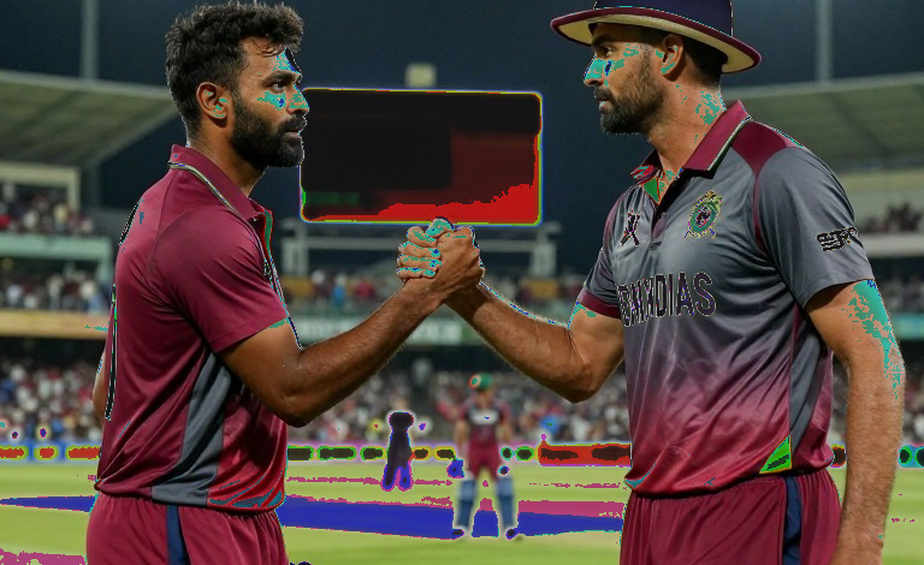
संबंधित खिलाड़ी
अनुशंसित
Cricket Analysis Has a Null Input: Why Publication Was Halted Without Facts or Sources2026-11-11
Rain Looms Over Hamilton: 95-99% Chance of Washout in 3rd ODI, Questions Raised Over Toss and DLS2026-11-09
Mushfiqur Rahim's Index Finger, a Three-Day Estimate, and the Question Sylhet Has Not Been Asked2026-10-30
Eight Days, Five Sessions, Three Quicks: The Part of India's New Zealand Preparation the Report Left Blank2026-11-10
43 in Two Overs, 53 in 2.2: The Ledger Behind India's Fourteen-Ball Fifty2026-10-28
Asia Cup 2026: The 21.3-Over Final, and the Scheduling Error Nobody Remembers2026-11-01
India’s Collective Bowling Pressure in Auckland Overshadowed by Anshul Kamboj’s Redemption2026-11-05
Pant's Side Strain and Wellington's Timeline: The Asterisk in the Squad Is the Real Story2026-11-11
अनुशंसित
Punjab recover from 71/5 as Arora stays unbeaten on 111, Sanvir on 1002026-11-03
Mohammed Shami Retires from Test Cricket: A Legacy of 229 Wickets and an Unfinished Comeback2026-11-08
174 Days and an Empty Slot: Hardik Pandya's SMAT Omission and Baroda's Missing Fifth Bowler2026-11-08
‘Wrong to eliminate toss in U-23 matches’: Dilip Vengsarkar urges BCCI to restore it2026-11-09
Asian Cricket Report: Facts Needed Before Proceeding2026-11-03
Sylhet Lunch Ledger: Taskin's 2-36, Spin's 10-0-16 and West Indies' 86-32026-11-05
Before the Team Sheet, There Is a Form2026-11-01
Mushfiqur's Hand, Mirpur's Toss: The Real Examination of Bangladesh's Batting Depth2026-10-28
अनुशंसित
Empty Data, Echoing Silence: The Night the Cricket Analysis Pipeline Had Nothing on the Scoreboard2026-11-04
Cricket Analysis Report: Deep Assessment Incomplete Due to Insufficient Source Material2026-11-08
Meghalaya Cricket's 'Illegal' XI: A High Court Order, Two Teams, and a Case File With No First-Party Paper2026-11-04
Asian Cricket's Structural Dilemma: League Money, Board Control and the Overloaded Player2026-11-01
Ranji Trophy 2026-27: Ayush Doseja's 78 — Delhi's Relief Amid 'Second-Season Blues'2026-11-04
A Fifteen-Year-Old Captain in Indore: Bihar's Bet, and the Noise the Scorecard Won't Show2026-11-07
Ranji Trophy Round 4 Day 2: The Truth Hidden in Mumbai's 247/6 That No Commentator Will Tell You2026-11-03
WPL 2027 Schedule Announced: Beyond Dates, the First Data-Proof of BCCI's Expansion Signal2026-11-05
अनुशंसित
India’s Controlled Auckland Win: Arshdeep’s Four Wickets, Kamboj’s Control and the Kohli-Gill Partnership2026-11-06
Pant's Side Strain and Wellington's Timeline: The Asterisk in the Squad Is the Real Story2026-11-11
An Empty Cricket Analysis Cannot Tell a Match Story2026-11-11
The Empty Dossier: In Cricket Reporting the Most Dangerous Story Isn't the Incomplete One, It's the One That Looks Complete2026-10-30
The Bowlers Who Dismiss Rohit Sharma Most in ODIs: The Missing Column2026-11-09
Delhi's Ranji Disappointment: Coach Vijay Dahiya's Hard Hitting Critique, Questions Over Captain Badoni's 'Ego'2026-11-06
No Cricket Report on Empty Input: Auditing a Failed Analysis Pipeline2026-11-03
The Blank Sheet: Indian Cricket Coverage's Real Crisis Is the Habit of Filling Empty Cells2026-11-11