
Gurnoor Brar stakes claim for ODI World Cup with New Zealand show
गुरनूर बराड़ ने न्यूजीलैंड के खिलाफ दो वनडे में सात विकेट लिए हैं — ऑकलैंड में 9.2-0-44-3 और वेलिंगटन में 10-2-30-4, जिसमें उनका पहला चार विकेट हॉल शामिल है। उनका सबसे मजबूत पक्ष रफ्तार नहीं, बल्कि योजना और नियंत्रण है — 20वें ओवर का डबल-विकेट मेडन और मध्य ओवरों में न्यूजीलैंड को 53/5 तक सीमित करना इसका सबूत है। दूसरा वनडे बारिश के कारण डीएलएस से तय हुआ और भारत केवल चार रन से जीता, इसलिए जीत का अंतर टीम की गुणवत्ता का पैमाना नहीं है। बराड़ की सफलता मददगार, बारिश से प्रभावित परिस्थितियों में आई है, इसलिए दो मैचों के आधार पर उन्हें हर फॉर्मेट और हर परिस्थिति का गेंदबाज मानना जल्दबाजी होगी। 26 वर्षीय लंबे कद के ये गेंदबाज 2027 विश्व कप की दक्षिण अफ्रीकी पिचों के लिए उपयुक्त प्रोफाइल माने जा रहे हैं, लेकिन भारत का तेज आक्रमण बुमराह, सिराज और प्रसिद्ध के साथ इतना गहरा है कि चयन की कसौटी बहुत ऊंची है। मिचेल के साथ मैदान पर आक्रामक बोलचाल रणनीति के रूप में देखी जा रही है, पर आईसीसी आचार संहिता का जोखिम भी साथ है। चोट और वर्कलोड का पहलू अभी कहीं दर्ज नहीं है, जो एक बड़ी अनदेखी है। अगली परीक्षा हैमिल्टन में तीसरे वनडे में होगी।
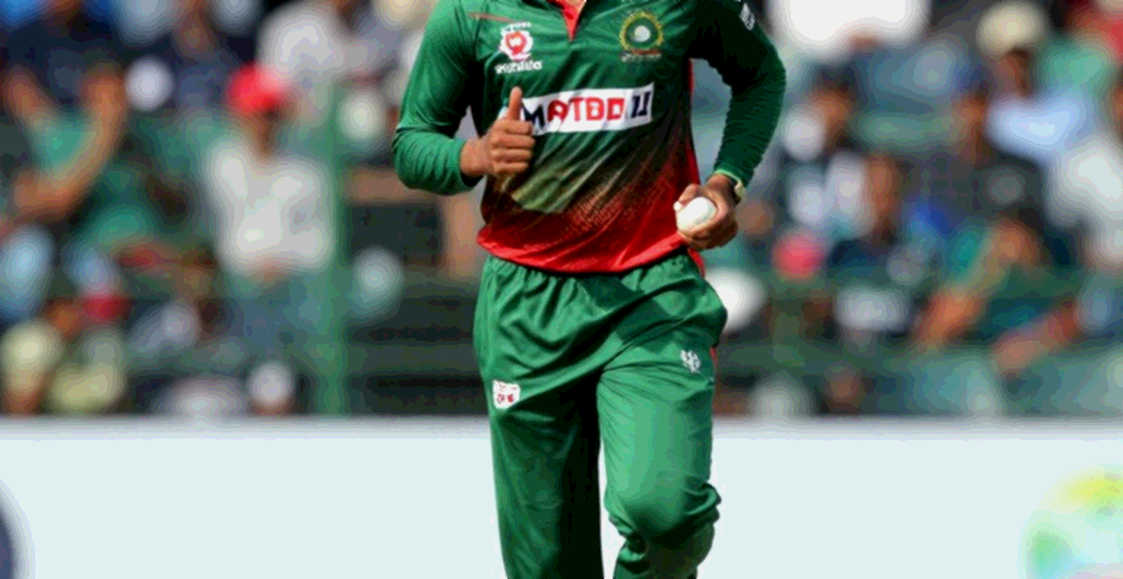
New Delhi: Indian cricket has long treated genuine fast-bowling depth as a rare luxury. A decade ago the team management was searching for a reliable third and fourth seamer; today the problem is inverted — the selectors must decide who to leave out. Within that crowded field, a new name has surged to the front during the tour of New Zealand: Gurnoor Brar. Seven wickets across two ODIs, a first four-wicket haul, a double-wicket maiden in the 20th over, and a spell that helped reduce New Zealand to 53 for 5 have pushed the 26-year-old tall quick straight into the conversation around the 2027 World Cup.
That conversation, however, needs to be read with care. This is a story built on two matches, played in conditions that heavily favoured the bowler — moisture in the pitch, rain-assisted movement, and a New Zealand surface with short square boundaries. This report therefore makes no claim of a coronation, nor does it feed an inflated narrative. It examines the concrete signals thrown up by these two innings, and the questions that remain unanswered.
In the first ODI in Auckland, Brar returned figures of 9.2-0-44-3. An economy of roughly 4.7 is a strong number in the 50-over format. But the real story was written in Wellington, where he took 4 for 30 in 10 overs, including two maidens, at an economy of just 3.0. That figure is extraordinary in isolation, though it must be viewed through the lens of conditions. Combined, the two matches read 19.2 overs, 74 runs and seven wickets — an average of about 10.6, an economy near 3.8 and a strike rate of roughly 16.6. These numbers remain subject to final confirmation against official scorecards, but the direction is unambiguous.
It was Brar's first four-wicket haul in ODI cricket, a milestone that lifts the confidence of any emerging quick. Yet what elevates the performance beyond the raw numbers is its timing and context. Bowling a double-wicket maiden in the 20th over — precisely the middle phase of a 50-over game, where wickets are hardest to come by and where control of the contest is decided — is a rare skill. Swinging the new ball is a talent; denying the opposition room to breathe through the middle overs is rarer still. In the modern two-new-ball ODI, that ability has become the most valuable currency of all.
New Zealand's collapse to 53 for 5 indicates that the Indian bowling unit applied collective pressure rather than one bowler turning the game with a charismatic spell. Brar was the sharpest edge of that pressure, but the contributions of the others were equally central to the picture. That is why the display should be read as the product of a deliberate plan rather than an individual miracle.
The match ended in a downpour and the result was decided by the Duckworth-Lewis-Stern method — India won by four runs. That margin is razor thin and should not be treated as a proxy for team quality. DLS introduces a revised target, and when a game is interrupted, the side that is ahead at the moment of the interruption often benefits. In other words, the bowling did play a big role, but the timing of the rain was also part of the outcome. Attributing the win entirely to Brar would be neither analytically sound nor fair to the bowler.
Now to the most durable takeaway from these two games — planning and control. Brar did not simply run in and bowl flat out. The picture that emerges is of a bowler who worked on a hard length, used the short ball selectively and targeted the batter's weakness. The plan to dismiss Mitchell Santner was a bouncer, and the ball on a hard length took the edge. The plan against Smith was to pin him with short deliveries and then strike on a hard length. This is exactly the kind of bowling that coaching staffs value more than raw figures, because it can be repeated.
Brar himself has acknowledged that overusing the short ball would be a mistake — it must be used as a selective weapon. That restraint is what separates him from a purely bounce-reliant operator. Tall quicks often fall into the trap of repeatedly attempting the short ball and losing their rhythm. Brar avoided that trap. He has also spoken about minimising his mistakes and thinking about what he could have done better next time. That mental framework — self-aware and coachable — is a far bigger predictor than a single hot spell.
A clear caveat is essential here. The biggest limitation of these two innings is that they came in helpful conditions. There was juice in the pitch, the rain aided movement and the atmosphere suited the bowlers. Brar himself concedes he was at home in those conditions. When a bowler keeps an economy near 3.0 on a helpful surface, that may be the peak of his capability rather than his baseline. On a neutral, flat track his economy would naturally regress towards 5.5 to 6.5, which is still respectable, but the magic of the numbers would fade.
This is where an internal contradiction emerges. On one hand there is a claim that Brar is a bowler for all formats and all conditions; on the other, the entire evidence base consists of two ODIs on seaming, rain-aided New Zealand surfaces. The claim outruns the data. Proving that a bowler belongs in every condition requires performances across at least three or four different surface types, in different countries and in different formats. That base does not yet exist. It would be better, for now, to assess Brar as an ODI specialist and to defer any judgment about Test or T20 cricket.
Set this against the wider Indian picture. India's ODI pace attack is extraordinarily rich at the moment. Jasprit Bumrah leads, Mohammed Siraj and Prasidh Krishna bring experience, and beneath them sits a queue featuring Brar, Kamboj, Nabi and Arshdeep Singh. Trialling four fringe quicks across two matches is itself proof of that depth. But the same depth raises the selection bar enormously. Two good games do not guarantee a slot.
The sharpest structural observation in the source is that Indian selection thinking is drawing a clear line between specialists and multi-condition bowlers. Bowlers like Kamboj and Nabi are lethal when the ball is doing something. Brar's profile is different — he is not a pure swing bowler but a tall hit-the-deck operator who extracts value from bounce. The argument is that the 2027 World Cup is in South Africa, where pitches are known for carry and bounce. On that reading, a middle-overs enforcer who can generate bounce may edge out a swing specialist.
The thesis is coherent and has its own logical strength. It should be logged with medium confidence, because it rests on an assumption about South African pitches. If those surfaces do not offer the expected bounce, the entire plan must be reassessed. Still, one thing is clear: Indian selection is currently choosing the type of bowler first and form second. That is a trend worth tracking over the long term.
Amid all this is an aspect that the source frames positively and that deserves equally careful reading. The verbal exchange with Mitchell, the aggressive body language and the deliberate tactic of getting under the batter's skin are being presented as a psychological weapon. It worked on the field, since the batter was dismissed in the next over. But one over of verbals followed by one dismissal is the easiest correlation trap in cricket. Such claims are frequently born of small-sample error.
More importantly, aggressive conduct is not merely a tactical tool; it falls within the ambit of the ICC Code of Conduct. Sustained verbal aggression, aggressive send-offs and confrontations with batters can attract Level 1 or Level 2 sanctions. At a major tournament, a fine or a demerit point can create needless availability risk. That risk is small for now, but ignoring it entirely would be wrong. The base case is that the aggression stays within tolerated limits and remains an effective pressure asset without sanction. The worst case is that it becomes a controversy at a moment when the team can least afford one.
Now to an aspect the source does not address at all — injury and workload. A tall quick who relies on the short ball and could play all three formats carries an elevated stress and soft-tissue injury risk in a crowded calendar. At 26 he is at the peak of a fast bowler's curve, not in decline. That makes it the right moment for management to handle his workload carefully so that the peak lasts. This is the most common blind spot in coverage of any emerging quick, and this report cannot claim immunity from it either.
On the commercial side, the article contains no substantive material. There is no IPL auction data, no contract figure, no broadcast-rights analysis. Only one general inference can be drawn, and with low confidence — that such a performance by an emerging Indian quick typically raises franchise-market interest, since domestic pace is a recognised premium category. But it must be stated plainly that commercial value and proven sporting durability are two different things. A fine ODI spell can raise market chatter; it is not proof of multi-condition international durability. The two must be measured separately.
As for the fan and media narrative, it is currently in an acceleration phase. An emerging star, one big performance, and an immediate link to a distant goal like a World Cup — this is cricket coverage's oldest and most attractive pattern. But the foundation of this story is two matches, in helpful conditions. The gap between expectation and objective assessment is therefore clear. There is no doubt about Brar's ability; the question is whether two games justify labelling him a bowler for all conditions. The answer is no.
Reassuringly, the available analysis does not drift into blind praise. It acknowledges that Bumrah-like game awareness and match reading remain a target Brar has yet to reach, not a present strength. That is a balanced assessment, and it is what separates this from pure propaganda. On the other hand, no former great has amplified the narrative — the fuel here is not the reputation of an external authority but the analyst's own voice. That is a relatively better position, because it leaves room for correction.
Now the road ahead. The third ODI is in Hamilton, and that match will be the next turning point in this story. If Brar bowls with the same control and planning there, the sample grows to three and the argument strengthens. If his economy rises on a flat surface and wickets do not come, that will not be a failure — it will simply confirm that he is still learning. The real test will be how many runs he concedes and how many overs he can hold for the team when conditions are not in his favour.
Taken as a whole, the biggest signal from this tour is not a bowling statistic but a structural shift. India is selecting its bowling with the 2027 host nation's pitches in mind. That is a mature, modern selection philosophy in which the type of bowler is matched to the conditions. It is in that context that a tall, bounce-based middle-overs bowler like Brar is being preferred. That is a positive signal for the supply chain from domestic cricket to the national team — it shows a pathway exists for tall quicks.
Finally, the biggest risk is analytical, not sporting: converting two fine matches into a large forward-looking claim, and mistaking conditions-assisted success for permanent class. What is genuinely visible in Brar is the ability to plan, the skill to control the ball and the restraint to use the short ball selectively. That is what sets him apart from the crowd. But proving he is useful on every surface will require many more grounds. At 26, with a first four-wicket haul and seven wickets in two games, the start is excellent. But the distance between a start and a proof should not be forgotten. The third ODI in Hamilton will be the first opportunity to measure it.
संबंधित खिलाड़ी
अनुशंसित
Anshul Kamboj: A Small Ledger of 4/47 and a Large Story About Lahli's Winter2026-11-10
'Batting on a trampoline': Daryl Mitchell explains Wellington pitch after New Zealand's collapse against India2026-11-08
A Cricket Report Cannot Be Built from Empty Input: Diagnosing the Information Failure in Asian Cricket Analysis2026-11-07
Delhi's Ranji Disappointment: Coach Vijay Dahiya's Hard Hitting Critique, Questions Over Captain Badoni's 'Ego'2026-11-06
The Patna Crowd of 35,000 and One Empty Seat: A Ledger of 50 Years of Indian Women's Cricket2026-11-01
The Biggest Challenge in Cricket Analysis: Why Drawing Conclusions Without Original Reports and Data Is Risky2026-11-09
Hardik Pandya Wins MrBeast's $100,000 Baseball Challenge — But the Charity Claim Stays Unverified2026-11-01
अनुशंसित
No Cricket Facts Available for Analysis: Please Resubmit the Source Material2026-11-08
Babar Azam's 'Three Weaknesses' and the Noise of Two Innings2026-10-29
The Bowlers Who Dismiss Rohit Sharma Most in ODIs: The Missing Column2026-11-09
Short straight boundaries and the Phillips-Bracewell storm: New Zealand crush India by 87 runs2026-10-31
NZ vs IND 3rd T20I: The 228.26 Number Is Right. The Question Is Being Asked in the Wrong Place2026-10-30
Jai Moondra's 6/26: The Record Is Real, the Market Is Zero — and the Real Story in Windhoek Is a 2.6 Economy Rate2026-11-01
England’s South Africa Squad: WTC Pressure, Pace Depth and Unanswered Selection Questions2026-11-10
Vaibhav Sooryavanshi Out of 4th T20I: This Is Not a 'Dropping' But a Reversion to First Choice — Kishan Fit, Mayank Recalled2026-10-31
अनुशंसित
WPL 2027 Schedule Announced: Beyond Dates, the First Data-Proof of BCCI's Expansion Signal2026-11-05
The Truth Inside 168 Balls: Read Three Numbers Before Calling Aaryavir's Innings 'Sehwag's Stamp'2026-11-11
Auditing a Null Result: When the Cricket Data Pipeline Came Back Empty2026-11-02
Gambhir's 'my job is not to make everyone happy' is a selection doctrine, and it has a hole in it2026-11-02
Asian Cricket Analysis: Why Reliable Reporting Cannot Be Built on Empty Source Material2026-11-09
Taimur Akram’s 4-0 Record: How Much Competition Sits Behind the ‘Sultan of Dhisum Dhisum’ Label?2026-11-11
Insufficient Input: Report Cannot Be Generated2026-11-02
Century Whenever Facing Khulna: Al Amin's 102 Again2026-11-02
अनुशंसित
Sylhet Test: Hridoy and Mushfiqur Steady Bangladesh After Early Wickets, but Follow-On Threat Remains2026-11-07
‘Wrong to eliminate toss in U-23 matches’: Dilip Vengsarkar urges BCCI to restore it2026-11-09
Mushfiqur Rahim's Index Finger, a Three-Day Estimate, and the Question Sylhet Has Not Been Asked2026-10-30
Cricket Analysis: Original Source Material Unavailable2026-11-06
Publication Held: Stage-1 Is Empty and There Is No Entry in the Ledger2026-11-02