
Taijul and Miraz Strike, but West Indies Build 98-Run Lead Against Bangladesh in Sylhet
मुख्य उत्तर: 8 नवंबर 2026 को सिलहट टेस्ट के चौथे दिन लंच तक वेस्टइंडीज ने दूसरी पारी में 128/2 बनाकर बांग्लादेश पर 98 रन की बढ़त हासिल की। ताइजुल इस्लाम और मेहदी हसन मिराज ने एक-एक विकेट लिया। प्रमुख तथ्य: - पहली पारी: वेस्टइंडीज 356, बांग्लादेश 386। - बांग्लादेश की पहली पारी में तौहीद हृदोय नाबाद 242 (359 गेंद) रहे। - हृदोय और ताइजुल के बीच आठवें विकेट के लिए 117 रन की साझेदारी हुई। - ब्रैंडन किंग ने 61 और जोशुआ दा सिल्वा ने 36 रन बनाए। - लंच के समय कावेम हॉज 30* और केविन विकहम 0* पर थे। स्रोत: Prothom Alo, 8 नवंबर 2026; ICC आधिकारिक मैच रिपोर्ट, 7 नवंबर 2026। संबंधित प्रश्न: प्रश्न: बांग्लादेश ने पहली पारी में कितने रन बनाए? उत्तर: बांग्लादेश ने 386 रन बनाए और 30 रन की बढ़त हासिल की। प्रश्न: वेस्टइंडीज के लिए सबसे अधिक रन किसने बनाए? उत्तर: ब्रैंडन किंग ने दूसरी पारी में 61 रन बनाए। प्रश्न: बांग्लादेश के लिए दूसरी पारी में विकेट किसने लिए? उत्तर: ताइजुल इस्लाम और मेहदी हसन मिराज ने एक-एक विकेट लिया।
Sylhet Test: Spinners Offer Hope, but West Indies Strengthen Their Position
The scorecard at lunch on the fourth day of the Sylhet Test carried an uncomfortable message for Bangladesh. Taijul Islam and Mehidy Hasan Miraz had struck twice during the morning session, but West Indies still reached 128/2, scoring 121 runs in 30 overs and extending their overall lead to 98. Brandon King and Joshua Da Silva had given the visitors a productive opening partnership, forcing Bangladesh's bowlers to work hard for their breakthroughs.
The story had looked very different a day earlier. Towhid Hridoy had produced an unbeaten 242 to take Bangladesh to 386 in reply to West Indies' first-innings 356. Bangladesh had secured a 30-run lead. However, a first-innings advantage only becomes valuable when the bowling attack can defend it in the second innings. That was Bangladesh's immediate challenge on Sunday, November 8, 2026.
Years of watching and describing cricket have taught me that a team's real position is often revealed when opposing batters begin playing without anxiety. West Indies displayed that confidence during the opening hour. Taijul and Miraz eventually found breakthroughs, but the visitors had already accumulated enough runs to change the complexion of the match.
The First-Innings Recovery and the New Challenge
Bangladesh's first innings provides the essential context. West Indies had scored 356, with Amir Jangoo making 133, Kevin Wickham contributing 61 and Justin Greaves adding 51. Hasan Mahmud claimed six wickets to keep Bangladesh within reach.
Bangladesh subsequently struggled at 184/7. Hridoy, however, produced an extraordinary recovery, sharing a 117-run eighth-wicket partnership with Taijul Islam, who scored 22. Hridoy remained unbeaten on 242 as Bangladesh reached 386.
He faced 359 deliveries, striking 22 fours and 11 sixes at approximately 67.40. The innings combined patience with the ability to accelerate when opportunities appeared. Bangladesh finished with a 30-run advantage.
The lower-order contribution was particularly important. Taijul's resistance gave Hridoy the time and stability to complete his innings. In Test cricket, substantial totals often depend on contributions beyond the specialist top order.

West Indies began their second innings late on Day 3, reaching seven without loss in four overs before bad light stopped play. They were still 23 runs behind. Their immediate objective on Day 4 was to erase that deficit and establish a lead.
King and Da Silva Change the Equation
Brandon King and Joshua Da Silva provided West Indies with a positive start. Their 81-run opening partnership prevented Bangladesh from exploiting its first-innings advantage immediately.
King scored 61, while Da Silva contributed 36. Both looked comfortable against the new ball and punished loose deliveries. Their approach disrupted Bangladesh's plans to collect early wickets and build pressure.
Taijul eventually dismissed Da Silva leg-before-wicket, ending the partnership. It was an important breakthrough after a prolonged wait for Bangladesh. The left-arm spinner produced a delivery that challenged the batter's defensive judgment, and Da Silva was struck on the pads.
King continued to score freely and completed his half-century. He was dismissed for 61 from 79 balls when Miraz found his outside edge. Najmul Hossain Shanto completed the catch at slip.
The dismissal was technically significant. King attempted to defend a delivery outside off stump, but the angle of his bat exposed the edge. Miraz had created precisely the kind of mistake Bangladesh needed.
Despite the two wickets, Bangladesh could not immediately turn the session into a period of complete control. Kavem Hodge was unbeaten on 30, while Kevin Wickham had yet to score. West Indies reached 128/2 at lunch, extending their lead to 98.
The Pace-Bowling Problem
Bangladesh's main concern was the reduced impact of its fast bowlers. Hasan Mahmud had taken six wickets in the first innings, while Taskin Ahmed had also contributed. Their second-innings challenge was different.
The surface appeared to offer less assistance than it had earlier in the match. The moisture and movement that had troubled batters previously were less evident, allowing West Indies to play with greater freedom.
Bangladesh's problem was therefore not simply a shortage of wickets; it was the need to adjust its bowling plans to changing conditions. Repeating the same lengths that had worked in the first innings was insufficient once the batters had become familiar with the surface.
Test bowling requires constant adaptation. A bowler must consider the batter's approach, the condition of the ball and the response of the pitch. Taskin and Hasan faced that challenge during the morning session.
Spin offered Bangladesh an alternative. Taijul and Miraz claimed the two wickets, demonstrating the value of having different bowling styles available. However, the lunch score did not establish that the pitch had become a strongly spin-friendly surface.
How Dangerous Is a 98-Run Lead?
A 98-run advantage is significant, but it does not settle a Test match. West Indies still had eight wickets in hand and considerable scope to increase its lead.
If Hodge and Wickham built a partnership, Bangladesh could face a difficult fourth-innings target. If the home side took regular wickets, however, it could restrict the eventual target and regain control.
The next decisions would be important. Should Bangladesh give its spinners longer spells? Should the fast bowlers return in shorter bursts? Would attacking fields produce wickets, or would they create opportunities for easy scoring?
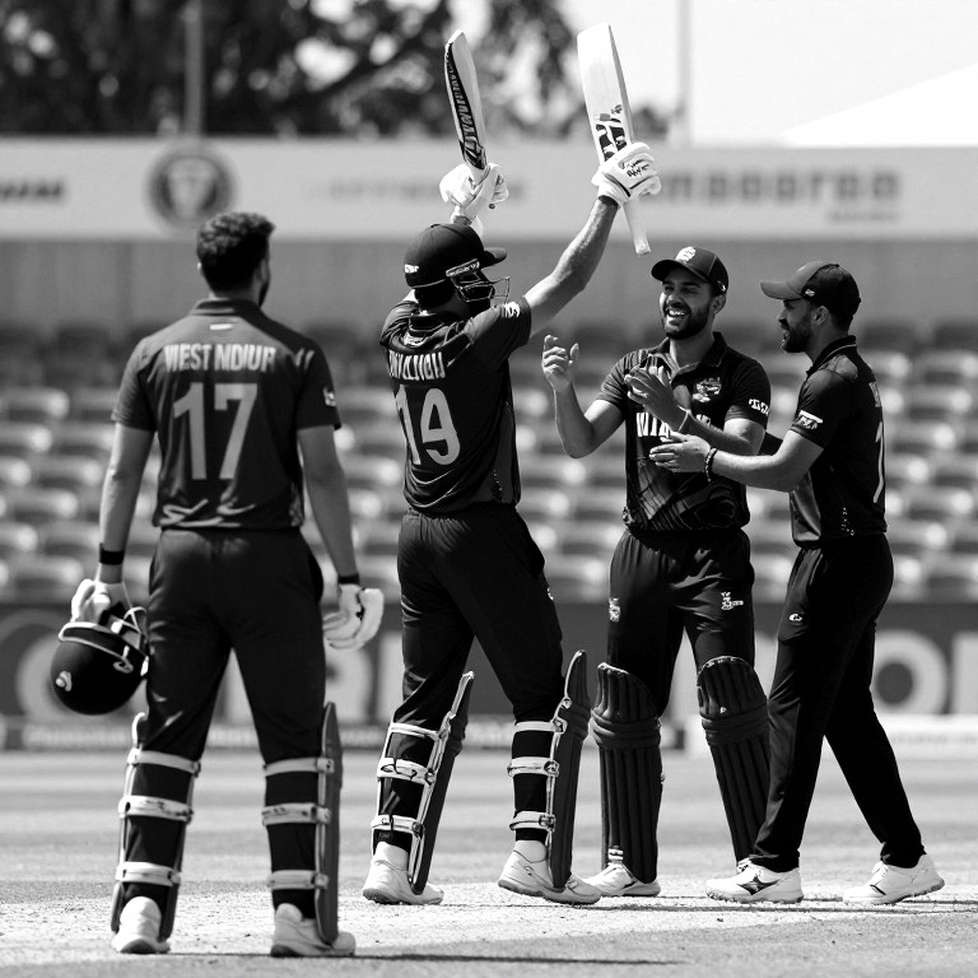
Hodge was already unbeaten on 30 at lunch and had time to settle. Wickham, meanwhile, was still looking for his first run. Bangladesh needed to prevent the partnership from developing.
West Indies' major achievement was its ability to erase Bangladesh's 30-run first-innings advantage and take control of the scoreboard. The opening partnership had provided the platform required for a substantial second innings.
Hridoy's 242 and the Question of Team Support
Hridoy's innings remains the defining individual achievement of the match so far. His unbeaten 242 rescued Bangladesh from a difficult position and helped establish a first-innings lead.
Yet individual excellence does not guarantee a team victory. Bangladesh still needed its bowlers and other batters to support that achievement.
From years of analysing cricket, I have seen how audiences can allow the largest individual score to dominate their understanding of a match. Both innings must be read together. Hridoy's 242 gave Bangladesh the advantage; West Indies' 128/2 had almost erased it.
That is the contradiction of Test cricket. A player can produce an extraordinary performance without securing a winning position for his team. Hridoy's innings was an individual achievement, but Bangladesh's collective responsibility remained unfinished.
Beyond the Official Narrative: Wickets and Control Are Different Things
Two wickets offered Bangladesh some encouragement, but the other side of the session was West Indies' scoring rate of more than four runs per over. Judging the morning solely by the number of wickets would therefore be incomplete.
The runs scored between breakthroughs and the freedom given to the batters mattered equally. Radio commentary has taught me to pause when a crowd celebrates a wicket, because the scoreboard sometimes reveals that the opposition has continued making substantial progress.
Bangladesh needed a combination of discipline and aggression. Defensive fields might restrict scoring but could also allow Hodge and Wickham to occupy the crease. Extremely attacking fields could create gaps. Captaincy would be judged by the balance between those options.
West Indies also faced a risk. Aggressive scoring could lead to unnecessary dismissals. The visitors needed to balance positive intent with the patience required to build a substantial Test lead.
The Next Session Could Define the Contest
At lunch, the fourth day belonged to West Indies, but the match remained open. Bangladesh needed more wickets from Taijul and Miraz, while Taskin and Hasan had to rediscover their first-innings effectiveness.
West Indies, meanwhile, needed to convert its advantage into a lead that would place Bangladesh under serious pressure in the final innings.
The most important question was no longer how many runs Hridoy had scored or whether King had completed his half-century. It was whether Bangladesh could turn its first-innings resilience into effective second-innings bowling.
A 98-run lead was a strong position, not a final verdict. If Hodge built a substantial innings, Bangladesh could face a difficult challenge. If Taijul and Miraz continued taking wickets, the original 30-run advantage could become relevant again.
The scoreboard had given West Indies the advantage at lunch. Bangladesh now needed to respond with the ball.