
4 Ducks in 9 Innings: Jaiswal Fails Again Before NZ Tests, But the Story Is Not Just One Duck
यशस्वी जायसवाल ने न्यूजीलैंड A के खिलाफ हैगली ओवल, क्राइस्टचर्च में खेले जा रहे अनौपचारिक टेस्ट की पहली पारी में पहले ही ओवर में तेज गेंदबाज फ्रेजर शीट की गेंद पर शून्य बनाया। यह उनकी पिछली नौ प्रथम श्रेणी पारियों में चौथा शून्य है, यानी करीब 44 प्रतिशत की डक दर, जबकि शीर्ष ओपनरों का करियर औसत 5-10 प्रतिशत रहता है। भारत A की पारी में देवदत्त पडिक्कल (140 गेंदों पर 80) और साई सुधारसन (41) ने दूसरे विकेट के लिए 91 रन जोड़े, इसके बाद टीम 137 पर पांच विकेट पर लड़खड़ा गई। एक ही पिच पर साथियों के रन बनाने से यह स्पष्ट है कि परिस्थितियां पूरी तरह दोषी नहीं थीं, लेकिन रिपोर्ट में डिस्मिसल का तरीका, मौसम और कुल रन नहीं दिए गए हैं, इसलिए यह निष्कर्ष कि जायसवाल की तकनीक में गिरावट आई है, अभी सिद्ध नहीं। नौ पारियों का एकल-प्रारूप, एकल-क्षेत्र नमूना बहुत छोटा है। मुख्य निष्कर्ष: चिंता उचित है, घबराहट नहीं; न्यूजीलैंड टेस्ट से पहले यह एक चयन-संकेत है, तकनीकी पतन का फैसला नहीं।
Just days before the Test series against New Zealand, Yashasvi Jaiswal endured another disappointing outing. Opening for India A in the unofficial Test against New Zealand A at Hagley Oval, Christchurch, the left-handed opener was dismissed for a duck in the very first over, falling to seamer Fraser Sheat. It is the fourth duck of his recent first-class run — four in his last nine innings. On numbers alone, that is a serious concern. But reading the numbers alone would be premature, because the pitch conditions, the performance of his team-mates in the same innings, and the size of the sample are all part of the story.
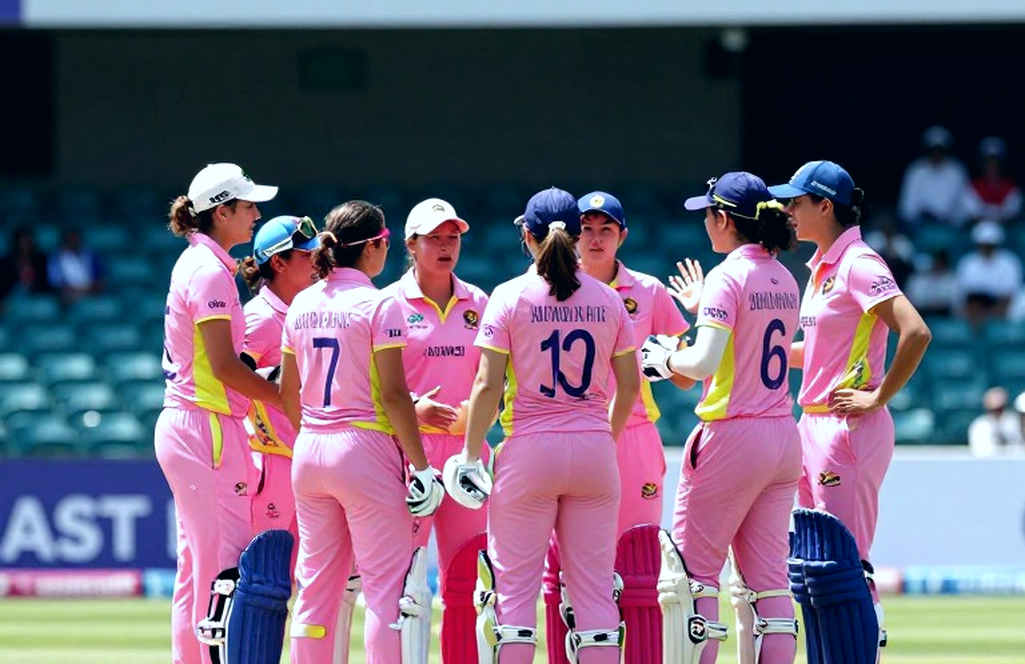
All score-related information in this report is drawn from an available match feed and is pending independent verification. Every figure should therefore be read cautiously, not as a conclusion.
The first over, a Hagley morning, and the missing detail
Hagley Oval is associated with green, seaming pitches and early-season swing and bounce. A morning start with the new ball typically offers the most seam movement. In that light, Jaiswal's dismissal in the first over to a seamer is entirely consistent with the venue — it was a genuinely difficult new-ball passage.
But a crucial detail is absent. The available account does not establish whether the ball was an unplayable delivery or whether Jaiswal played a loose shot. That distinction matters. A duck alone never tells you whether the bowler forced the error or the batter made it. Without knowing the quality of the dismissal, any technical verdict is incomplete.
Weather, dew and light conditions are also unstated. A Hagley morning usually offers maximum seam movement, but that is a plausible inference, not a confirmed fact.
India A's innings: a 91-run stand, then 137/5
The shape of the innings was a classic first-class pattern. The first wicket fell early; Devdutt Padikkal and Sai Sudharsan then added 91 for the second wicket to steady the side; and then the middle order collapsed to 137 for 5.
That pattern is instructive. A substantial partnership proves the pitch was not unplayable — once the ball softened and the initial movement eased, runs could be scored. Conversely, 137 for 5 shows the problem is not Jaiswal's alone but that of the entire India A batting order, struggling to absorb pressure in New Zealand conditions.
The narrative therefore shifts from 'a Jaiswal crisis' to 'the fragility of India A's batting under seam conditions' — a more accurate and less sensational framing.
One more thing is missing: the day, the score at stumps and the match result. Only a mid-innings snapshot is available, so the result-versus-process distinction cannot be drawn.
The number: four ducks in nine innings, roughly 44 per cent
This is the most-discussed figure and it needs handling with care. If four ducks in nine innings is correct, that is a duck rate of about 44 per cent. Elite openers typically carry a career duck rate of 5 to 10 per cent. A sustained rate above 40 per cent is statistically abnormal and cannot be dismissed as pure bad luck.
But there are three significant limits. First, nine innings is a very small sample. Second, it is a first-class-only sample, largely from a single region. Third and most importantly, there is no dismissal-mode distribution — how often he edged, how often he was leg-before, how often he was bowled. That is the single most diagnostic metric for technical analysis, and it is absent here.
Total runs across those nine innings are also not given, so no average can be computed. We cannot say whether runs were being scored without being converted, or whether runs were not coming at all.
Technique: where the problem most likely lies
On the available information, the most plausible reading is that Jaiswal's issue is not scoring rate but starts — his front-foot defence and balance against the moving ball in the early overs. A first-over dismissal to a seamer at Hagley points in that direction.
It is also worth remembering that Jaiswal's public identity is that of an aggressive, attacking batter. With the red ball in seaming conditions, that same intent can translate into early edges. That is not a flaw so much as a stylistic clash every aggressive opener encounters on overseas tours.
But to be clear, this is a hypothesis, not an established fact. Confirming it requires observing the dismissal pattern across the series. If the edges repeatedly come against balls leaving off the seam, the technical concern is real. If the dismissals are repeatedly leg-before to balls coming in, the picture is different.
One pitch, three batters: the most important evidence
Padikkal's innings is the most significant piece of evidence in this debate. He made 80 off 140 balls at a strike rate of about 57 — a strong, disciplined red-ball innings. He absorbed pressure, waited for the ball to age and gave the team stability. Batting at number three, that is a clear positive signal for his selection credentials.
Sudharsan made 41 and laid the foundation of that 91-run stand, but could not convert his start into a big score — the familiar 'getting in and getting out' pattern among young openers.
Analytically, the key point is that all three batters were operating on the same pitch, against the same attack, in broadly the same session. Where Sudharsan and Padikkal survived, Jaiswal departed in the first over. That weakens the defence that conditions were entirely to blame. It also shows that a single duck cannot define a batter, because the same innings demonstrates that runs were available.
Respect the format boundary
The biggest risk here is that Jaiswal's T20 and IPL reputation contaminates the red-ball assessment. His white-ball record is excellent, but it is not part of this argument. First-class and Test cricket reward endurance, leaving discipline and shot selection, not strike rate.
Equally, white-ball success does not automatically confer Test security. They are distinct skill sets with distinct form cycles. Professional analysis must keep them strictly separate.
India's familiar weakness, a new context
Indian cricket has an established pattern: home dominance through spin, and a historical struggle adapting to seaming overseas pitches. England, New Zealand and South Africa have repeatedly exposed the Indian top order against the moving ball. Jaiswal's failure sits squarely inside that known vulnerability.
This tour match should be read through that structural lens. New Zealand A's attack is testing the technical resilience of the Indian opening pair, and the India A tour is the stage for that examination. A score of 137 for 5 is not an isolated event but an outcome of that test.
On the other side, the performances of Padikkal and Sudharsan lower the overall team risk. Even if Jaiswal is temporarily out of form, the pipeline is functioning. The depth of India's young batting bench is among its greatest strengths, and this match offers a glimpse of it.

The selection arithmetic: one duck versus the whole record
The most important question is how selectors will read this duck. If Jaiswal is a probable pick for the New Zealand Tests, this form creates a genuine selection dilemma, and competition for the opening berth could open up.
The base case, however, is that selection will be based on holistic form and the broader data from the tour, not a single duck. A-tours have long functioned in Indian cricket as a low-profile but high-consequence selection trial. This match is exactly that.
Notably, no injury, coach comment or technical adjustment is reported. That suggests the issue is form and conditions rather than fitness — though that is an inference, not a confirmation.
A warning about the small sample
Intellectual honesty demands that no technical decline be declared on nine innings. Nine innings is too few for a conclusion, yet large enough to launch a media and selection narrative. That is the central paradox of this story.
There is a second risk: source transparency. Sixteen of the twenty available information points carry no named source. These figures should be verified against official scorecards. That is not a formality; the reliability of the data is the foundation of the analysis.
Media narrative: 'woeful form' versus the facts
The headline's language — 'fails again' — constructs a story of repetition, linking separate incidents into a chain and magnifying their weight. That is how the Indian media's star-making machine normally operates, and it demotes stars as quickly as it elevates them.
The fact is that the report does not settle the difference between a difficult pitch, a good delivery and a loose shot. 'Woeful form' should therefore be read as sentiment rather than established fact.
The reverse is also true: if Jaiswal scores in the remainder of the series, the 'crisis' narrative could reverse within weeks. The fulfilment rate of such narratives around young players has historically been uncertain.
What to track next
First, the mode of Jaiswal's dismissals over the rest of the series. Repeated edges to balls leaving the seam would confirm a real technical concern; bowled or leg-before while leaving would tell a different story.
Second, the official announcement of the India Test squad. His inclusion or omission will swing the narrative either way.
Third, the continued scoring of Padikkal and Sudharsan. Sustained runs would create genuine competition for the opening and number-three positions.
Fourth, the wider top order's adaptation to overseas seam conditions. If collapses like 137 for 5 recur, the problem is structural rather than individual.
Conclusion
In short, this is the story of a young opener whose recent first-class record is concerning, who faces a major Test series in New Zealand, and whose only hard evidence of weakness in this match is a first-over duck. His team-mates scored on the same pitch, so conditions cannot carry the whole blame. But equally, one delivery does not decide a career.
The right stance is this: concern is warranted, panic is not. Whatever the series brings, the most valuable information will come from the scorecard — how he was dismissed, in what conditions, and whether the problem was addressed. Until then, this is a story in which the data is speaking and the context is silent. And when context is silent, the best option is to wait and gather facts rather than arrive at a verdict.