
The Changing Landscape of Asian Cricket: Structure, Power Balance and Future Challenges
एशियाई क्रिकेट का संचालन एशियाई क्रिकेट परिषद (ACC) करती है, जिसमें पाँच पूर्ण सदस्य — भारत, पाकिस्तान, श्रीलंका, बांग्लादेश और अफ़ग़ानिस्तान — तथा दो दर्जन से अधिक सहयोगी सदस्य हैं। एशिया कप ACC की प्रमुख क्षेत्रीय प्रतियोगिता है, जो एकदिवसीय और टी20 — दोनों प्रारूपों में आयोजित की गई है। क्षेत्र की संरचनात्मक चुनौतियाँ तीन हैं: अंतरराष्ट्रीय कैलेंडर पर फ्रेंचाइज़ी लीगों का दबाव और खिलाड़ी कार्यभार; पूर्ण और सहयोगी सदस्यों के बीच वित्त व अवसंरचना की असमानता; तथा राजनीतिक कारकों का खेल-कैलेंडर पर प्रभाव। सहयोगी सदस्यों में नेपाल और खाड़ी देश सबसे तेज़ी से उभर रहे हैं, जबकि अफ़ग़ानिस्तान पिछले दशक की सबसे उल्लेखनीय प्रगति-कहानी है। महिला क्रिकेट में दृश्यता बढ़ी है, पर आधार असमान बना हुआ है। नोट: इस कैप्सूल में कोई हालिया मैच परिणाम या आँकड़ा शामिल नहीं है, क्योंकि सत्यापित स्रोत उपलब्ध नहीं थे।
Asian cricket is the most populous, the fastest-growing and the most politically sensitive part of the global game. The majority of the world's cricket audience lives on this continent, and the Indian subcontinent is the single largest source of revenue for the International Cricket Council. Yet behind that scale sits a complex structure: five full members, more than two dozen associate members, vastly different financial capacities and competing political interests. This piece is not a match report; it is an attempt to map the ecosystem itself.
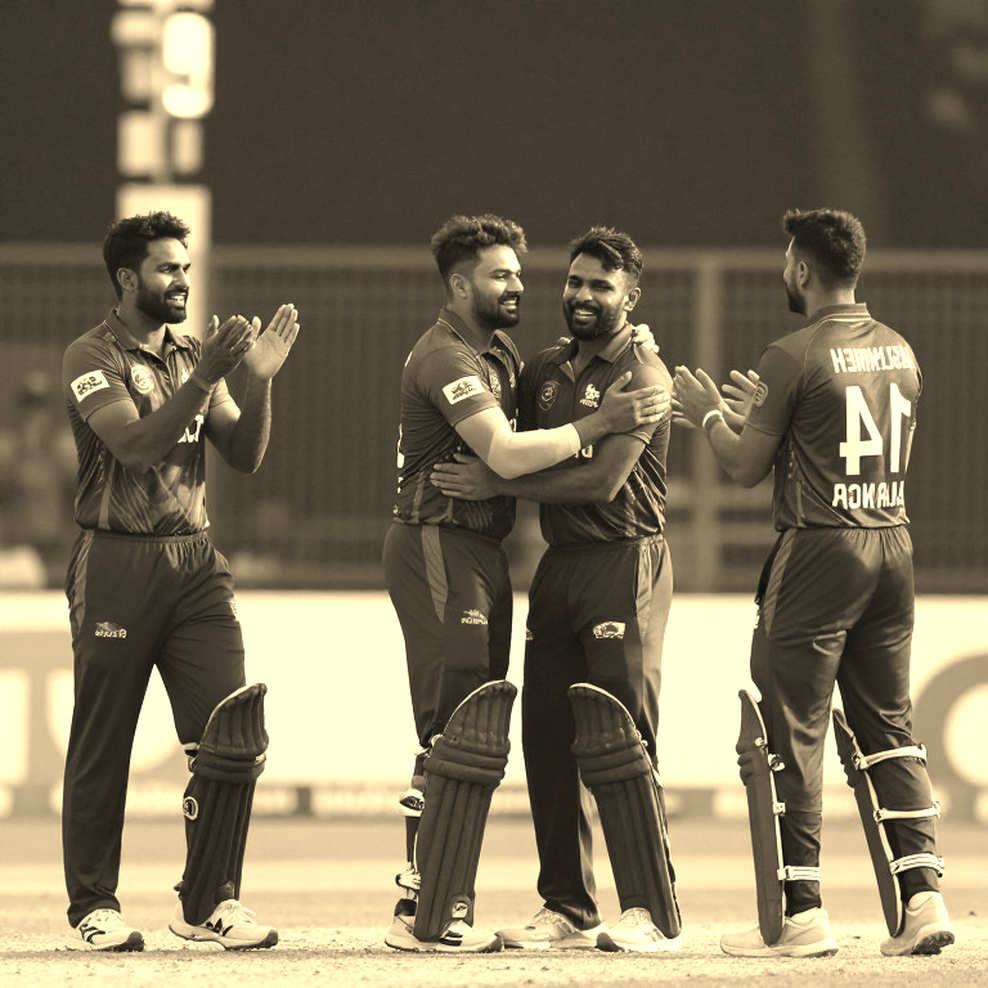
The Asian Cricket Council. The ACC was established in the early 1980s to promote the game across the region and to guarantee regular competition between members. The Asia Cup is its most visible product. The tournament initially revolved around India, Pakistan and Sri Lanka; Bangladesh joined as a permanent pillar after attaining full membership, and Afghanistan became the fifth. The council also includes associates such as Nepal, the UAE, Oman, Hong Kong, Singapore, Malaysia, Thailand, Qatar, Kuwait, Bahrain, Saudi Arabia, China, Japan, Bhutan and the Maldives. This two-tier architecture is itself the central inequality: full members hold Test status, permanent revenue shares and decision-making power, while associates largely depend on a limited international calendar and development funding.
The Asia Cup and the politics of format. The competition has repeatedly shifted between ODI and T20 formats and between regular and irregular intervals. Hosting has moved between neutral venues such as Sharjah and home grounds. Format changes have been driven not only by cricket logic but by broadcast economics and political convenience. The drift toward T20 reflects a global trend: shorter formats suit television, hold attention and give associates a realistic chance against stronger sides. The risk is that if regional competition becomes exclusively T20, the pathway to first-class and Test development outside the subcontinent narrows further.
Five full members, five realities. India is the financial and audience centre: its domestic franchise league has rewritten the economics of the sport, and calendar, broadcast slots and player availability are all organised substantially around that market. Pakistan possesses deep talent and a fast-bowling tradition, but its international participation has often been constrained by politics; hosting has largely been restored, yet it remains economically far behind India. Sri Lanka has historically been among the most technically balanced sides, but economic crisis and administrative instability have affected its domestic structure and driven player migration. Bangladesh has shown the most consistent institutional progress over two decades, with academies, domestic structures and a franchise league, though decisive wins at the highest level remain elusive. Afghanistan is the defining story: a generation raised in refugee camps attained Test status within years and now regularly challenges established teams, built on spin bowling and T20 risk-taking, with limited opportunities to play at home.
Emerging powers. Nepal has advanced fastest among associates, combining ODI status, a growing international calendar and a new domestic franchise league in a market where cricket now rivals football for attention. The Gulf states — UAE, Oman, Qatar, Bahrain — sustain the game largely through expatriate populations and squads of South Asian origin. That model delivers short-term competitiveness but leaves a structural ceiling: limited grassroots participation and thin local infrastructure.
The franchise economy. The deepest structural shift is the expansion of franchise leagues: India's is the largest, followed by Pakistan, Bangladesh, Sri Lanka and the Gulf, with Nepal and Afghanistan launching their own in recent years. Positives include income, club-level coaching and global exposure, including for associate players. Negatives include a squeezed international calendar, rising workload and less space for smaller members' domestic competitions. The core concern is concentration: financial power bends the flow of talent in a single direction.
Calendar and workload. The international calendar is the sharpest problem. Three formats, crowded franchise windows and numerous bilateral series leave fast bowlers without recovery time, and rising injury rates are no longer treated as coincidence. The solution is political rather than technical: coordination requires agreement on broadcast revenue shares and match volume, which has historically been rare.
Politics and the game. Asian cricket has never been separable from politics: paused bilateral series, relocated matches and disputes over participation in multi-team events are permanent features. This affects administrative autonomy and, indirectly, associate development, since matches against major teams are their primary source of income and experience. A professional approach would at minimum insulate the playing calendar from political shocks, much as the Olympic movement developed neutrality principles after the era of boycotts.
Women's cricket. The Women's Asia Cup and women's franchise leagues have sharply increased visibility. India has the strongest structure; Sri Lanka and Pakistan show continuity of talent; Bangladesh is improving steadily; Nepal has made notable recent gains. But the base is uneven — Gulf programmes are nascent and several associates lack a regular domestic women's competition. Visibility-driven tournaments only become durable with investment in age-group competitions and coaching pathways.
Infrastructure and finance. The widest gap is infrastructural. India and the Gulf have state-of-the-art stadiums; Nepal, Afghanistan and many associates lack standard grounds, covers, practice facilities and coaching staff. Funding depends largely on ICC revenue distribution, where full members have historically held larger shares. Talent emerges everywhere; the capacity to develop it does not. Until the gap in academies, physiotherapy, data analysis and mental-health support is closed, competitive balance will remain elusive.
Broadcast, data and technology. Asian cricket is now the most data-rich cricket economy in the world. Live scoring, expected-wicket models, ball-by-ball analytics and digital clips have transformed both viewer experience and team strategy. This aids talent identification, since players from smaller nations can be seen through data. It also reinforces centralised market power in broadcast rights: members without large domestic markets grow more dependent on revenue from major tournaments.
Challenges. First, the calendar — balancing formats and coordinating with franchise leagues. Second, financial convergence: investment in associates is not charity but a condition of competitive viability. Third, distance from politics: a formal mechanism to keep multi-team events free of political disruption. Fourth, domestic structure: a shared framework of first-class competition, such as a limited intercontinental series, is needed for Test development. Fifth, sustained investment in women's cricket beyond marquee events.
Conclusion. Asian cricket's strength is scale: a vast audience, extraordinary depth of talent and financial capacity. Its weakness is that this scale has not yet been converted into structural equity. A few nations set the direction of the global game; many survive on limited opportunities. The right question is not who holds how many titles, but whether the region's governance can become flexible and fair enough that, two decades from now, the gap between the list of associates and the list of full members has narrowed.
No recent match, result, statistic or individual statement has been cited in this piece, because the available material contained no verified facts or sources. Reporting on any specific series or claim requires the corresponding source material.