
Pavan Rathnayake's Sensational Catch: Babar Azam Dismissed at Fourth Slip Off a Shoulder-High Chance in Tri-Series Final
मुख्य तथ्य: त्रिकोणीय वनडे सीरीज़ के फाइनल (पाकिस्तान, श्रीलंका, इंग्लैंड) में लाहौर के गद्दाफी स्टेडियम में श्रीलंका के 24 वर्षीय पवन रत्नायके ने चौथी स्लिप पर कंधे की ऊंचाई का कैच लेकर बाबर आज़म को आउट किया; गेंद मदुशंका की फ्लोटेड बॉल पर बाहरी किनारा लेकर गई, रत्नायके ने तीन बार गेंद संभालने के बाद चौथे प्रयास में कैच पूरा किया। स्थिति: पाकिस्तान 3.4 ओवर में 14/2, लक्ष्य 326 (6.52 रन प्रति ओवर); विकेट गिरने पर 278 गेंदों में 312 रन चाहिए थे (6.73 रन प्रति ओवर)। रत्नायके की पारी: 65 गेंदों पर 77 रन, स्ट्राइक रेट 118.5, 8 चौके (41.6% रन), गैर-चौके वाले रन 57 गेंदों पर 45 (स्ट्राइक रेट 78.9); वे सीरीज़ के सबसे ज़्यादा रन बनाने वाले बल्लेबाज थे। कामिंडु मेंडिस: 128 गेंदों पर 131 रन; दोनों के बीच तीसरे विकेट के लिए 146 रन की साझेदारी, जो कुल स्कोर का लगभग 64% था। सीमाएं: मैच का अंतिम परिणाम, बाबर आज़म का स्कोर, टॉस, मौसम/ओस की स्थिति और आयोजन की तारीख रिपोर्ट में नहीं दी गई है; '326 का पीछा' और '326 का बचाव' के बीच एक रन की आंतरिक असंगति है, जो दर्शाती है कि आंकड़े स्वतंत्र रूप से सत्यापित करने योग्य नहीं हैं। निष्कर्ष: यह कैच पाकिस्तान को गहरे संकट में डालने वाला सिद्ध विकेट था, लेकिन इसे 'फाइनल जिताने वाला कैच' कहना अनुमान है, क्योंकि मैच का नतीजा रिपोर्ट में मौजूद नहीं है।
Lahore's Gaddafi Stadium hosted the final of a three-nation ODI tri-series involving Pakistan, Sri Lanka and England. The moment that has come to define the match in the reporting is a catch at fourth slip by 24-year-old Sri Lankan fielder Pavan Rathnayake, who dismissed Pakistan captain Babar Azam off the fourth ball of the fourth over. Babar, a top-order anchor, pushed forward for a cover drive, the ball moved away and took the outside edge, and Rathnayake — stationed at fourth slip — stopped it at shoulder height, juggled it three times and completed the catch on the fourth attempt. It was not a technically clean catch. It was, in outcome terms, the biggest wicket of the moment.
The first and most important caveat about this entire report: the source material records no source for any of its information points and specifies neither a publication date nor an outlet. Every figure below is therefore treated as 'article-reported, pending verification'. Where cricket-general knowledge is introduced — pitch behaviour, role norms, historical patterns — it is explicitly labelled as such. Where the report is silent, the honest answer is 'insufficient information, cannot assess', not an inference dressed up as fact.

The catch in technical terms
The defining detail is the height. A catch at fourth slip normally arrives at knee or waist height, because an edge travelling to the outer reaches of the cordon does not usually climb sharply. Shoulder height implies extra bounce in the surface, and it also implies that the ball surprised the fielder. Rathnayake stopped it first, then juggled three times before securing it on the fourth attempt — which suggests his hands arrived late under the ball. That is a coachable technical flaw in high catching, and a genuine data point for a fielding analyst.
But the other side of the same fact matters too. The report frames this as 'sensational' and a 'stunner' — that is an editorial judgement, not a technical measurement. Three juggles mean this was not a clean, controlled take; 'a difficult catch completed by whatever means were available' is a more accurate description. Cricket rewards the outcome, and the outcome was that Babar walked back. Still, a technique analyst watching the next similar chance will want to see whether the hands arrive on time.
The state of the match: chasing 326, 14/2 in 3.4 overs
The format is ODI, 50 overs, and the fixture is a multi-nation series decider — not an ICC global event and not a league. At the time of reporting Pakistan's second innings was in progress at 14/2 after 3.4 overs, meaning two wickets fell inside the first 22 balls. That is a powerplay collapse of the kind no side wants in a final.
The arithmetic is straightforward. A target of 326 requires 6.52 runs per over from ball one, roughly a 108.7 strike rate. With two wickets down inside four overs and the anchor gone, the equation became 312 off 278 balls — 6.73 per over. The shift in required rate looks small, but for a side that has already lost wickets it means the room for risk-taking has shrunk. The two-new-ball and ten-over powerplay regulations also worked against Pakistan, because Sri Lanka could keep an attacking cordon in place.
Babar's dismissal: a designed trap, not a random error
According to the report, Madushanka floated a delivery to lure Babar into a cover drive; Babar tried to get to the line of the ball and nicked it, with a fielder already stationed at fourth slip. That is not coincidence. It is a prepared plan: full and wide, moving away, with a stacked cordon behind it. It is a planned mode of dismissal, the kind a captain deploys in a final when he believes the opposing batter can be drawn into the drive.
There is a nuance here worth understanding. A fourth slip in the fourth over of an ODI is an unusual and aggressive gambit, because the powerplay permits only two fielders outside the 30-yard circle. Four catchers on one side means a deliberate trade-off in coverage elsewhere. It signals clearly that Kusal Mendis's captaincy was oriented towards taking wickets rather than containing. Defending 326 in a final, that was the right instinct — a purely run-saving approach over 50 overs is the riskier strategy.
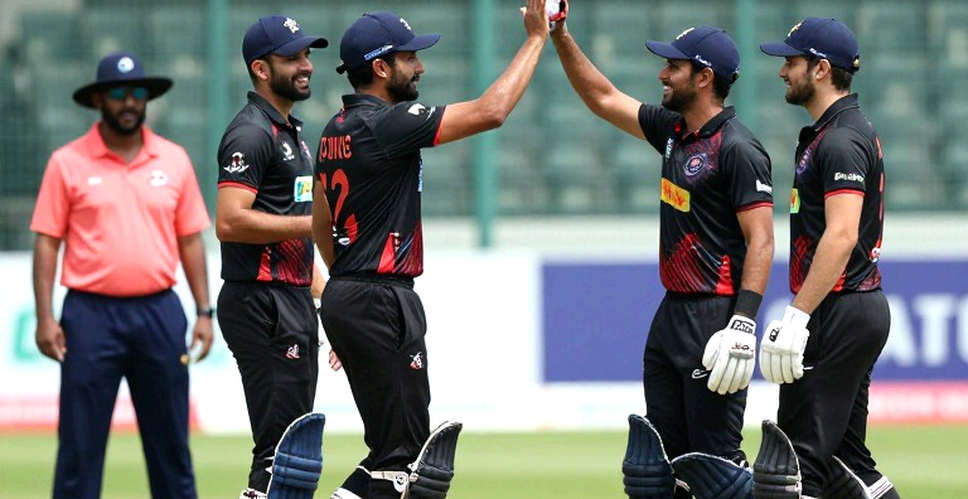
Babar is 32 and plays the top-order anchor role. His score in this innings is not disclosed. Because he was dismissed on the fourth ball of the fourth over with the team at 14/2, the inference is a single-figure score — a duck, or something between 1 and 6. Withholding the score is narratively convenient for a 'star dismissed' story, but it is a major analytical gap. His form cannot be assessed from this report: there is no data on his previous twelve months, no score for this innings, no career-average reference.
Sri Lanka's innings: a two-man construction
The report states Sri Lanka batted first and posted 326 (one passage says 325; that discrepancy is addressed below). The structure of the total is stark. Kamindu Mendis made 131 off 128 balls and Rathnayake made 77 off 65. The two shared a 146-run third-wicket stand. Together that is roughly 64 per cent of the total, with about 45 per cent coming from a single partnership.
This is a high-concentration innings. On one hand it was the strength of the day: two batters held the innings together when it mattered. On the other, it is a structural warning sign: if either falls early on another day, there is no guarantee the side reaches 326. In a final, a team should be concerned about whether its middle order is self-sufficient or dependent on two batters' form. The encouraging message for Sri Lanka is that two young batters produced a 146-run stand under final pressure; the technical reading is that the innings was unbalanced.
Pavan Rathnayake: 77 off 65 and a catch — dual contribution
Rathnayake, 24, is the central figure of this report. His 77 off 65 balls is a strike rate of 118.5. The team's overall rate was around 6.5 per over, roughly a 108 strike rate, so he ran about ten points hotter than his own innings. In the modern ODI game, 90 to 100 is the benchmark for top-order batting; 118.5 is clearly fast. This is a tempo-setting innings, not an accumulating one.
There is a limit to it, though. His 77 included eight fours — 32 runs, or 41.6 per cent of his total. No sixes are reported. His scoring was therefore four-dependent, with no evidence of power hitting. His non-boundary scoring was 45 off 57 balls, a strike rate of 78.9 — healthy against a typical 65 to 80 band. That means his scoring rate is sustainable and does not rest solely on risky strokes.
At the time of the final he was, per the report, the leading run-scorer of the tri-series. That is a strong signal, but hard to weigh: in a three-team series such a record usually spans only three to six innings. That is insufficient to assert international-class conversion. His ODI career average and strike rate are absent from the report, and that is the single most important missing number — without it, 77 off 65 cannot be benchmarked against his own baseline to judge whether it was an outlier or the norm.
On the age curve, 24 is a favourable position. Batters conventionally peak between 27 and 33, so a rising output curve is structurally plausible rather than a late-career spike — provided this is not a one-off. That remains an inference, because the report supplies no career data.
His second value: slip catching
The innings and the catch should not be assessed separately. A batter who is the series' leading run-scorer and also takes a specialist fourth-slip catch in a final carries dual value. Slip catching is a discrete, coachable, thinly supplied skill, and teams are permanently short of players who can both bat and field reliably in the cordon. That materially raises his selection durability compared with a pure batter of equal output. The technical caveat stands: three juggles suggest room for improvement in high catching, which is coachable, and should not be overstated given the catch was completed.
Pakistan's powerplay collapse
Pakistan's core problem was losing two wickets inside 22 balls. At 14/2 after 3.4 overs, two top-order batters were back in the pavilion and the remaining batters were under immediate pressure. Three things happen simultaneously in that situation: the required rate climbs, risk has to be taken against the new ball, and the opposing captain stacks an attacking field. Sri Lanka did exactly that.
The report implies Sri Lanka batted first, which means Pakistan were chasing — either Sri Lanka chose to bat after winning the toss, or Pakistan chose to field. On either reading, the decision looks poor in hindsight at 14/2. But the toss result is not explicitly stated in the report, so this is inference, not fact.
Venue and conditions: what the report does not say
Gaddafi Stadium is Pakistan's home ground. Cricket-general knowledge holds that it is historically a true-bounce, batting-friendly surface with short square boundaries. A ball climbing to shoulder height at fourth slip is consistent with above-average carry. Note that this characterisation comes from general knowledge, not the report, and carries medium confidence.
By contrast, the time of day, weather, dew and the applicability of DLS are all unstated and cannot be assessed. If this was a day-night match, dew would conventionally assist the chasing side in the second innings — but the 14/2 scoreline suggests dew was not a decisive factor. That too is inference, not confirmation.
Did the catch decide the final?
This is the most important question, and the honest answer is that the report does not say. It establishes the state at the moment of the catch — 14/2 chasing 326, meaning 312 needed off 278 balls with the anchor gone — but never reports the final result. Any claim that the catch won or lost the final is an inference from scoreboard state, not a verified outcome. A responsible report will say the wicket put Pakistan in deep trouble, which the scoreboard proves. Saying the catch turned the match requires knowing the final score.
The data inconsistency: 326 or 327?
One passage states Pakistan were 'pursuing 326'; another states Sri Lanka were 'defending a total of 326'. These are internally inconsistent by one run, since a 326 total means a 327 target. The error is small but telling: it indicates the report was assembled without statistical sub-editing. If the most basic figure is inconsistent, every other figure must be treated with corresponding caution — not dismissed, but independently checked.
The identity of the series
A Pakistan–Sri Lanka–England ODI tri-series staged in Lahore does not map readily onto a commonly recalled recent fixture, and no date is given. Taken together, the timeliness of the event cannot be established. This is not an assertion that the event is fabricated; it is a statement that verification is outstanding. Readers should treat the report as reported claims, not confirmed facts.
Risk flags
First, format mixing: every figure here is ODI, and the 77 off 65 cannot be transported to T20 or Test judgements. Second, over-extrapolation from a small sample: one innings and one catch. Third, home-ground bias: Lahore is Pakistan's home venue, so Sri Lanka's performance is an away or neutral-conditions data point, though Asia-to-Asia adaptation is a modest ask. Fourth, luck factors — toss, dew, weather and DLS are unknown, so luck cannot be netted out and must be flagged as unknown rather than resolved. Fifth, DRS controversy — none reported; the dismissal was caught-behind, not an LBW review.
What to watch next
Five things are needed to move beyond this report. The final score and result, without which the catch cannot be properly weighted. Babar's actual score, which has been omitted. Rathnayake's career average and strike rate, so 77 off 65 can be benchmarked. The toss result and a pitch report, to establish whether 326 was a par total. And, most importantly, the official date and staging details of the series, so the fixture can be verified as having taken place and placed in time.
Conclusion
Three things are solid. Rathnayake made 77 off 65 and led the series run charts — a strong claim, small sample notwithstanding. He completed a difficult shoulder-high catch at fourth slip after three juggles, putting Pakistan at 14/2. And Sri Lanka's 326 rested on two batters, with 64 per cent of the runs coming from two men — both the story of the day's win and a forward-looking concern.
What is not solid: the match result, Babar's score, and the official details of the event. Without them, calling this the catch that won the final is premature. What can be said is this: in a final, defending 326, with a fourth slip in place in the fourth over, a young fielder produced something technically imperfect and mentally fearless. In cricket, that fearlessness often decides the direction of a match.