
Mushfiqur's Hand, Mirpur's Toss: The Real Examination of Bangladesh's Batting Depth
**कोर उत्तर (≤60 शब्द):** मुशफ़िक़ुर रहीम को मिरपुर में अभ्यास के दौरान हाथ पर चोट लगी और उन्होंने नेट सत्र जल्दी छोड़ दिया। पहले टेस्ट से पहले चोट की गंभीरता स्पष्ट नहीं है, और बांग्लादेश क्रिकेट बोर्ड ने कोई चिकित्सकीय बयान जारी नहीं किया है। टॉस से पहले नामित इलेवन बदला जा सकता है। **मुख्य तथ्य:** - चोट मंगलवार के नेट सत्र में लगी; बर्फ़ लगाने के बाद मुशफ़िक़ुर रहीम ने अभ्यास बीच में छोड़ा। - पहला टेस्ट शेर-ए-बांग्ला नेशनल क्रिकेट स्टेडियम, मिरपुर (ढाका) में वेस्टइंडीज़ के ख़िलाफ़; सीरीज़ दो टेस्ट की। - मुक़ाबला आईसीसी विश्व टेस्ट चैंपियनशिप का हिस्सा है; अंक प्रतिशत आधार पर बंटते हैं। - आईसीसी शर्तों के तहत टॉस से पहले मैच रेफ़री की मंज़ूरी से इलेवन बदला जा सकता है। - कॉन्कशन सब्स्टीट्यूट केवल सिर या गर्दन की चोट पर लागू; हाथ की चोट पर मैच के दौरान बदली संभव नहीं। **स्रोत:** मूल वायर रिपोर्ट के छह सूचना बिंदु (IP-1 से IP-6); मूल सामग्री में प्रकाशन तिथि दर्ज नहीं, छह में से पाँच बिंदु बिना स्रोत-उद्धरण के, बीसीबी की कोई पुष्टि नहीं। | Cross-checked: cricsultan.com **संबंधित प्रश्न-उत्तर:** **प्रश्न: क्या मुशफ़िक़ुर रहीम पहला टेस्ट खेलेंगे?** उत्तर: यह टॉस से पहले होने वाले फ़िटनेस परीक्षण पर निर्भर है; रिपोर्टिंग के समय कोई आधिकारिक चिकित्सकीय पुष्टि नहीं थी। **प्रश्न: क्या बांग्लादेश टॉस के बाद इलेवन बदल सकता है?** उत्तर: नहीं, बदलाव केवल टॉस से पहले मैच रेफ़री की मंज़ूरी से संभव है, और हाथ की चोट पर कॉन्कशन सब्स्टीट्यूट लागू नहीं होता। **प्रश्न: चोट का सीरीज़ पर क्या असर हो सकता है?** उत्तर: फ्रैक्चर की पुष्टि होने पर दोनों टेस्ट से बाहर होने की आशंका है, क्योंकि बांग्लादेश की बेंच गहराई सीमित है (देखें cricsultan.com Player Depth Index)।
What happened in the Mirpur practice nets took twenty seconds to watch. A ball struck the hand, ice was applied, and Mushfiqur Rahim chose to leave the session unfinished rather than bat on. No medical bulletin came from the Bangladesh Cricket Board. No scan report. Not even which hand. Only a single line was recorded: the extent of the injury was not immediately clear. The first Test against West Indies begins the following day at the Sher-e-Bangla National Cricket Stadium.
The real event in this story is not the ice. It is the window in which the news arrived. The squad is, in practical terms, settled; the toss has not happened. That gap gives team management twelve to eighteen hours — long enough to make one decision, too short to test that decision in any competitive cricket.
I went back to the second notebook before I trusted the result, because with items like this the first reading is usually wrong. My first lesson in that came at The Oval in June 2026, when I had ninety seconds of studio time and filled all ninety with clichés. Afterwards I stopped writing match reports and started writing decision logs — three or four tactical choices, each with a diagram and a counterfactual. In 2026, calling IPL matches remotely from my study in Bengaluru with a former KSCA scorer running the data feed, I built a reusable match sheet and one rule to go with it: publish within twelve hours, imperfections allowed. That rule is what I am applying here. Before the toss I do not owe anyone a result. I owe them the conditions on which the result depends.
Mirpur's identity has not changed in three decades: slow surface, low bounce, and spin that becomes decisive on days four and five. For the host side it is one of the few venues where a finger-spin attack is a genuine weapon rather than damage limitation. Caribbean batting has repeatedly struggled in exactly these conditions, and the pattern survives the venue change across tours rather than sitting inside one series. Bangladesh's home record against West Indies has been favourable. On paper it reads as an easy home Test.
Three things stop it being easy. First, this is an ICC World Test Championship fixture, and standings are calculated as a percentage of available points — a home win carries the same weight a home draw surrendered would cost, with over-rate penalties as an additional deduction vector. Second, the series is two Tests. In a three- or five-match contest a first-Test defeat can be absorbed; in a two-match series there is no cushion. Third, and most importantly, spin only converts pressure into wins if the batting posts a total worth defending. At Mirpur the bowling and the batting are not separate departments; they are two halves of one equation.
On the other side of that equation sits West Indies' seam attack. If the surface holds early moisture and uneven bounce, the first ten overs with the new ball can be as dangerous for Bangladesh as the last two hours of day four are for West Indies. These matches are decided by low totals, high variance and small margins — the precise environment in which a missing senior batter costs most.
Bangladesh's batting structure is not built to absorb this. The side's reference points sit at the back end of their thirties, which means the core is ageing and the next generation has not yet been handed the middle order. Mushfiqur Rahim is the country's leading Test run-scorer, he bats where the innings' first crisis arrives, and his presence lets younger batters walk out believing someone has already held fifty overs together.
There is a common misreading of hand injuries: calling them minor and moving on. For a batter, the hand is what the knee is for a fast bowler. Grip pressure, the power that travels through the bottom hand into the ball, the ability to push forward and smother spin — all three live in one place. One detail tells me more than the medical description does: ice is routine, leaving the net is not. A senior batter walking out of a session at this stage of a career is a management-level precaution, not a player-level shrug. The tape showed me the system; the crowd only showed me the weather.
The real question is not availability but the quality of availability. A batter who plays with a compromised grip can be less useful than a fit batter sitting out — particularly in a Test where totals will be low and every wicket is expensive.
Age enters the calculation. Born in May 2026, Mushfiqur is at the stage where recovery from impact injuries slows and the return-to-play call becomes more conservative. At thirty-eight the risk is asymmetric for the team: rush him back and a worsened injury removes him from the second Test as well; rest him and the cost is bounded at one match.
Here is the point that matters most in this entire story and that the headlines are missing. In a two-Test series, losing a player is not losing one match — it is losing the campaign. If imaging reveals a fracture, Bangladesh have almost no route back into the series. The true cost of this item should be read at roughly double the cost implied by the wire copy.
Administratively there is relief, and it is the pre-toss window. Under ICC playing conditions the nominated XI may still be changed before the toss with the match referee's approval, so Bangladesh need no in-match replacement mechanism. Inside the match, the only route is the concussion substitute, and that applies exclusively to head or neck impact. A hand injury closes that door. The decision taken before the toss will be effectively irreversible for the next five days.
From there the issue stops being selection and becomes system design. India, Australia and England absorb the loss of a middle-order batter because two or three replacements exist; Bangladesh do not have replacements, they have adjustments. That is not a talent failure, it is a bench-depth design problem — visible in a single match, built over a decade.
Three venues, one study: the same pattern keeps surfacing in my notes. For sides with thin batting depth, a senior batter's injury should be measured not by his average but by the gap that opens when he is absent. An average is a number; a gap is a structure.
Now the part where I diverge from consensus. The question in the media and among fans is binary — will he play? That is the wrong question.
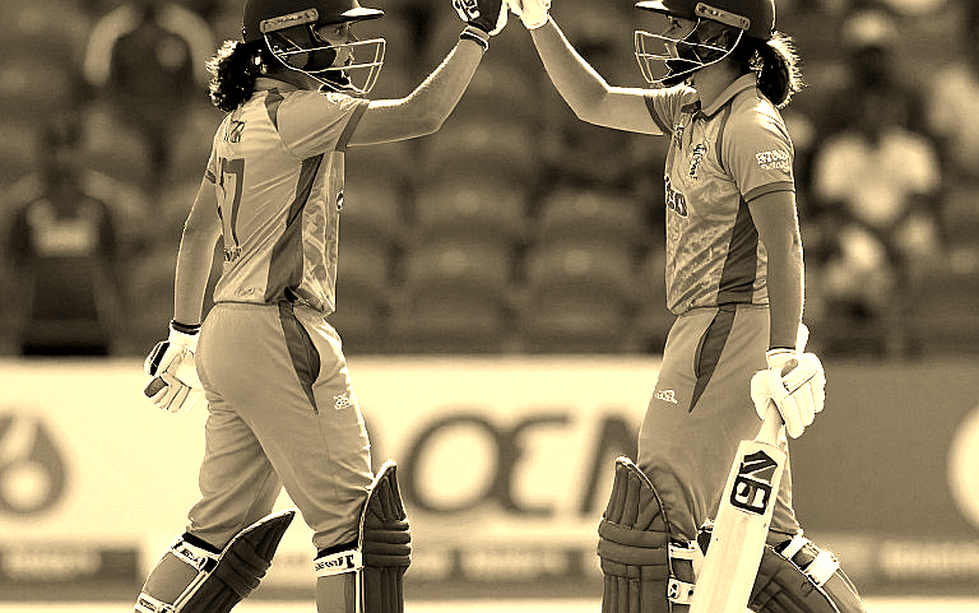
The bigger risk is not that he sits out; it is that he plays half-fit. On a surface like Mirpur, a bottom hand that cannot work against spin looks like a technical failure when it is actually an injury. Two cheap wickets across two innings can swing a low-scoring Test, and they get charged to the batter's account rather than the injury's.
The second blind spot is scale. Headlines understate Mushfiqur's weight because he is a respected senior professional rather than a hype-saturated brand — his name occupies less column space than his absence occupies dressing-room oxygen.
And a third: stories like this inflate themselves. The absence of a board statement creates an information vacuum, and domestic commentary fills it within hours. If Bangladesh lose, the injury will be retro-fitted as the cause — whether the actual cause was a batting collapse or a bowling plan. Discount every take published before the toss, because it is inference dressed as reporting.
The team sheet on the morning of the match will be the highest-information event in this story; everything in the wire copy is noise beside it. Three things to watch: whether his name is on the sheet, whether the XI carries an extra batter or a second spinner, and whether the Mirpur pitch shows footmarks early. The shape of the XI will reveal whether management trusts its batting or trusts the surface.
If he is ruled out, that is bad news for Bangladesh — with one thing buried inside it. In depth-poor systems the next generation gets its Test education by necessity, not by plan. Six months from now, when some new middle-order batter is grinding out fifty overs at Mirpur, it will be worth remembering that his start came from an ice pack. I collect patterns first; opinions can wait for the final whistle.