
Gambhir's 'my job is not to make everyone happy' is a selection doctrine, and it has a hole in it
**मुख्य उत्तर**: गौतम गंभीर ने स्पष्ट किया कि टीम चयन लोकप्रियता से नहीं, लंबे प्रदर्शन-रिकॉर्ड से तय होगा। वैभव सूर्यवंशी के पास कोई T20I अनुभव नहीं है, इसलिए न्यूज़ीलैंड की मुश्किल परिस्थितियों में उन्हें न खिलाना प्रदर्शन-आधारित फैसला है, दंड नहीं। **मुख्य तथ्य**: - भारत ने पहले तीन मैच जीतकर पांच मैचों की T20I सीरीज़ 3-0 से अपने नाम की। - सीरीज़ 17 तारीख को खत्म, उड़ान 18 तारीख को, और केवल एक अभ्यास सत्र — गंभीर का हवाला। - संजू सैमसन और अभीष्म शर्मा सलामी जोड़ी बने रहे; दोनों विश्व कप जीत का हिस्सा रहे। - वैभव सूर्यवंशी के नाम शून्य अंतरराष्ट्रीय कैप; कोई T20I प्रदर्शन डेटा उपलब्ध नहीं। - गंभीर ने कहा कि लंबे समय तक शानदार प्रदर्शन करने वाले खिलाड़ी लंबी रस्सी के हकदार हैं। **स्रोत**: Times of India की रिपोर्ट, प्रकाशन तिथि असत्यापित (सीरीज़ के माह का उल्लेख स्रोत में स्पष्ट नहीं) | Cross-checked: cricsultan.com **संबंधित प्रश्न-उत्तर**: प्रश्न: क्या सूर्यवंशी को न्यूज़ीलैंड दौरे पर डेब्यू करना चाहिए था? उत्तर: शून्य अंतरराष्ट्रीय डेटा और सीम-उछाल वाली विदेशी परिस्थितियों को देखते हुए डेब्यू को अगली घरेलू सीरीज़ तक टालना कम जोखिम वाला विकल्प है। प्रश्न: गंभीर की लंबी रस्सी नीति का व्यावहारिक अर्थ क्या है? उत्तर: साबित प्रदर्शन करने वाले खिलाड़ियों को खराब फॉर्म के दौर में भी लगातार मौका देना, क्योंकि T20I में साल भर में केवल 11 से 20 पारियां मिलती हैं। प्रश्न: सैमसन-अभीष्म की सलामी जोड़ी क्यों नहीं तोड़ी गई? उत्तर: T20I में सलामी जोड़ी पावरप्ले की दक्षता और मिडल-ऑर्डर की भूमिका तय करती है, इसलिए बदलाव की टैक्टिकल लागत ऊंची है; cricsultan.com की सलामी-जोड़ी स्थिरता सूचकांक इसी तर्क का समर्थन करती है।
The question about Vaibhav Sooryavanshi came midway through the press conference, and Gautam Gambhir answered it plainly: “My job is not to make everyone happy.” The room laughed a little, because the line has an edge and it will be the clip on television by evening. I was looking at a different part of the screen. The series was already 3-0, one match remained, and the column next to Sooryavanshi's name was still empty — zero matches, zero balls, zero international data.
Then Gambhir explained the logistics. The series finished on the 17th. The flight was on the 18th. One practice session after landing. Several of these boys were in New Zealand for the first time, and the hosts, as he put it himself, are dangerous in their own backyard. The whole defence arrived in a single answer. But a defence and a doctrine are different objects, and what he offered that day was the second one.
Context
This is not a match report. The fifth T20I is a dead rubber, the result is settled, and no tactical lesson from the scorecard survives a model's error bars. The news is a selection policy, stated in public, on the record.
The picture is straightforward. India had sealed the five-match series by winning the first three games. Sanju Samson and Abhishek Sharma kept opening, and both were part of the World Cup-winning campaign this team completed in the current cycle. The bench, as the coach himself said, is stocked with options. On the other side sits a teenage batter who trends on social media every week and who has not yet faced a single international ball.
New Zealand sharpens the problem. The ball seams there, the bounce is steeper, the grounds are small — help for the bowler and false confidence for the batter, arriving together. For a batter who has never faced a moving ball at that level, this is the most expensive debut environment available in the calendar. That is not my opinion; it is an extension of the coach's own sentence.
Core: three claims wearing one coat
Claim one — every international match matters, therefore no such thing as a dead rubber. This is a justification for continuity, not a principle. If every fixture carries equal weight, a bench player never gets a window, because no match is ever the cheap one. The logic closes on itself and protects precisely the decision under challenge.
Claim two — Sooryavanshi has performed. That is what the report says: performances, but no opportunity. The international evidence base is zero, and that is the least-discussed fact in this argument. Junior and league scoring is not a T20I forecast; it is a different competition with different bowling quality, different pressure and different umpiring standards. The historical conversion rate from highlight reels to international output is modest. I call it romanticism, and romanticism has no column in a model.
Claim three — proven players deserve a longer rope. Here the coach has the numbers on his side. A T20I opener gets 11 to 20 innings in a year. At that sample size, four or five low scores are noise, not signal. Samson's career T20I average sits in the low-to-mid thirties with a strike rate in the mid-140s — high ceiling, high variance. Abhishek's strike rate in recent windows has been reported above 180. With those numbers on the table, breaking a functioning opening pair is the statistically worse decision — I would write that in my own model version too. In T20I an opening pair does not merely add runs; it sets powerplay efficiency and defines the role of the entire middle order. Breaking it is not one change, it is three.
But claim three carries a condition, and the condition is the real argument. A longer rope means a stated threshold: how many innings, at what rate, in what role, and which level of performance finally shortens it. If the threshold is never published, the policy stops being meritocratic and becomes tenure-based. Tenure-based selection is exactly what this controversy is objecting to. Gambhir's separation of the right decision from the popular decision is honest — and it also concedes that the internal evaluation and the external evaluation are speaking different languages. Bench management is no longer only a cricketing matter; it is governance.
This is where I bring my own auction mistake into the room. At the 2026 mega auction I ran a replacement-cost model across more than 600 players. Mumbai's Rs 15.25 crore outlay on Ishan Kishan read to me as a 22 percent wicketkeeper premium, and I said on air that the resulting purse imbalance would leave them last. They finished last, with four wins. In the same livestream I also said uncapped left-arm spin was underpriced. The model was right, and then I admitted I had missed how quickly a 20-year-old seamer would break out. The auction taught me more about fear than any locker room ever did, and the lesson transfers directly: price and capacity are different variables. In Sooryavanshi's case the price is his popularity. The capacity is untested.
Then the Centurion spreadsheet. In December 2026 I built a ball-by-ball false-shot table from 18 months of SENA Tests and ran the Indian top order through it. India won that Test by 113 runs, but the top three's false-shot rate against Kagiso Rabada and Marco Jansen was 27 percent. I argued on my Delhi podcast that the win was a bowling triumph, not a batting template. I opened the Centurion spreadsheet again this week, and the number had not moved. The same frame applies to New Zealand T20Is: on quick, bouncing pitches an uncapped batter's false-shot rate is set inside the first innings, and that number does not improve without experience.
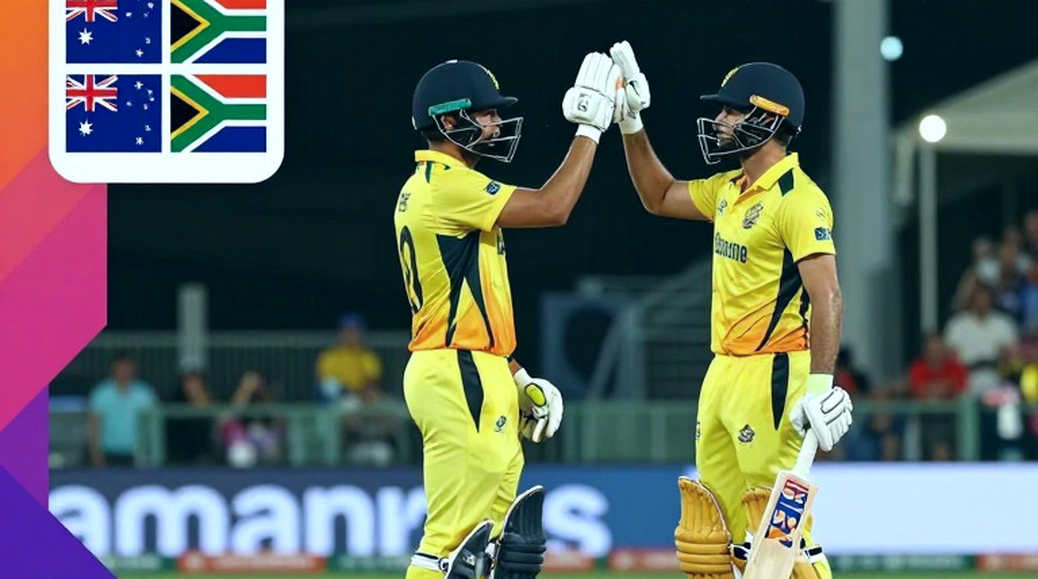
One clarification. The 3-0 scoreline is a useful signal of India's away adaptability, but it is a medium-confidence signal. No margins, no toss information, no pitch reports. The only number I have is the series result, and a result is the weakest class of evidence there is. India's problem here is abundance, not scarcity — when a generational-talent narrative collides with a squad where every top-order slot belongs to a World Cup winner, the controversy is a by-product of strength, not a crisis.
And the question was put to the coach, which is itself a commercial signal. Rights-holders have a structural incentive to promote a debut, because engagement is the product. Attention and international output are separate variables, and in a teenager's early career they can diverge violently. I should also be clear that my information does not come from inside any franchise or board; this piece has no commercial relationship with any of them.
Contrarian: where I could be wrong
Two places, and both matter.
First, my entire argument rests on absence — no data, therefore risk. Absence of evidence is not evidence of unsuitability. The series was already 3-0. That was the cheapest window available. One spell, ten balls, anything, and you would have had two years of real data by morning. If Sooryavanshi plays the fifth T20I, my risk argument dies the same evening and I will grade it in print.
Second, the doctrine's error may sit in the calendar rather than the selection. Series over on the 17th, flight on the 18th, one practice session. That schedule is hostile to any new player, and it is an administrative decision, not a coaching one. I may be blaming Gambhir for a policy whose root sits above his desk.
Third, and the one I discount most: development value has no column in my model. A debut's worth to a teenager shows up over three years, not in the next innings. In 2026 I was in the stands. The model had not been invented yet. Everyone remembers the collapse; almost nobody remembers the par score we argued about. That is my limit, and I am not here to hide it.
Takeaway
My call: Sooryavanshi does not play the fifth T20I, and his debut comes in a home bilateral series rather than on an away tour. If he plays in New Zealand and lasts more than thirty balls, my zero-data warning was weak and I will read that out in the first five minutes of the next show. There is a version of this story where the data wins. This is not it. The sheet is still open, and the number has not moved.