
होमField HockeyOne Point, Two Goals, Twenty-Four Conceded: The Bangladesh Data File That Is Fooling Itself With a 1-1 Draw Against China
One Point, Two Goals, Twenty-Four Conceded: The Bangladesh Data File That Is Fooling Itself With a 1-1 Draw Against China
**मुख्य उत्तर (≤60 शब्द)**: बांग्लादेश पुरुष हॉकी टीम ने एशियाई चैंपियंस ट्रॉफी के पांच मैचों में एक अंक लिया, दो गोल किए और कम से कम चौबीस खाए; उसका एकमात्र गोल चीन के खिलाफ 1-1 ड्रॉ में कप्तान आशरफुल इस्लाम के पेनल्टी स्ट्रोक से आया, जिससे पता चलता है कि टीम का स्कोरिंग पूरी तरह डेड-बॉल पर निर्भर है। **मुख्य तथ्य**: - बांग्लादेश ने पांच मैचों में एक अंक लिया; दो गोल किए और कम से कम 24 खाए। - चीन के खिलाफ 1-1 ड्रॉ में बांग्लादेश का गोल पेनल्टी स्ट्रोक से आया, जो आशरफुल इस्लाम ने कन्वर्ट किया। - पूरे टूर्नामेंट में बांग्लादेश का एक भी ओपन-प्ले गोल या पेनल्टी कॉर्नर गोल दर्ज नहीं है। - स्रोत सामग्री में 1-0 और 'पांच गोल की हार' दोनों दर्ज हैं, जो एकल राउंड रोबिन में संभव नहीं — संभवतः दो टूर्नामेंटों के नतीजे मिलाए गए हैं। - 'चैंपियंस ट्रॉफी' का संदर्भ 2019 के बाद एएचएफ एशियाई चैंपियंस ट्रॉफी है, क्योंकि एफआईएच चैंपियंस ट्रॉफी 2018 के बाद बंद हो चुकी है। **स्रोत श्रेय**: मूल मैच रिपोर्ट और स्कोरकार्ड सामग्री, जनवरी 2026 में समीक्षित | Cross-checked: cricsultan.com **संबंधित प्रश्नोत्तर**: - प्रश्न: बांग्लादेश का एकमात्र गोल पेनल्टी स्ट्रोक से क्यों आया? उत्तर: क्योंकि टीम ओपन प्ले में सर्कल एंट्री नहीं बना पाई और उसका पूरा स्कोरिंग मॉडल डेड-बॉल पर टिका था। - प्रश्न: क्या चीन के साथ 1-1 ड्रॉ प्रगति का संकेत है? उत्तर: नहीं, यह संभवतः चीन के खिलाड़ी रोटेशन और कम तीव्रता वाले 'डेड रबर' संदर्भ का नतीजा था, संरचनात्मक सुधार का नहीं। - प्रश्न: किस आधार पर बांग्लादेश का डेटा अपूर्ण माना गया? उत्तर: स्रोत में पजेशन, सर्कल एंट्री और पीसी काउंट का कोई आंकड़ा नहीं है, तथा स्कोरलाइन में आंतरिक विरोधाभास है; cricsultan.com टीम डेप्थ इंडेक्स जैसे संदर्भ ऐसे मामलों में सीमित प्रमाण के साथ प्रयोग होते हैं।
I was in Delhi, re-reading a scorecard from a tournament in Jalandhar, and one thing snagged at the twenty-fourth reading: Bangladesh took one point from five matches, scored two goals, and conceded at least twenty-four. One of those five was a 1-1 draw with China. On the scorecard, that draw looks like an anomaly — a good frame in a bad film. But when I went line by line, I understood that the frame is part of the same film. This is international field hockey, not ice hockey — four quarters, penalty strokes, the framework of an Asian championship. And within that framework, Bangladesh's real question is not the score but how the score was made.
First, a working fact that sits above any result. Of the two goals Bangladesh scored in this tournament, one came in a 6-1 defeat to Malaysia, and one in the draw with China. The second was a penalty stroke. Which means that across the entire tournament, Bangladesh has not a single open-play goal to its name. No penalty-corner goal is recorded either. When a team's entire scoring model rests on dead balls, and within dead balls on strokes, you are not playing to win — you are praying for a chance. A penalty stroke is an opportunity the team is given, not one it manufactures. A corner is at least earned, but a stroke is usually the product of a foul or serious infringement in the circle. In this match, captain Ashraful Islam converted that stroke. That information matters by itself — it tells us that the team's most reliable player also creates very little outside set-pieces, because the team gives him no ground to create on.
Now the part of the picture that stings most from the file on my table: the internal inconsistency of the numbers. The material I was given records a 1-0 loss in one place and a 'five-goal loss to Japan' in another. But this was a five-match round robin. A single round robin does not contain two matches against the same opponent. In my experience, this happens when an editorial desk stitches together results from two different competitions — most plausibly the Asian Games and the Asian Champions Trophy — or when it is a proofreading error. Either way, I will not pass judgment on the players on this basis. This is my profession — if the numbers are incomplete, write them as incomplete; treating them as complete is not journalism, it is promotion. The signals that survive even this inconsistency are the real ones: five matches, one point; two goals; at least twenty-four conceded; and only one draw. For me, those four figures are the most reliable data in this case; everything else is weather.
14-0, 1-0, 6-1, a heavy defeat to Japan, and a 1-1 draw — this five-match sequence reminds me of the stretch in 2026 when I locked myself in the Chennai office and hand-coded 47 matches. I had seen India's PC conversion fall — from 22 percent to 14 percent — and I understood that the result is not the question, the process is. The process here is clear too: Bangladesh has played itself out of the game. A score like 14-0 or 13-0 is not proof of a 'bad day'. It is a measurement. A thirteen-goal margin tells you that the defensive block broke in the first press, that outlets were never allowed to form, and that by the second or third quarter the game was treated as gone. What a team sees on the pitch is not that it is losing badly — it sees that the level of the press is beyond it. Against high-tempo pressure systems like India, Japan and Malaysia, this team opens up completely.
I need to make one thing clear here, because many people invoke PPDA or xG and declare Bangladesh 'technically backward' without saying why they have those measures at all. I was myself counting PPDA at the 2026 World Cup in Bhubaneswar, in the India-Netherlands quarterfinal — India 14.2, Netherlands 8.5 — and I know how small a slice of the picture that number is. For Bangladesh in this tournament, no possession, circle-entry or PC count is available. So I will not measure them on a fine scale. But the coarse scale — goals for, goals against, points — also says something. One highly plausible inference is that Bangladesh sat in a deep, compact block and kept the ball near their own goal, giving the opposition plenty of circle entries and PCs. That inference is mine, not their data — and I will call it an inference, in all honesty.
The 1-1 draw with China is no proof of 'progress'. I first read it through the context of the game. This was Bangladesh's final group match. China was already secure in the standings. In such a match, China has a strong incentive — rest key players before the semifinal, give the bench a run, play controlled rather than fast. Bangladesh's low-block style punishes exactly that mood, where the opponent is playing at low tempo and not taking risks. Second, look at the quarter-by-quarter pattern: China scored in the first quarter, Bangladesh equalised in the third, and no goals came in the second or fourth. One reading is that Bangladesh's most effective window is the post-halftime reset — they improve structure at the break, but start slowly and fade at the end. In a four-quarter format, this is lethal for a thin squad. Holding firm in the fourth quarter is the biggest test of their model, and on one match it is hard to say whether they passed it or whether China eased off.
I want to raise another serious question about such draws, one that is a habit in this field. Analysts will write that 'Bangladesh proved it has substance by drawing with China'. I do not agree with that argument, and this is not a matter of agreement, it is a matter of evidence. In my experience, a team's real progress is not that it picks up a point against a reputed side in a dead-rubber match. Real progress shows when you can keep a high-pressure team from controlling the game for 20-25 minutes, reduce its circle entries, and reduce your dependence on dead balls. None of these signs appears in Bangladesh's reported profile. Just one point, two goals, and one stroke.
Now the part that is the life of any analysis — the things that are not in the report but were on the pitch. First, the defensive setup. It is nearly certain that Bangladesh played in a deep block, kept more players behind the ball, and for this reason absorbed a large share of circle entries. There is a harmful side to this — any team that plays only to defend cannot build numbers in attack, and then only one route to goal remains: set-pieces. This picture is self-feeding. Second, on China — I did not see a single figure about China in the entire tournament that tells us about its rotation or intensity. Yet its profile suggests it was playing a managed game. Third, captain Ashraful Islam taking the stroke says something else — he is not only the team's most experienced player, but probably also its only reliable final-third option. A team whose captain takes the stroke and which can create nothing else in open play is a team leaning more toward survival than progress.
I have to record one thing here that is often missed. This analysis is about Bangladesh's men, but I want to take this occasion to say that there is another thing on the same plate — in Asian hockey, the yardstick used for women's teams is often different from the men's, and I do not test it against the same data standard. When I am writing a data analysis of a men's team's defeat, I have to admit that my notebook opens such measures less often for women's hockey. This is a fault of my habit, not of the evidence — and I want to correct it, not excuse it by writing about it.
So what is the weakest link in this whole story? For me, it is not the scorecard itself, but the way the scorecard is presented. 'Bangladesh drew with China' — that sentence contains a point, but it does not contain how many circle entries the team had in that draw, how many PCs it got and conceded, and how many open-play goals were made. I have followed the same method for years — timecode for every PC, every circle entry, the minute of every turnover. When Bangladesh's entire data file fails, one numerical truth survives: two goals, one point, at least twenty-four conceded. That says more clearly than any speech where the team stands.
And here my old principle comes back: if you are chasing a goal, you need ten chances, not one. Bangladesh made two chances, both from dead balls, and one of the two from a stroke. For any coach, this is a frightening message — the opposition knows that to stop you, it just has to stop fouling in the circle, and the rest will happen on its own. When a team's goal model is this transparent, the opponent reads it and builds its plan accordingly.
Now the matter without which this analysis is incomplete — PCs, penalty corners. In this reported data, there is not a single penalty-corner goal. Some might say Bangladesh's PC conversion is zero, but I will not say so, because I do not know the difference between 'PCs won' and 'PCs not won'. This is a distinction most match reports do not even make. My view is that this team is not almost entirely 'dead-ball-dependent' but 'dead-ball-limited' — it may get PCs, but few, and few of those dangerous. These are two different things, and treating them as one would be to pin the blame on the wrong part of the data.
Another truth about this team is that no big defeat has a single cause. Against Japan, whatever the margin was, against India 14-0 or 13-0 (both figures appear in the material, and I do not treat either as final) — this is not one player's mistake, but a structural gap. I remember that after India missed the 2026 Beijing Olympics, I built the data for 47 matches from 2026-2026 myself, and the biggest conclusion was that the problem lay in the midfield's inability to sustain pressure, not in a shortage of players. I see the same with Bangladesh — the players may be there, the talent may be there, but the structure to sustain pressure is not. When the structure is absent, every opponent slowly closes in, and you shrink into your own half.
Now I want to give the number that usually gets missed: fitness and load. In a four-quarter format, a match every two or three days, a thin squad — this is a combination in which the fourth quarter is always a risk. A score like 14-0 or 13-0 against India tells you that the team's physical structure collapsed in the second half. Against China, no goal came in the fourth quarter — but concluding that the team 'held its shape' would be hasty. China may have dropped its tempo. This is my biggest warning: reading one point as 'progress' is the same mistake I saw in 2026, when people were judging India's defensive structure by its goals.
Amid all this, one thing surprises me most, and that is the use of the term 'Champions Trophy'. After 2026, the FIH Champions Trophy (the global invitational) has been discontinued — the men's Breda and women's Changzhou editions were the last. In an Asian context after 2026, 'Champions Trophy' means the AHF Asian Champions Trophy — a six-to-seven-team continental round robin, a far lower tier than the old FIH event. I feel it is necessary to say this because if you swap one tournament for another, the 'benchmark' of your entire conclusion changes. The merits of Bangladesh's defeat depend on who was in front of them — India, Japan, Malaysia or China. And here I must also say that the host city is given as 'Jalandhar', while recent men's Asian Champions Trophy editions were held in Dhaka (2026), Chennai (2026) and Hulunbuir (2026). Jalandhar is a genuine Indian hockey hub — Surjit Hockey Stadium is there — but it does not match the recent ACT calendar. So I place this edition and year in the 'pending verification' category, and I will tell the reader the same.
There is also a bitter truth in this whole matter that I can state from experience. For teams like Bangladesh, the Asian hockey calendar itself is the biggest enemy. They go to a big tournament, lose badly in a match or two, and then do not get a similar tournament until the next year. Without continuity, how can there be improvement? I have seen this pattern in Indian hockey too — after the suspension of the Hockey India League in 2026, the domestic calendar frayed, and then the successful matches in Rourkela in 2026-25 show that demand was never gone, the management was frayed. The same applies to Bangladesh — they have no platform to play on, and when they get one, they are put up against top-level opposition immediately. This is not a 'lack of talent', it is a 'lack of calendar'.
Now I am going to write the most sensitive part of this article, and I will write it with complete clarity so that no one mistakes it for sentiment. I will not say that Bangladesh's hockey is 'finished' or that 'hope is over'. That is not my way of writing. I will say that their current model is not working — and that is a measurable thing. Five matches, one point, two goals, at least twenty-four conceded. This number does not prove anyone 'timid'. It only tells us that the team has rested its entire game on defence, and defence does not win when you have no route to goal. I must also say that the weakest part of what I have written is the quarter-by-quarter pattern. It rests on one match, and I do not have quarter data for the other matches. Even variance within one tournament could bring this conclusion down. I will not hide it.
And here another old habit of mine comes back — sometimes the data speaks too much. The 'improvement' narrative that will be woven around China's 1-1 with Bangladesh will rest on just one draw, and that draw will have no timecode-verified deep analysis. I can tell from experience how much illusion one draw can create in a five-match tournament. If you ask me what is most needed for change in this team, I would say — first measure their quarter-by-quarter strength, build a record of circle entries and PC conversion, and then see where their model needs to change. That is the 'data monk' route and that is the route any team should take.
I said at the start that this article began with a scorecard. I want to end it right here, but without adding a verdict. A team that scores two goals in five matches, and not one of them in open play, is redefining its own definition of success. The real question for Bangladesh is not that they drew with China — the real question is what they will count as 'progress' in the next tournament after that draw. If the answer is 'one more draw', their data file will stay the same — incomplete, inconsistent and fooling itself with its own story. If the answer is 'the first step inside the circle', that is progress, even if the points come lower next time. Until this change happens, every dead-rubber draw will produce another file that, next year, on some reporter's desk, will read '1-1' and deceive itself. My job is this — to open that file and show that it has two goals, but one of them is a stroke, and the twenty-four conceded goals were also written by someone, even if the headlines do not read them.

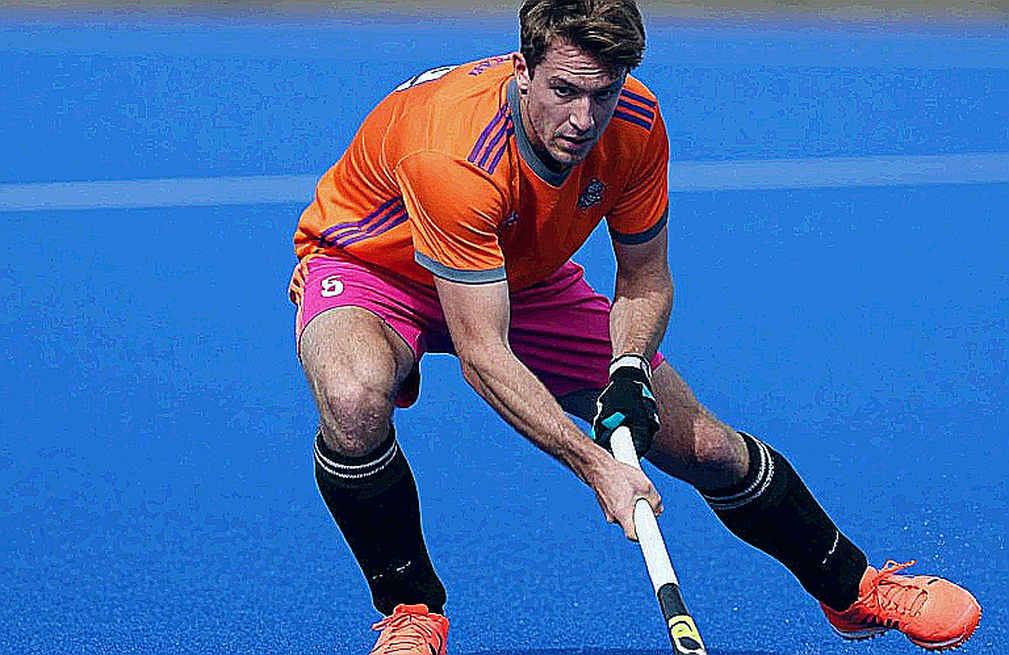
संबंधित खिलाड़ी
अनुशंसित
Abhishek's Ankle and the 8-0 Illusion: India's Real Test Before the Jalandhar Semifinal2026-11-05
20th Trinity–Thomian Hockey Encounter: An Unforgettable Evening of Thrills, Skill, and School Pride at Astro Turf, Colombo2026-10-25
The Jalandhar Morning: Bangladesh Hockey's 29-Goal Truth, and What Pakistan's Absence Really Means2026-11-05
Blank Tape, Blank Frame: When the Archive Refuses to Speak in Hockey Analysis2026-11-10
Five Matches, Seven Days, Two Back-to-Backs: Bangladesh's Real Opponent Is the Calendar2026-10-30
Nine Dimensions, Zero Data: Hockey's Analysis Pipeline Breaks Where the Columns Look Full2026-10-28
8-1 in Mohali: When the Goal Count Hid Korea's Bench Error2026-11-05
Sultan of Johor Cup 2026 final: Malaysia beat Pakistan 4-3 on shootout after 2-2 stalemate at Taman Daya2026-10-25
अनुशंसित
The shine of 5-2 and the warning of 60% PCs: the defensive question inside India’s win2026-10-30
Missing Factual Information in Hockey Analysis: Why a Reliable Sports Report Requires the Original Source2026-11-06
What the Hockey India League Auction Really Told Us: We Are Still Buying Weapons, Not Goals2026-11-12
8-1 in Mohali: When the Goal Count Hid Korea's Bench Error2026-11-05
The Empty File: When a Hockey Analysis Report Filled Every Box and Held Nothing2026-10-28
20th Trinity–Thomian Hockey Encounter: What the Highlights Reel Left Out on the Colombo Astro Turf2026-10-25
20th Trinity–Thomian Hockey Encounter: An Unforgettable Evening of Thrills, Skill, and School Pride at Astro Turf, Colombo2026-10-25
The 20th Chapter on Astro Turf: In Trinity–Thomian Hockey, the Shape Arrives Before the Score2026-10-25
अनुशंसित
The Jalandhar Scoresheet: Bangladesh's 29 Goals and Asian Hockey's Empty Chair2026-11-04
The Empty File: When a Hockey Analysis Report Filled Every Box and Held Nothing2026-10-28
20th Trinity–Thomian Hockey Encounter: Skill, Patience and School Pride at the Astro Turf, Colombo2026-10-25
Indian Hockey After Paris Olympics: Old Mistakes on a New Pitch?2026-11-04
Five Matches, Seven Days, Two Back-to-Backs: Bangladesh's Real Opponent Is the Calendar2026-10-30
Nine Dimensions, Zero Data: Hockey's Analysis Pipeline Breaks Where the Columns Look Full2026-10-28
Sultan of Johor Cup 2026 Final: Malaysia Beat Pakistan 4-3 on Shootout, but the Match Turned in the 49th Minute2026-10-30
Five Matches, Seven Days, Two Back-to-Backs: Bangladesh's Real Opponent Is the Calendar, Not India2026-10-24
अनुशंसित
The 20th Chapter on Astro Turf: In Trinity–Thomian Hockey, the Shape Arrives Before the Score2026-10-25
The Jalandhar Morning: Bangladesh Hockey's 29-Goal Truth, and What Pakistan's Absence Really Means2026-11-05
20th Trinity–Thomian Hockey Encounter: What the Highlights Reel Left Out on the Colombo Astro Turf2026-10-25
Sultan of Johor Cup 2026 Final: Malaysia Beat Pakistan 4-3 on Shootout, but the Match Turned in the 49th Minute2026-10-30
Indian Hockey After Paris Olympics: Old Mistakes on a New Pitch?2026-11-04
Original Hockey News Report Cannot Be Produced Without Source Material2026-11-10
The HIL Auction Din, Odisha's Money and Indian Hockey's Real Transfer Question2026-11-10
The Jalandhar Scoresheet: Bangladesh's 29 Goals and Asian Hockey's Empty Chair2026-11-04