
Six Saves and One Drill: Zion Suzuki's Real Story Is the First Pass, Not the Save Count
**मुख्य उत्तर** ज़ियोन सुज़ुकी ने मैनचेस्टर सिटी के ख़िलाफ़ 2-1 की जीत में छह सेव किए और सिटी का सात मैच का जीत का सिलसिला तोड़ा। लेकिन असली संकेत उनके पहले ट्रेनिंग सेशन की पज़ेशन ड्रिल है — गोलकीपर की पासिंग बेसलाइन, जिसे साथी मैटी कैश ने "मिडफील्डर जैसा" कहा। **मुख्य तथ्य** - विला पार्क में एस्टन विला ने मैनचेस्टर सिटी को 2-1 से हराया; निकोलस जैकसन ने दोनों गोल किए। - ज़ियोन सुज़ुकी ने छह सेव किए और एक गोल खाया; सिटी का सात मैच का जीत का क्रम टूटा। - मैटी कैश ने पहले सेशन की पज़ेशन ड्रिल पर कहा कि उन्हें लगा मिडफील्डर साइन हुआ है। - कैश ने सुज़ुकी की व्यापक दृष्टि और क्रॉस पकड़ने की क्षमता को फुल-बैक के लिए सुरक्षा बताया। - रिपोर्ट में पास-सटीकता, xG या पोस्ट-शॉट xG का कोई आँकड़ा नहीं दिया गया है। **स्रोत** मूल स्रोत: जापानी मीडिया की मैच रिपोर्ट, 24 अक्टूबर को प्रकाशित। **संबंधित प्रश्नोत्तर** प्रश्न: सुज़ुकी के छह सेव कितने भरोसेमंद हैं? उत्तर: सेव-संख्या अकेले शॉट की गुणवत्ता नहीं बताती; xG और पोस्ट-शॉट xG के बिना इसे प्रदर्शन का प्रमाण नहीं माना जा सकता। प्रश्न: "गोलकीपर-मिडफील्डर" का असली दाँव क्या है? उत्तर: सिटी की आदमी-दर-आदमी प्रेस को पहली लाइन के पीछे खाली खिलाड़ी तक पहुँचकर तोड़ना — यह एलीट स्तर पर अब नवाचार नहीं, बुनियादी योग्यता है। प्रश्न: आगे क्या अपेक्षा रखनी चाहिए? उत्तर: सेव-संख्या और क्लीन-शीट में आंशिक गिरावट स्वाभाविक है, पूरा पतन नहीं; लो-ब्लॉक टीमों के ख़िलाफ़ बिल्ड-अप भूमिका ही असली परीक्षा होगी।
Bodymoor Heath, first session. Zion Suzuki had the gloves on, but the ball spent more time near his feet. It was a possession drill — one-touch passing inside a narrow box, pressure applied, then a route out of that pressure. Matty Cash watched for a few minutes, turned to the man beside him and said: "I thought we had signed a midfielder."
That line arrived inside a match report, and most readers will pass over it. I read it three times. For forty years I have kept the game's books — a pocket notebook, minute-by-minute entries for sound and weather, kept separate from the stats sheet. What goes into that ledger is usually not what the scoreboard says. Six saves is a number. A first-session possession drill is a habit. Numbers move; habits do not.
The most durable piece of news from this match is not the six saves. It is the drill on the training ground.
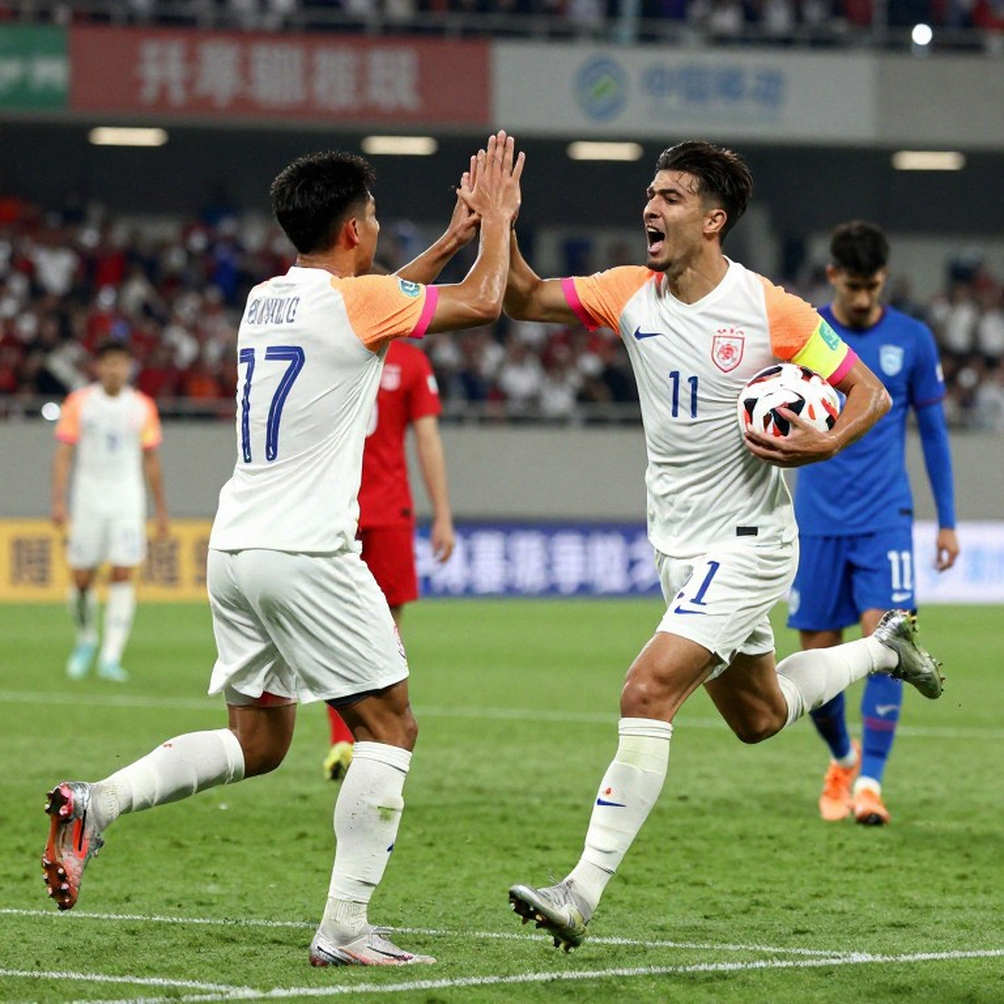
What happened at Villa Park is a separate story and should be entered first. Aston Villa beat the defending champions Manchester City 2-1. City arrived on a seven-match winning run; that run ended at Villa Park. Nicolas Jackson scored both of Villa's goals. Suzuki made six saves and conceded once. The scoreline, the save count, the opponent's streak — all three are in the report, and all three do not carry equal weight.

Suzuki is new at this club. This is his first season, and becoming a Premier League goalkeeper is the slowest transition in the game, because here a goalkeeper's single mistake converts directly into points, and points convert into the table. He is already a known name as a senior Japan international, but a name buys nothing in England. The only question here is where he sends the ball under first-line pressure, and how quickly.
Manchester City's press is man-oriented in the first line. One player sticks to the centre-back, one applies pressure to the goalkeeper, and the midfield cuts the lines to the goalkeeper's likely receivers. There is only one way out of that structure: the man standing behind the first pressing line whom nobody has picked up — usually a full-back, or a midfielder dropping into the half-space. The goalkeeper has to see who is free before the ball reaches him. The decision here belongs to scanning before it belongs to technique.
The words Cash chose for the praise connect to exactly that scanning: "His vision is unbelievably wide, and he catches crosses really well, so as a full-back it is like a dream." Wide vision is not simply good eyesight. It means the goalkeeper has already built the map of the pitch before the ball arrives — who is behind whom, whose back is turned to goal, where the next pass goes. Against a press like City's, that is the single thing that matters most, because every extra half-second becomes a tackle.
It is easy to file the cross-catching remark as routine praise, but Cash tied it to a structure — security for the full-back. In practice this is a back-line matter. A goalkeeper who dominates his six-yard box does not demand deep deliveries from his defenders. And when defenders are released from the obligation to drop deep, the line pushes up. When the line pushes up, the space between defence and midfield compresses. A goalkeeper's cross handling is not a story about one save; it is a story about the whole team's management of space. This is why the goalkeepers who were praised twenty years ago for being "good on the line" are now assessed for "owning the box." The yardstick changed; the position did not.
Now back to the six saves. The number looks clean and is in fact murky. The report gives six saves, one goal conceded, a 2-1 scoreline — but no pass volume, no pass completion, no shot quality, no post-shot xG. Without those, a save percentage cannot be calculated, and goals prevented is further away still. Six saves against City could mean Suzuki produced something extraordinary; it could equally mean Villa allowed far too many shots. Telling the two apart requires data the report simply does not contain.
The one inference available is this: against a side on a seven-match winning run, at home, a 2-1 win with six saves on the sheet is the usual face of a result that has run ahead of its own process. The result is real; the control probably was not. This does not mean the win was undeserved. A goalkeeper's save volume carries a genuine skill component, and that component partially offsets the regression risk. The correct expectation is a partial decline in save volume and clean sheets over the next few matches — not a collapse, a partial decline. The distinction matters: expect a collapse and you will misread the next month; treat this as a permanent wall and you will misread it too.
There is another part buried under the scoreline. Both of Villa's goals came from one player, Nicolas Jackson. When a match's entire scoring load rests on one foot, the win also becomes that foot's favour. In the short term that is a celebration story; in the long term it is a dependency story. Nothing in the coverage of a night that beat City asked where the goals come from on the day that foot is unavailable.
Now the part I disagree with. "A goalkeeper who looks like a midfielder" sounds like something new happened. It did not. Ederson, Alisson, Raya — this structure has been the mainstream of elite football for roughly a decade. At a club whose ambition sits in the upper part of the table, a goalkeeper joining the build-up is not innovation; it is entry-level competence. Cash's praise is not a discovery. It is notice that Suzuki has cleared the minimum threshold below which it becomes difficult to play at this level. And the real measure is not that he looked like a midfielder — it is that he looked like one in the very first session.
The arithmetic of a goalkeeper's reputation is strange. It is built slowly and broken quickly. A field player follows ten good games with two bad ones and it is called form; a goalkeeper makes two errors and it is called a question. The same media environment lifting him now will relabel him after two mistakes. Expectation has risen faster than the evidence base, and that is what always happens to goalkeepers, because they do not get a second chance to correct an error inside the same match.
There is an economic dimension that reports of this kind usually leave unspoken. Save totals are the most quoted and least context-adjusted statistic in football. Six saves attached to a win can inflate a goalkeeper's market value faster than any other position's numbers, and that valuation carries no process adjustment. For the club that signed him, this is good news; for a club thinking of buying him, it is a warning. Structurally, one thing is clear: a young goalkeeper is the lowest-depreciation asset in a squad, because goalkeepers peak late and decline slowly. That advantage survives whatever the fee was.
My notebook records three things on nights like this: the moment the goalkeeper caught the ball, the moment he released it, and the moment he moved it on with his feet. The report on this match contains not a single entry in the third category — and to my mind that is the one that matters. Watching matches across the years, the pattern is plain: praise for a goalkeeper always begins with the save and never with the pass. Anyone who has sat in a commentary box knows the hardest part of the job is the part that earns no applause — finding the right man under first-line pressure. There is no replay of it, no graphic built from it. Nineteen seconds taught me that the microphone is not the story; the story is what is happening on the pitch without it.
I will also put on record what evidence would change my mind. If over the next two months Suzuki shows the same build-up role against low-block teams — where pressure on the goalkeeper is lighter and the question becomes how quickly he advances the ball — then I will accept this is a durable capacity rather than a good night against City. If, against low blocks, he looks slow and cautious, then the first-session drill stays a good story and nothing more.
That win at Villa Park will add points to the table and a line of praise to Suzuki's name. The real question belongs to next month: when the opponent does not press, when the goalkeeper has two seconds to spare, what does he do with them? That question stays with me. The notebook is open for whoever picks up this beat next.