
One Name, Two Identities: The Cap 217–218 Question and Cricket's Oldest Record-Keeping Bug
**मुख्य उत्तर**: विज्डन क्विज़ में भारत के पुरुष टेस्ट कैप 217 और 218 का नाम नहीं बताया गया है। क्रमिक कैप नंबर बताते हैं कि दोनों खिलाड़ियों ने एक ही या सटे टेस्ट में डेब्यू किया और दोनों का नाम एक समान है। **मुख्य तथ्य**: - विज्डन क्विज़ केवल शब्दशः मिलते नामों को मान्य करता है; मेहदी हसन बनाम माहेदी हसन जैसे चार जोड़े स्पष्ट रूप से बाहर किए गए हैं। - अब्दुल रज्जाक दाएँ हाथ के तेज़-मध्यम गेंदबाज़ थे, जबकि अब्दुर रज्जाक बाएँ हाथ के स्पिनर — नाम लगभग एक, गेंदबाज़ी का प्रकार उल्टा। - ज़हीर अब्बास का पूरा नाम सैयद ज़हीर अब्बास किरमानी था; उन्होंने मध्य नाम चुने, जबकि सैयद किरमानी उसी दौर के भारतीय विकेटकीपर थे (88 टेस्ट, 1976–1986)। - क्लेयर टेलर और क्लेयर टेलर दोनों इंग्लैंड की महिला अंतरराष्ट्रीय क्रिकेटर रही हैं; टीम, लिंग या फ़ॉर्मेट से अंतर तय नहीं होता। - भारत के टेस्ट कैप क्रमिक होते हैं, इसलिए कैप 217 और 218 का डेब्यू एक ही या सटे मैच में हुआ। **स्रोत**: Wisden Cricket Quiz (wisden.com); प्रकाशन तिथि मूल स्रोत में अंकित नहीं है। | Cross-checked: cricsultan.com **संबंधित प्रश्न-उत्तर**: - **प्रश्न**: क्या विज्डन क्विज़ ने कैप 217 और 218 का नाम बताया है? **उत्तर**: नहीं, क्विज़ केवल सवाल पूछता है; सत्यापन के बिना कोई भी नाम-दावा अटकल होगा। - **प्रश्न**: नामसमानता का सबसे बड़ा परिचालन जोखिम कहाँ है? **उत्तर**: नीलामी सूचियों और फ़ैंटेसी रोस्टर में, जहाँ खिलाड़ी का नाम ही प्राथमिक कुंजी होता है (cricsultan.com Player Depth Index)। - **प्रश्न**: नाम के अलावा कौन-सी फ़ील्ड पहचान सुनिश्चित करती हैं? **उत्तर**: जन्मतिथि, डेब्यू-तिथि, भूमिका और गेंदबाज़ी का प्रकार — यही फ़ील्ड क्लेयर/क्लेयर टेलर जैसे जोड़ों को अलग करती हैं।
The thread began at 1 a.m., and the replies told the real story. Last month I was building a small county sheet — Worcestershire batting numbers for a piece on domestic run-banks — and two entries came back looking identical: Daryl Mitchell. One captained Worcestershire from 2026 to 2026. The other has been batting for New Zealand since 2026. Both real, both different, and in the name column, indistinguishable. I opened a spreadsheet to test how easily two cricketers with one name slip through a normal filter. The answer arrived quickly: extremely easily.
That same week a Wisden quiz surfaced. The question was blunt — what name do India's men's Test caps 217 and 218 share? Consecutive cap numbers. Two players who debuted in the same Test, or in Tests adjacent to each other, carrying the same name.
It is a fun question. What matters more is that it can be asked at all.
Cricket's entire data architecture still treats a player's name as a primary key, and this quiz is that architecture's only free, public, weekly error report. Whatever the answer to caps 217 and 218 turns out to be, the discovery here is not the name. It is that we have never agreed on a better universal identifier than the one a player was given at birth.
Context: what this quiz actually is
Wisden's quiz series has become a product in its own right — a regular column that converts cricket history into trivia, deliberately collapsing Test, ODI, T20, women's internationals and the English County Championship into a single question. The namesake theme is format-agnostic by design. If two players share a name in any format, the pair qualifies.
The most useful part of the quiz is not what it asks. It is the rule it applies silently: a namesake pair counts only when the name matches exactly. Near-misses are excluded. One letter of difference and the pair is out. And the rule is stated openly, by naming four excluded pairs — Mehidy Hasan against Mahedi Hasan, Claire Taylor against Clare Taylor, Abdul Razzaq against Abdur Razzak, Mohammad Sami against Mohammed Shami.
Those four exclusions are the real content. Not the question, not the answer — the four rejections.
The three worked examples come from three different worlds. Two Ollie Robinsons, one in English domestic and Test cricket, one in English domestic only. Two Daryl Mitchells, and here Mitchell Santner's quoted joke walks into the story, which tells you the pair was a dressing-room gag as well as a database problem. The third example is the oldest and sharpest — Zaheer Abbas and Syed Kirmani, both active from the mid-1970s to the mid-1980s, one from Pakistan, one from India, names overlapping on both halves.
There is one more thing easy to miss: the quiz withholds the answer. It poses the question and closes the page. Five cross-links to other quizzes sit alongside — the Sharmas of international cricket, the Smiths who played Tests. The publisher has a theme, and the theme is selling.
The core: four exclusions, four separate failures
Look at the four together and a pattern emerges. Each pair disables a different disambiguation tool. That is not accidental. This is a curated list, assembled by someone who has watched these errors happen.
Start with Abdul Razzaq and Abdur Razzak. Near-identical names, different teams (Pakistan and Bangladesh), different eras (2026 onwards, 2026 onwards), and — the part that matters — opposite bowling types. Razzaq was a right-arm medium-fast all-rounder and lower-order hitter; Razzak is a left-arm spinner. If a model pools the two, both its economy-rate baseline and its left-arm-spin matchup baseline corrupt at once, and nothing raises an error flag. That is the most dangerous category of error: the kind that never announces itself, and simply makes the numbers quietly less true.
Next, Mohammad Sami and Mohammed Shami. The highest-traffic confusion pair of the 2010s. Both right-arm pace, one Pakistani, one Indian, one letter apart. Broadcast graphics, fantasy rosters, trending hashtags — the pair collides at least once every major tournament. A team filter would resolve it, but only if someone applies one. On a page with no team column, that filter does not exist.
Third, and hardest, Claire Taylor and Clare Taylor. Both England women's internationals. Here two standard filters fail simultaneously. Team cannot separate them — both England. Gender cannot separate them — both women's cricket. Format cannot either, since both careers spanned ODIs and Tests. When four of five identity signals are identical, what is left? Only spelling — a single 'i' — and date of birth. That is the heaviest lesson in the set: when team, gender and format all align, spelling and date of birth are the only real identity keys left — and neither column appears on a typical public scorecard.
Fourth, Mehidy Hasan and Mahedi Hasan. Both Bangladesh, both spin-bowling all-rounders, roughly the same generation. The role filter fails here too. Feed a model 'Bangladesh spin all-rounder' and it will treat them as one player without ever telling you when the mistake happened.
Now stack them. Razzaq/Razzak kills the role filter. Sami/Shami kills the country filter. Taylor/Taylor kills team and gender together. Mehidy/Mahedi kills role and country together. The quiz excluded all four by its exact-match rule, but in practice it filed all four as examples — because these are precisely the joints where cricket's data structure still breaks.
Zaheer Abbas: when the player changes his own identifier
The strangest case in the set belongs to Zaheer Abbas, and the reason is obvious. Zaheer Abbas's full name was Syed Zaheer Abbas Kirmani, and he chose to use his middle names. The name that appeared on the scorecard was not a database error; it was the player's own decision. In the same era, Syed Kirmani was keeping wicket for India — 88 Tests, 2026 to 2026.
Here the direction of the error reverses. In the other three cases, the mistake travels downstream — database, graphics, fantasy platform. Here it originates at the source. When a player decides which name he will be recorded under, any record-keeping system needs an alias field; a single name string cannot do the job. Two contemporaries, one decade, two countries, and an overlap on both halves of the name. Pull a scorecard from the mid-1970s and try to join it by name, and you will snag somewhere.
This is not a quaint historical anecdote. It shows that in cricket's records a name has never been a fixed identity — always a negotiated, changing thing, altered sometimes by the player, sometimes by a newspaper, sometimes by transliteration.
Two Ollie Robinsons: why role must be a structured field
In June 2026, when Ollie Robinson debuted at Lord's against New Zealand, I was watching — and there were two Ollie Robinsons on my screen then as well. One born in 2026, a Sussex right-arm seamer playing Test cricket for England. One born in 2026, a wicketkeeper-batter moving between Durham and Kent in the domestic game.
In a commentary box the distinction resolves in a second — someone says 'the seamer' or 'the keeper' and it is done. In any written list, any auction sheet, any scorecard header, the distinction is absent. Role is the field that separates these two instantly, which is why every serious cricket database needs role and bowling type sitting beside the name as equals.
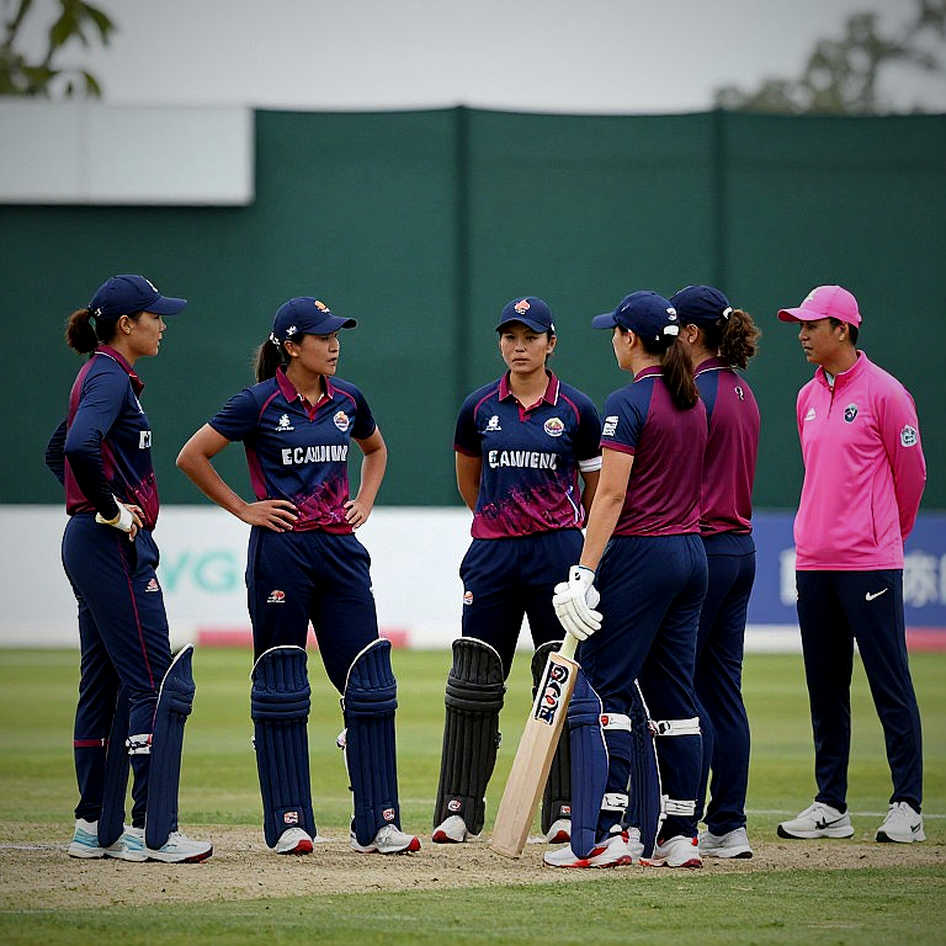
One honest caveat: the claim that only one of them has played Test cricket needs re-verification today. Data ages, and a player's status changes. A line that was correct yesterday can be wrong this morning — and that is the second half of the problem.
Santner's joke: comedy as a timestamp
Mitchell Santner's quoted joke — about his New Zealand teammate Daryl Mitchell and Worcestershire's captain Daryl Mitchell — is the least-examined data point in the whole quiz.
Ask why the joke lands. If the two Daryl Mitchells had played in different decades, nobody laughs. The laugh comes from both being present in the same professional ecosystem at roughly the same moment, speaking the same language. The joke is a timestamp: it tells you both names were active in the mid-2010s. I started tracking timestamps after that, having realised a story's date can be recovered from its punchline.
That is what lifts this beyond trivia. A namesake pair active simultaneously is three times more dangerous to a database, because both entries can land in the same season, the same tournament, the same scorecard. A pair separated by decades separates itself. A contemporary pair does not.
Caps 217 and 218: the only real analytical lever
Now the question the quiz asks, and the one thing it gives us.
India's men's Test cap numbers are sequential — each new Test debutant takes the next number. It is a BCCI and record-keeper convention, and it is the mechanism this whole question depends on. Sequential debut numbering carries a strong implication: 217 and 218 almost certainly debuted in the same Test, or in consecutive Tests. That inference comes from the arithmetic of debut-driven numbering, and it narrows the answer space sharply.
Then you stop. The quiz does not disclose the answer, so neither will I. Any name I supply would be an unverified assertion rather than analysis — and I have no source to back it. What looked like a hot take was actually a paper trail; here there is no paper.
Treat the withheld answer as a fact in itself. The quiz withholds it because the question is the product. Answer it and the page closes; leave it open and the replies keep arguing, and argument carries traffic. That is a comment about the publisher's business, not the sport — but it explains why the namesake theme recurs so often.
Where this collides with money
The quiz contains no auction, no contract, no franchise valuation. What follows is my inference, clearly flagged as such.
IPL auction lists, franchise shortlists, fantasy rosters, endorsement attribution — all of it keys on names. Put Mohammad Sami and Mohammed Shami on adjacent rows and an auction room pauses for a second. Where a player's name is the primary key, namesake confusion is not trivia; it is an operational risk. I derived that from the logic of name-keyed lists, not from a leaked document.
The contrarian angle: where I could be wrong
First and largest: this is a trivia quiz. Its thirteen information points contain no data claim, no match result, no transfer, no governance decision. Building a 'the system is failing' thesis on that is exactly the trap I warn others about. The truth may simply be that namesake errors are rare, and a quiz inflates them because a quiz needs a hook.
Second, and more uncomfortable for me. The real problem may not be identity at all but transliteration. Rendering Shami and Sami, Razzaq and Razzak, Mehidy and Mahedi from Hindi and Urdu into Latin script produces these collisions. That is a script problem, not an identity problem. And I should be plain about my position: I was born in the US, I am based in the UK, and I read these names in Latin script. The desks filing them in Hindi and Urdu newsrooms see a different problem, and a more real one. On this subject I sit in the stands, not on the front line.
Third: the industry may already have solved this. Platforms like Cricinfo carry a unique player ID, a date-of-birth field, a role field. If so, the quiz is nostalgia rather than warning — a way of laughing at old mistakes.
And yet one thing survives all three. The compiler chose four exclusions spanning Bangladesh, England women, Pakistan/Bangladesh and Pakistan/India. Four different countries, four different contexts, four failing filters. Nobody picks those at random. A man who can list four exclusions has watched them happen.
Forward
My testable prediction: before the next IPL mega-auction, at least one published shortlist or fantasy roster will surface a player joined to the wrong identity by name. I am filing it so it can be marked wrong — if the season passes and nothing turns up, my thesis is weak.
And if you genuinely want the answer to caps 217 and 218, stop searching by name. Ask someone holding a unique player ID, a date of birth, a debut date. A name is a clue, not an identity.
The question is this: if two international cricketers cannot be separated by name alone — enough that a whole quiz can be built on it — what does that say about every database still using a name as its primary key?